Sewage Cleanup in Las Vegas
Sewage cleanup in Las Vegas is a biohazard job, not a mop-and-bleach job. What backs up through a floor drain or a failed main is Category 3 black water, and it carries bacteria and viruses that have to be removed to standard. Here is what we do: extract the waste, remove and bag contaminated materials, disinfect, dry the structure, and verify the space is safe to live in again. Certified in-house technicians, and because sewage does not wait, we are on site within the hour, 24/7.
A toilet backed up and kept coming, a main sewer line let go in the yard, or a storm pushed the city sewer back up through a floor drain, and now there is raw sewage where your family lives. Step away from it, keep the kids and pets out of the room, and take a breath. This is fixable. It is also one of the few water emergencies you should never clean up yourself, because what came up is not water, it is Category 3 “black water,” a genuine biohazard, and it has to be handled to a standard, not with a mop and a bottle of bleach.
Mold Eliminators has restored more than 255 Las Vegas properties since 1996. Our founder, Craig Herrmann, helped author the ANSI/IICRC S520 standard and holds IICRC Master Restorer credentials, so when we say a sewage loss is decontaminated, that judgment is measured against the rulebook the industry follows, not a franchise checklist. Sewage cleanup is the deep end of water damage restoration, and it is exactly the kind of job you want a credentialed, in-house crew handling from the first hour.
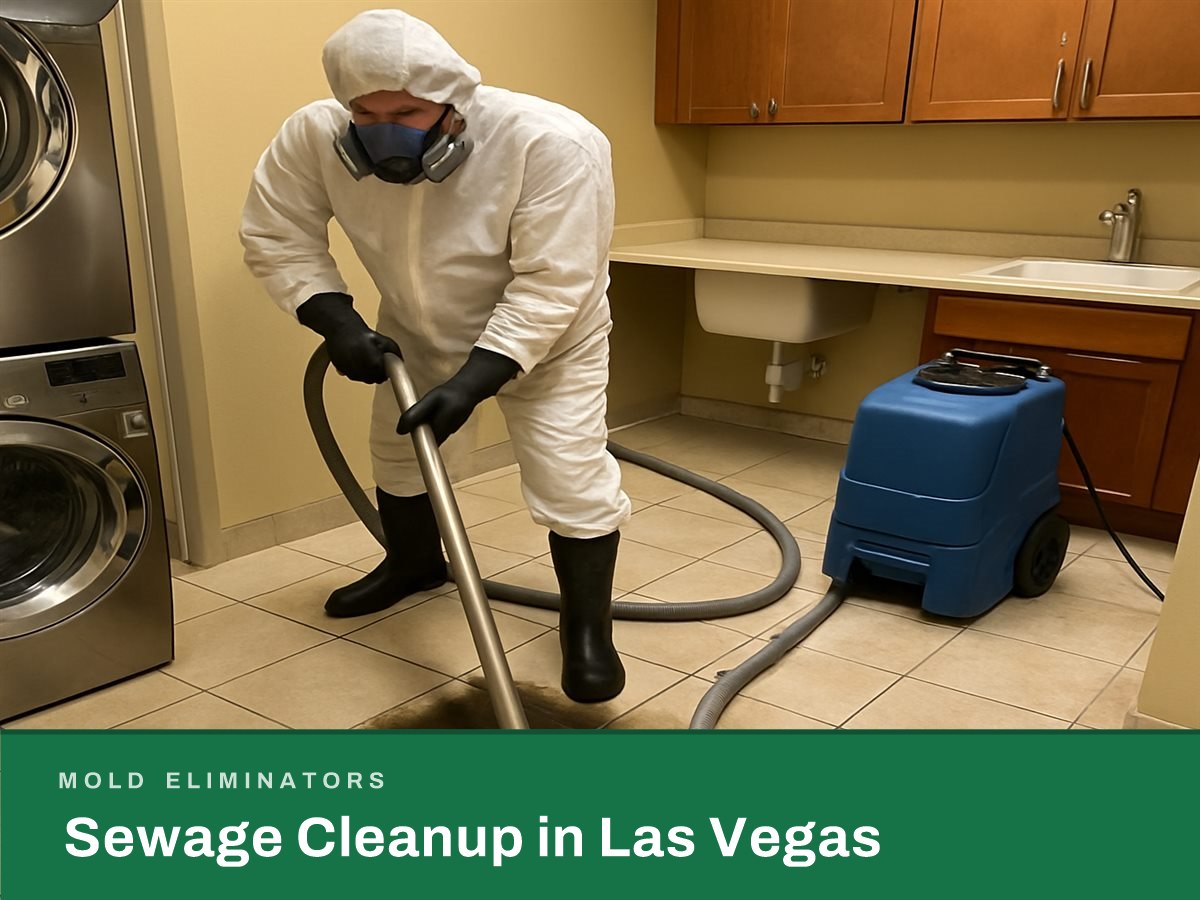
What sewage cleanup actually is, and why it is different
Sewage cleanup is the professional removal, decontamination, and structural restoration of an area contaminated by Category 3 water. The industry sorts water losses into three categories by how dirty the water is, and that category, not the volume, decides how the job has to be done. Category 1 is clean water from a supply line. Category 2 is “gray water,” with some contamination, like a washing-machine overflow. Category 3 is “black water”: grossly contaminated water that can carry bacteria, viruses, parasites, and fungi. Sewage backups, toilet overflows that include solids, and storm water that has touched the ground or a sewer are all Category 3 by definition.
That distinction matters because Category 3 changes the entire response. Under the S520 standard, porous materials that black water has touched, carpet, pad, most drywall, particleboard, insulation, are not cleaned and saved; they are removed and disposed of as contaminated waste. The goal is not to dry the sewage in place. It is to physically remove the contamination, decontaminate every surface that remains, dry the structure to a verified target, and confirm the space is safe to reoccupy. A mop spreads the problem around. Restoration removes it.
Las Vegas adds its own wrinkles. Slab-on-grade homes mean a backup often spreads fast across a flat ground floor with nowhere to drain. Older valley neighborhoods have aging clay sewer laterals that root-intrude and collapse. Monsoon season can overwhelm storm and sewer systems within an hour. And in the high-rise condos near the Strip, a single stack blockage can push sewage into multiple units and turn a plumbing problem into a liability question across an HOA. None of that is reason to panic, it is reason to call people who know desert construction and have done this here before.
It also helps to understand why sewage is treated so differently from clean-water losses. With a burst supply line, the water is relatively safe and the priority is speed of drying. With sewage, the contamination itself is the hazard, so the priority shifts to containment and removal before anything else. Pathogens in black water do not stay put, they aerosolize, they wick into porous materials, and they bond to surfaces in ways that a surface wipe will never reach. That is why the standard calls for removing affected porous materials rather than trying to save them: there is no reliable way to verify that drywall or carpet pad soaked in sewage has been decontaminated all the way through. Removing and replacing is not waste; it is the only honest way to know the structure is safe.
Need help now?
Talk to a Las Vegas expert
In-house certified crews. One-hour emergency response across the valley, 24/7.
Signs you are dealing with a sewage problem, not just water
Sometimes a sewage loss is obvious, it is on the floor and you can smell it. Other times the source is hidden and the warning signs are easy to misread as ordinary plumbing trouble. Here is how to tell when you have crossed from a nuisance into a biohazard that needs a professional response.
If you see any of these, keep people and pets out of the affected area, shut off water to the offending fixture if you safely can, and avoid running other drains that share the line. Do not try to dry or disinfect it yourself, household bleach does not penetrate porous materials, and walking through the area tracks contamination into clean parts of the home. The right move is to contain it and call. Left untreated, a sewage loss becomes a mold problem within 24 to 48 hours, which is why fast, contained response is the whole game.
How Mold Eliminators handles a sewage loss
Every sewage job we take is run by our own certified W-2 technicians, never a subcontractor, never a stranger’s crew. That matters more on a biohazard job than on any other, because decontamination is only as good as the discipline of the people doing it, and we stand behind our people by name. Here is the process, step by step, so you know exactly what to expect when we arrive.
- Containment and safety first. We isolate the affected area with physical barriers and negative-air containment so contamination and odor cannot migrate into clean spaces. Crews work in full personal protective equipment. Nobody reoccupies the area until it is cleared.
- Extraction and contaminated-material removal. We extract the standing black water, then remove the porous materials it has touched, carpet, pad, affected drywall, insulation, and damaged subfloor, cut back to clean, sound substrate per the S520 standard.
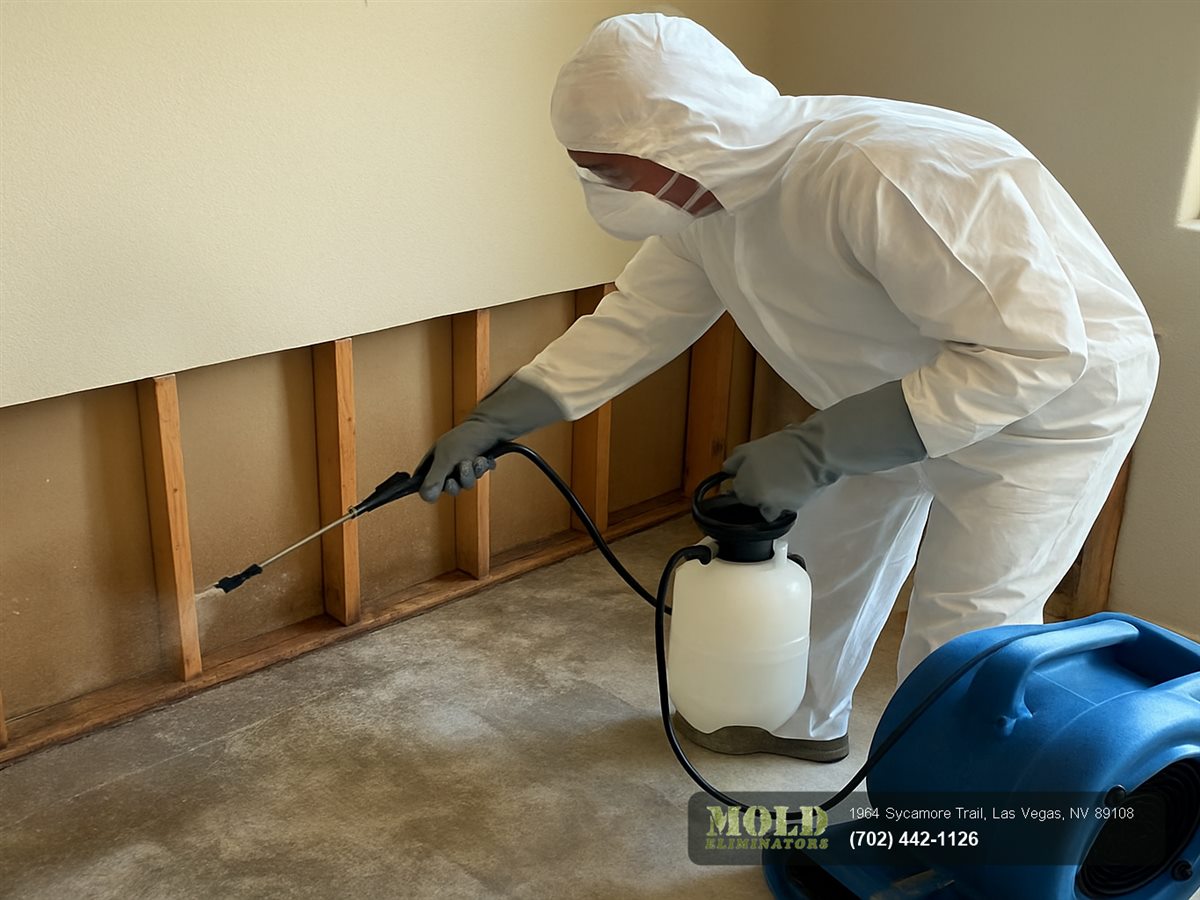
- Cleaning and antimicrobial sanitization. Every salvageable surface is cleaned and treated with EPA-registered antimicrobials. We are decontaminating the structure, not masking it, the difference between a job that holds and one that grows back mold in a month.
- Safe biohazard disposal. Contaminated materials are bagged, sealed, and disposed of as regulated waste, not dumped in your curbside bin. Handling the waste correctly is part of doing the job to standard.
- Structural drying. Once the contamination is gone, we dry the structure to a verified moisture target with air movers and dehumidifiers. This is full structural drying, measured with meters, not eyeballed, because trapped moisture is what mold needs to take hold.
- Odor removal and final verification. We treat residual odor at the source rather than covering it, often with hydroxyl or ozone treatment as part of professional odor removal. We then verify the space is dry and decontaminated before we call it done and hand it back to you.
When the loss comes from large-scale storm intrusion rather than a single backed-up line, the same containment-and-decontamination discipline applies on a bigger footprint, that overlap is why sewage work sits alongside flood restoration in our emergency services. Throughout, we document what we found and what we removed, so if your loss involves an insurance claim, a property manager, or an HOA, you have a clear record. And consistent with how we run every job, if we open up an area and the contamination is more limited than it looked, we will tell you and scope the work down. We profit from fixing the problem honestly, not from inventing one.
Timeline depends on the size of the loss, but most residential sewage jobs follow a predictable arc: containment and extraction on day one, removal and decontamination over the following day or two, then drying monitored over several days until the moisture readings hit target. We do not rush the drying phase to clear a job faster, because trapped moisture behind a finished wall is exactly what turns a cleaned-up sewage loss into a mold call three weeks later. The cost factors that move the number most are the square footage affected, how much porous material has to be removed and rebuilt, and how far the contamination traveled before it was contained, which is the strongest argument there is for calling early rather than waiting to see if it “dries out on its own.” It will not, and the wait only makes the scope bigger.
Certified in-house crews
Every technician on your sewage job is a certified W-2 employee of Mold Eliminators, no subcontractors brokered in. On a biohazard, that accountability is non-negotiable.
Measured against the standard
The decontamination and drying targets we work to come from the ANSI/IICRC S520 standard our founder helped author. The rulebook is the floor, not the marketing.
One-hour emergency response, 24/7
Sewage losses get worse by the hour. We answer around the clock and move fast, because contained early is the difference between removal and a mold remediation later.
Handled fast, from flood to finished
“We had a major sewage flood in one of our properties. I found Mold Eliminators and got Bill the GM. Today is Tuesday and my tenants are happy, the insurance claim is approved, and the home will be finished by Friday. This guy Bill knows his stuff.” ZenJuvenate, Google
What backs sewage up in the valley
Two things drive most of the sewage calls we run here. Monsoon storms overwhelm the city system and push it back up through the lowest drain in the house, and older neighborhoods built before 2000 have clay or cast-iron laterals that crack and clog under mature landscaping. Either way the result is the same, and we clean it up across Las Vegas, North Las Vegas, Henderson, and out through Paradise and Spring Valley.
Areas we serve across the Las Vegas valley
We serve homeowners and property owners throughout Las Vegas and the surrounding valley, including Summerlin, Henderson, Paradise, Spring Valley, and North Las Vegas, along with all of Clark County. One-hour emergency response, 24/7. Call (702) 442-1126 any time.
Sewage cleanup FAQ
- Is a sewage backup actually dangerous, or just gross?
- It is genuinely hazardous. Category 3 black water can carry bacteria, viruses, and parasites that cause real illness through contact, ingestion, or inhalation of aerosolized contaminants. That is why the affected area should be evacuated and handled with protective equipment and proper decontamination, not a mop and bleach.
- Can I just clean it up myself with bleach?
- No. Surface bleach does not penetrate the porous materials, drywall, carpet pad, subfloor, that black water soaks into, and walking through the area spreads contamination into clean parts of the home. Affected porous materials have to be removed and disposed of, and the structure properly sanitized and dried, to actually resolve it.
- How fast do I need to act?
- Immediately. Sewage left in place becomes a mold problem within roughly 24 to 48 hours, and the contamination keeps spreading the longer it sits. Contain the area, keep people out, and call our 24/7 emergency line right away.
- Will my homeowners insurance cover it?
- Sewage backups are often covered, sometimes under a specific backup endorsement, but coverage varies by policy. We document the loss thoroughly, what was contaminated and what we removed, so you have a clear record to support a claim. Check your policy and ask your carrier about sewer backup coverage.
- Do you do the whole job, or do you subcontract parts of it?
- We do the whole job with our own certified W-2 technicians, containment, removal, sanitization, disposal, drying, and odor removal. No subcontractors. If our name is on the work, our people did it. We serve homeowners and property managers across our Las Vegas service areas.
A job like yours
For what this looks like on a real job, read our case study on the sewage flood in a Las Vegas rental with an out of state owner, handled with tenants still in the property.
Putting the property back together afterwards
Keeping the household safe while we work, and what you pay
The assessment costs nothing up front, and you get a written scope before anything is removed. A Category 3 loss is not a job to sit on, so response runs 24/7 with same day and weekend availability.
The first thing we sort out is which parts of the property stay usable. Contaminated areas go under containment and negative air straight away, and the work is planned so a household keeps a working bathroom wherever the building allows it. If an occupant is elderly, pregnant, immune compromised or has limited mobility, say so on the first call, because it changes the containment route and sometimes changes the order the rooms get done in.
What to do next
If there is sewage in your home right now, do three things: get everyone out of the affected room, stop using fixtures that share the line, and call us. We will contain it, decontaminate it to standard, dry it, and verify it, with our own crew, start to finish. If you are not mid-emergency but want a problem assessed or you manage a property and need a plan, reach out and we will walk you through it with no pressure and no upsell.
Certified, in-house biohazard cleanup, 24/7.
Call now and a real technician, not a call center, will talk you through the next ten minutes.