Mold Removal Cost in Las Vegas
Mold cluster · Transparent pricing
If you are searching for what mold removal costs in Las Vegas, you have probably already found something you do not like: black spots creeping along a baseboard, a musty smell that will not quit, or a water stain that keeps coming back. The honest answer is that most residential mold removal in the valley falls between $1,000–$6,000, with an average job landing near $2,214. But the range is wide for a reason, and anyone who quotes you a flat number over the phone, before anyone has looked at the actual moisture, is guessing.
This is the page our other guides point to when pricing comes up, because we would rather show you the math than hand you a brochure number. Mold removal is priced by the square footage of contaminated material, the difficulty of reaching it, and whatever caused the moisture in the first place. Below we break down every factor that moves the price, what an honest quote actually includes, how insurance fits in, and why we start with free inspection instead of a sales pitch. The work itself is measured against the mold remediation standard the industry follows, so the scope is defined by a rulebook, not by how much we feel like charging.
Las Vegas mold removal cost
What mold removal typically costs in Las Vegas
behind one wall
about 500 sq ft
or systemic
The average Las Vegas mold job runs about $2,214, and most projects land between $1,000–$6,000. We start with a free inspection and an honest scope, not a guess.
What actually drives the price
Size of the area
More affected square footage means more containment, labor, and disposal.
Hidden vs. accessible
Mold behind walls or under flooring costs more to reach than a visible surface.
The moisture source
A slab leak or swamp cooler overflow has to be fixed, or the mold returns.
Biohazard layered on
Sewage or contaminated water adds protective protocols and disposal cost.
HVAC involvement
When spores reach the air ducts, the system needs cleaning to stop spread.
Containment & clearance
Sealing the work area and independent post-job lab testing protect the result.
Need help now?
Talk to a Las Vegas expert
In-house certified crews. One-hour emergency response across the valley, 24/7.
The Las Vegas cost ranges, in plain numbers
Pricing in our market generally runs $10–$20 per square foot of affected area for standard mold remediation. That single figure does most of the work in any estimate, so it is worth understanding what it covers and how it scales:
Small, contained job
A bathroom corner, a single wall section, or under one sink. Typically $1,000–$2,500. This is the most common call we get, and the most common place homeowners overpay elsewhere.
Mid-size area, ~500 sq ft
A flooded room, a closet that backs onto a slab leak, or spread behind drywall. At $10–$20 per sq ft, plan on roughly $5,100–$10,200 depending on access and water damage.
Whole-home or systemic
Mold that has reached the HVAC system, multiple rooms, or structural framing. These projects start around $15,000+ and require staged containment and clearance testing.
Two homes with the same square footage of mold can still receive very different quotes, and that is not a bait-and-switch. The difference is almost always access and cause. Mold growing on an exposed bathroom wall is cheap to remove. The same colony hidden inside a wall cavity, fed by an active water-damage source, sitting above a finished ceiling, costs more because the labor, the demolition, the containment, and the drying are all harder. The numbers above are starting points, not promises. The only honest number is the one written after someone has measured the moisture and seen the extent.
It is also worth naming what these prices do not include, because that is where most sticker shock lives. Reconstruction, putting the drywall, paint, flooring, or cabinetry back after the contaminated material is removed, is a separate line from the remediation itself. A small contained job may need almost no rebuild, while a 500 sq ft removal might require new drywall and flooring across an entire room. When you read a quote, check whether it is remediation only or remediation plus rebuild, because comparing one of each side by side is how good companies end up looking expensive and corner-cutters look cheap.
What actually drives the price
Every credible estimate is built from a handful of variables. When you understand them, you can read any quote, ours or a competitor’s, and tell whether it reflects the real job or a number pulled from the air.
Size of the affected area
The biggest single driver. Square footage of contaminated material sets the baseline at $10–$20 per sq ft. A few square feet behind a vanity is a different project than 500 sq ft across a great room.
Hidden vs. accessible
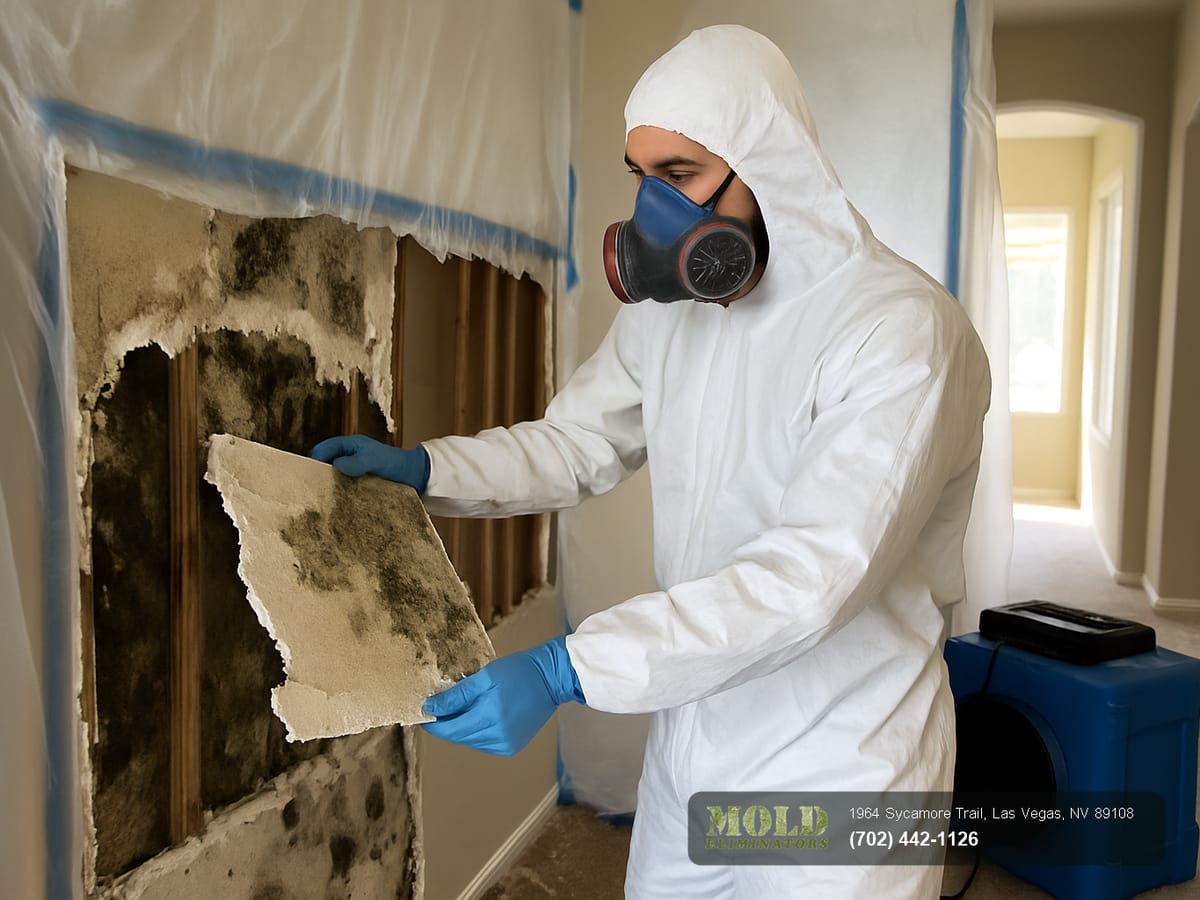
Mold on an open surface is wiped, treated, and verified. Mold inside wall cavities, under flooring, or above ceilings requires selective demolition to reach, which adds labor, debris removal, and rebuild. A proper mold inspection finds the hidden extent before it surprises you mid-job.
The moisture source
Mold is a symptom; water is the cause. A swamp-cooler line, a slab leak, or monsoon intrusion has to be stopped and dried, or the mold returns. Layered water-damage restoration is often the larger part of the bill.
Biohazard layered on
When the water source is a sewage backup or the situation involves contamination beyond mold, additional containment, protective protocols, and disposal apply. That is a different category of work and is priced separately and transparently.
HVAC involvement
Once spores reach the air handler or ductwork, the system can re-seed the whole house. Cleaning or isolating HVAC adds meaningful cost but is non-negotiable, because skipping it means paying twice.
Containment and clearance
Negative-air containment, HEPA filtration, and independent post-job clearance testing are built into honest pricing. They are the difference between mold being removed and mold being verified gone.
What an honest quote includes
A real estimate is itemized so you can see what you are paying for. When you compare bids, line them up against this list. If a competitor’s number is dramatically lower, it is usually because one of these is missing, and the missing piece is the one that determines whether the mold stays gone.
Our written quotes spell out the contained area, the containment and filtration setup, the demolition and disposal of affected material, the drying of the moisture source, the antimicrobial treatment, and the independent clearance step. Because all of our technicians are certified W-2 employees and not subcontractors, the price you are quoted is the price the people doing the work were scoped against. No middleman markup, no stranger’s crew.
We also quote before we start. That sounds obvious, but the most common complaint in this industry is the estimate that balloons once the walls are open. Our scope is defined against the S520 standard Craig Herrmann co-authored, which means the work has a defined endpoint: the area passes independent lab testing, or it is not finished. That endpoint is what you are buying.
Does insurance cover mold removal?
Sometimes, and the deciding factor is almost always one question: was the water damage sudden and accidental, or gradual? Insurance is built around this distinction, so it is worth understanding before you file.
Sudden and accidental events, a pipe that bursts, a water heater that fails, an appliance line that lets go overnight, are the kind of loss most homeowner policies are designed to cover. If mold grew as a direct result of a covered water event, the remediation often follows the water claim. Documentation matters here, which is one more reason testing and inspection come first: a third-party lab report and a moisture map give your adjuster something objective to work from.
Gradual damage, a slow drip that went unnoticed for months, long-term humidity, deferred maintenance, is where carriers commonly limit or deny coverage. This is not us being pessimistic; it is how the policies are written. Knowing which category you are in before you start saves you from budgeting around money that may not arrive.
We are not your insurer and we do not pretend the outcome is guaranteed. What we can do is document the loss properly so that whatever coverage exists actually gets claimed. If the source is an active leak or flood, our 24/7 emergency response stops the water first, because the longer it runs, the larger both the damage and the bill become.
- Free inspection first. We confirm whether you actually have a mold problem, and how far it reaches, before anyone talks price.
- Independent lab analysis. A third-party accredited lab reads the samples, so the finding is not coming from the company that profits from the fix.
- Written, itemized quote. You see the scope and the number before work begins. No surprises once the walls are open.
- Remediation to standard. Containment, removal, drying the source, and antimicrobial treatment, all measured against S520.
- Clearance testing. Independent post-job testing verifies the area is clean. That is the endpoint you paid for.
Why we start with free inspection, not a price
Here is the part most companies will not say out loud: a lot of what people think is mold is not mold, and a lot of mold problems are smaller than the panic that found them. We have walked into homes where the “black mold” on the wall was soap scum, and homes where a tiny visible spot hid a much larger colony behind the drywall. You cannot price either one accurately by guessing.
That is why we test before we quote, and the inspection is free. We would rather tell you that you do not need us, and keep the relationship honest, than sell you a job that should not exist. Our entire reputation, built across 255+ Las Vegas properties since 1996, runs on independent verification rather than upselling. The lab has no incentive to inflate a finding, and neither do we, because we profit from fixing a real problem, not from inventing one.
There is one more reason testing comes first, and it is purely practical: it protects your budget. A homeowner who guesses high over-prepares for a job that turns out to be a $1,200 contained removal. A homeowner who guesses low gets blindsided when a small visible spot turns out to be feeding a hidden colony. A test replaces both guesses with a measurement, and a measurement is what an accurate, defensible price is built on.
So when you ask what mold removal costs, the most useful first step is not a number, it is a test. Once we know what is actually there and what caused it, the price writes itself from the factors above, and you get it in writing before we touch a wall.
Frequently asked questions about mold removal cost
- How much does mold removal cost in Las Vegas on average?
- Most residential jobs run $1,000–$6,000, with an average near $2,214. Pricing works out to roughly $10–$20 per square foot of affected area. A 500 sq ft project lands around $5,100–$10,200, and whole-home or HVAC-involved remediation starts at $15,000+. The accurate number for your home comes after a mold inspection, not over the phone.
- Why is one company’s quote so much lower than another’s?
- Usually because something is missing: containment, drying the actual moisture source, HVAC cleaning, or independent clearance testing. A low bid that skips the cause means the mold returns and you pay again. Compare quotes line by line against what real mold remediation includes.
- Will my insurance pay for it?
- It depends on whether the water damage was sudden and accidental, like a burst pipe, versus gradual, like a slow long-term leak. Sudden events are more often covered. Proper documentation and third-party lab testing give your adjuster the objective evidence a claim needs.
- Do you charge for the inspection or the estimate?
- No. Inspection is free and the written quote is free. We confirm whether you have a problem, and how big it is, before any price conversation. If you do not need remediation, we tell you.
- What if it is an active leak or flood right now?
- Call our 24/7 emergency line first. Stopping and drying the water source immediately limits both the damage and the final cost. We serve Las Vegas and the surrounding valley, see service areas for coverage.
Get a real number, starting with free inspection
Stop guessing what mold removal will cost. We inspect for free, quote in writing before we start, and measure the work against the standard we helped author. Independent lab, no upsell, no subcontractors.