High-Rise Condo Water Damage in Las Vegas
Water Damage Knowledge
A burst supply line on the 18th floor of a Strip-adjacent tower is not one unit’s problem. Within minutes it becomes three units’ problem, and by the time anyone notices the stain spreading across a ceiling two floors down, the water has already found paths that no one can see.
High-rise condo water damage behaves unlike anything in a single-family home. Gravity, shared assemblies, and secured access turn a small leak into a building-wide event. When you live or own near the Strip, in towers like those along Las Vegas Boulevard, Turnberry Place, or the residential high-rises of the Resort Corridor, the stakes are higher and the response window is shorter. This guide explains how water moves through vertical buildings, why desert tower construction reacts differently than you would expect, and what fast, documented action looks like.
This page sits within our broader coverage of water damage restoration across the valley. If your situation involves a tenant-occupied floor, a leasing office, or shared building systems, our commercial water damage response applies the same vertical-building methods at scale.
How Water Crosses Unit Lines in a Tower
In a house, water that escapes a fixture tends to stay roughly where it landed. In a high-rise, every floor is a ceiling for the unit below and a floor for the unit above, and those assemblies are full of penetrations: plumbing chases, electrical conduit, post-tension cable sleeves, and HVAC risers. Water follows the path of least resistance, which is almost never straight down.
A leak that originates in one unit routinely shows up in three directions at once:
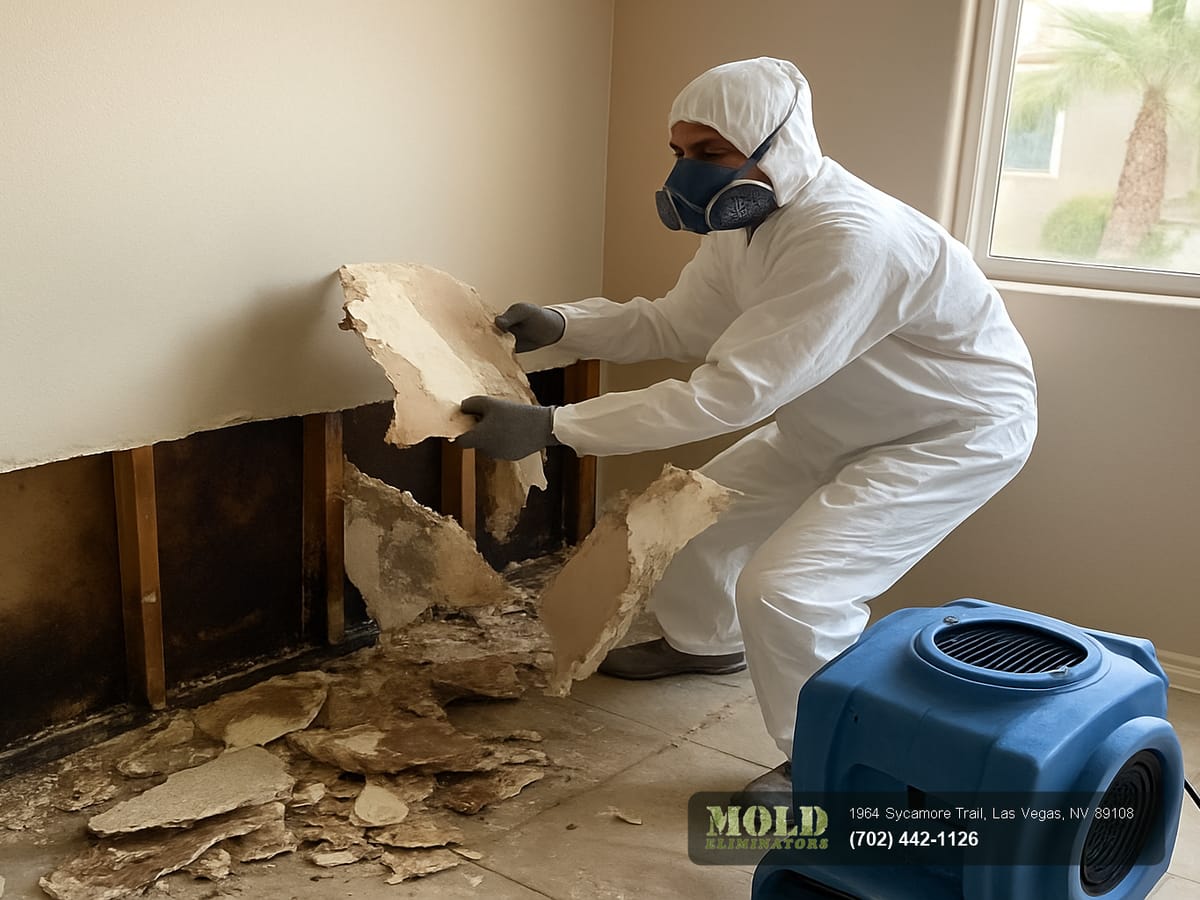
Because the migration is hidden, the visible stain is a poor guide to the real boundary of the loss. Proper structural drying depends on mapping the full moisture footprint with meters and thermal imaging before any equipment is set, not on guessing from the water line on a wall. Skip that step and moisture left inside a wall cavity becomes the seed for mold remediation weeks later, in a unit that thought it was never affected.
Need help now?
Talk to a Las Vegas expert
In-house certified crews. One-hour emergency response across the valley, 24/7.
Why the First Hour Matters More in a Secured Tower
Every water loss is a race against absorption, but high-rises add friction that ground-level properties do not have. Class of water and the time it sits both determine whether a floor can be dried in place or has to be removed, and a tower makes time harder to control.
Access is the first obstacle. A restoration crew cannot simply pull up and walk in. They need key-fob access, a freight elevator reservation, a certificate of insurance on file with building management, and often a security escort. If those arrangements are not already understood, the clock keeps running while the water keeps spreading. Our 24/7 emergency response team is built around this reality: we coordinate building access and equipment staging while we are still en route, so set-up starts the moment we clear security rather than an hour after.
The second obstacle is shared infrastructure. Shutting off the source may mean isolating a riser that serves a stack of units, which requires a building engineer, not a unit owner. The faster a qualified crew reaches the right valve, the smaller the loss. Minutes here translate directly into the difference between drying a single unit and gutting four.
We bring all certified W-2 technicians, never subcontractors, which matters in a secured building where a vetted, badged, consistent crew is far easier for management to admit and trust than a rotating cast of day labor.
Why Desert High-Rise Construction Behaves Differently
 High-rise tower against the Las Vegas desert skyline
People assume the desert is forgiving about water because the air is so dry. Inside a sealed, air-conditioned tower, the opposite is often true, and the construction itself changes how damage develops.
Las Vegas high-rises are built almost entirely of post-tension concrete: dense slabs with steel cables running through them. Concrete holds water far longer than the wood framing of a suburban home, and it releases that moisture slowly into adjacent materials for days. A loss that would air-dry quickly in a stick-built house can keep feeding a wall cavity in a concrete tower long after the surface looks dry.
The desert climate compounds this in less obvious ways. Tower envelopes are sealed tight against summer heat, so there is little natural air exchange to carry interior moisture away. The extreme temperature gap between 110-degree exterior air and a chilled interior drives condensation inside wall assemblies and around HVAC risers, which means some high-rise moisture problems are not plumbing leaks at all. They are building-physics problems that mimic leaks.
This is also why the dry outside air gives false comfort. A surface can read dry while the slab beneath it stays saturated. We monitor moisture daily over the full 24–72 hour drying window rather than trusting a single reading, because in concrete the number on day one tells you very little about day three. Where standing water and humidity persist in a sealed envelope, the same conditions that invite hidden mold growth take hold quickly, which is why we pair drying with a free mold inspection whenever the moisture history justifies it.
Working With Building Management and the HOA
In a condo tower, no water loss is purely private. The HOA governs the common elements, the building engineer controls the systems, and your neighbors are stakeholders the moment water crosses a wall. Restoration that ignores those relationships creates conflict; restoration that respects them resolves the event faster.
The dividing line that matters most is the boundary between unit and common element. As a general rule, the HOA is responsible for the structure, risers, and shared assemblies, while the owner is responsible for finishes and contents inside the unit, but the governing documents control and they vary building to building. When a loss spans both, two insurance policies and two responsible parties are involved at once, and the question of who pays for what is decided largely by the quality of the documentation.
We work as a neutral, technical party in that conversation. We coordinate with building engineers on source isolation, give management a clear scope and timeline they can share with the board, and keep affected owners informed without overstating or understating the loss. Our anti-upsell posture helps here: when a unit does not need intervention, we say so in writing, which protects owners from unnecessary cost and protects the HOA from disputes. That candor is part of why building managers call us back.
Documentation That Holds Up When Liability Is Shared
In a single-family home, documentation supports one insurance claim. In a tower, it allocates responsibility across owners, the HOA, and multiple carriers, and it may be read by an adjuster, a property manager, and eventually an attorney. Thin documentation is how a straightforward loss turns into a year-long dispute.
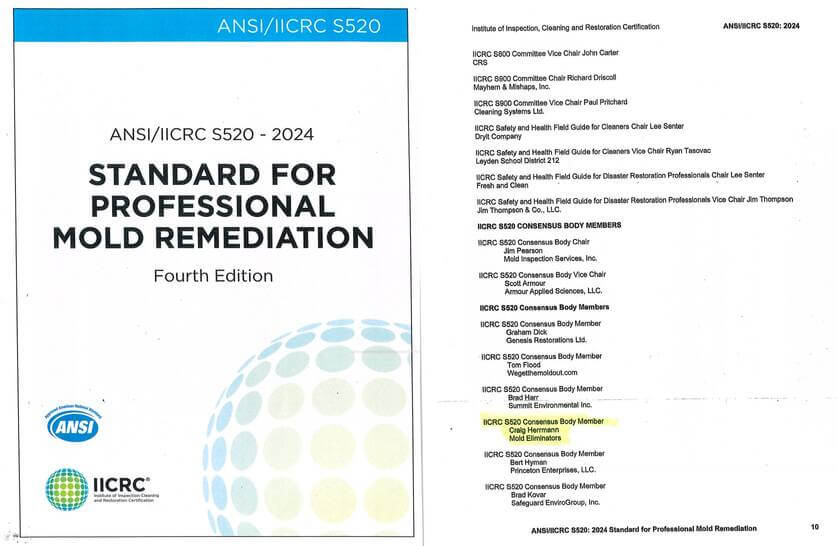
Our process is built around defensible records because our owner, Craig Herrmann, is one of three IICRC Master Certified Flood Experts in Southern Nevada and a co-author of the ANSI/IICRC S520 standard. The same rigor that goes into a standard goes into the file we hand your stakeholders.
- Source and scope. We identify and photograph the origin, then map every affected unit and assembly so the boundary of the loss is documented before drying begins, not reconstructed afterward.
- Moisture mapping. Meter readings and thermal images record the full extent across unit lines, including the hidden migration into adjacent and lower units.
- Daily drying logs. Equipment placement, ambient conditions, and moisture readings are logged each day across the drying window, creating a timeline that proves the loss was handled to standard.
- Independent lab verification. When mold is a concern, we use third-party labs rather than grading our own work, so results stand up to scrutiny from any party.
- Final clearance. A documented dry standard and, where relevant, clearance testing close the file with evidence every stakeholder can rely on.
Because we never grade our own testing, the record is credible to every party at the table. That neutrality is what keeps a shared-liability loss from becoming a standoff. We serve owners and managers across the valley, and you can review our full coverage on our service areas page.
Frequently Asked Questions
- Water is coming through my ceiling from the unit above. What should I do first?
- Contain what you safely can with towels or a container, move valuables out of the path, and notify building management immediately so they can reach the source and isolate the riser if needed. Then call a restoration team. The faster the source stops and drying begins, the smaller your loss. Our 24/7 emergency response coordinates building access while en route so set-up starts the moment we clear security.
- Who pays, me, my neighbor, or the HOA?
- It depends on where the water originated and what your governing documents say about unit versus common-element responsibility. Often more than one party and policy is involved. This is exactly why thorough documentation matters, and why neutral records from a credentialed firm protect everyone. See how we approach shared-liability losses across our water damage restoration work.
- The water looks dry already. Do I still need anything done?
- A dry surface in a concrete tower frequently hides a saturated slab or wall cavity. Without moisture verification you cannot know the loss is truly resolved, and trapped moisture is the leading cause of mold weeks later. If the history justifies it, we pair drying with a free mold inspection so you are not guessing.
- Do you handle the building’s commercial spaces too, not just my condo?
- Yes. Lobbies, leasing offices, and tenant floors fall under our commercial water damage response, using the same vertical-building methods, and where moisture lingers we move into mold remediation with independent lab verification.
High-Rise Water Loss?
Get a documented response built for towers.
Free inspection for owners and property managers. Certified W-2 crews, neutral third-party testing, and records every stakeholder can trust. We tell you the truth, even when that means you do not need us.