High-Rise Mold Remediation in Las Vegas
Mold cluster · High-rise condos
Mold in a Las Vegas high-rise is a different animal than mold in a single-family home. The walls you share are someone else’s ceiling, the air you breathe was conditioned three floors down, and the spores that start in one unit do not respect the property line on a floor plan. Treating a tower the way you would treat a tract house is how a small leak becomes a building-wide problem.
If you own, manage, or sit on the board of a condo tower near the Strip, in Summerlin, or downtown, this page explains how mold actually moves through a high-rise, why containment and negative air are non-negotiable in an occupied building, and how independent clearance protects you from the liability questions that follow every multi-unit job. It is part of our broader work on mold remediation, focused here on the realities of vertical, shared-system living.
The short version: high-rise remediation is less about scrubbing a wall and more about controlling pressure, sequencing access around residents, and proving with third-party data that the air is clean before anyone moves back in. That is the work. Everything below is how we do it without turning your building into a construction zone.
Why high-rise mold behaves differently
In a detached home, a mold problem usually stays where the water went. In a high-rise, the building itself becomes the transport system. Shared plenums, stacked plumbing chases, common return-air paths, and pressure differences between floors all give spores routes that simply do not exist in a house. A leak in a 14th-floor bathroom can surface as a musty smell in a 12th-floor bedroom, and the resident who calls you first is often not the one with the source.
Three forces drive this. First, stack effect: warm air rises through a tall building and pulls air, and whatever it carries, upward through every gap in the envelope. Second, HVAC distribution: many towers condition multiple units off shared systems, so contamination near a return can seed several spaces at once. Third, construction sequencing: post-tension slabs, demising walls, and tight mechanical shafts hide moisture for weeks before anyone sees a stain.
Las Vegas adds its own wrinkles. Slab leaks under a podium level, condensation where over-cooled air meets desert heat at the curtain wall, and aging risers in towers built during the mid-2000s boom all create the kind of slow, hidden wetting that mold loves. The dry climate fools people into thinking mold is a coastal problem. It is not. It is a moisture problem, and high-rises manufacture moisture in places no one is looking.
Need help now?
Talk to a Las Vegas expert
In-house certified crews. One-hour emergency response across the valley, 24/7.
How HVAC drives spread between units
The single most underrated factor in tower mold is the air-handling system. When a unit’s wall cavity or vanity gets wet and stays wet, the colony that grows there does not need an open door to reach a neighbor. It needs a pressure path, and a shared or leaky duct system provides one. Air pulled across contaminated material picks up spores and fine fragments, then delivers them wherever that return loop terminates.
This is why we treat the mechanical system as part of the investigation, not an afterthought. If a return plenum or a section of ductwork has been exposed to mold growth, cleaning the visible drywall accomplishes very little: the system will reseed the space the moment it cycles on. Our HVAC-aware approach to air duct and HVAC mold maps the airflow first, isolates affected runs, and decides what can be cleaned in place versus what has to come out.
In occupied towers, you also cannot simply shut the whole system down. Residents need conditioned air in the desert, and management cannot black out comfort for an entire stack to fix two units. So the work becomes a balancing act: isolate the affected zone, keep the rest of the building comfortable, and prevent the act of remediation from pushing contamination into clean areas through the very ducts you are trying to protect.
Containment and negative air in an occupied tower
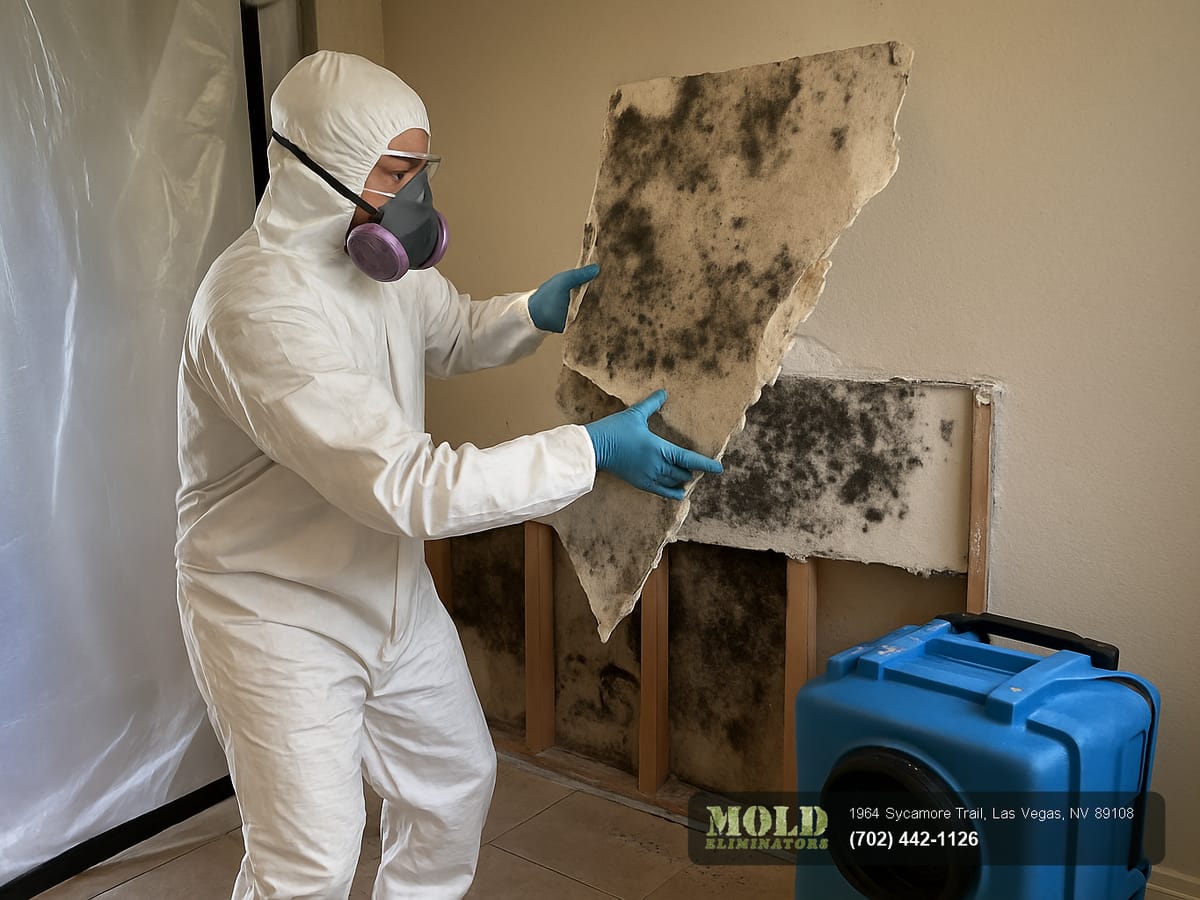
Containment is the heart of doing this right. The principle is simple: the work area must be sealed and held at lower air pressure than the surrounding building, so air flows into the contained zone and never out of it. Achieve that, and spores stay where the work is. Fail at it, and you have spread the problem to the hallway, the elevator lobby, and the units next door.
We build physical barriers, run HEPA-filtered air scrubbers to create negative pressure, and exhaust filtered air through a controlled path. In a single-family home this is straightforward. In a 30-story building with residents coming and going, shared corridors, and a management company that needs the lobby presentable for buyers, it is a logistics problem as much as a technical one. The containment has to be strong enough to hold pressure and unobtrusive enough that life in the building continues.
A few realities specific to towers:
- Corridor pressure matters. Hallways in high-rises are often pressurized for fire-life-safety reasons. Our containment has to coexist with those systems, not fight them.
- Elevator and stairwell paths leak air. We plan routes and seal transitions so the building’s own vertical shafts do not undo our pressure boundary.
- Filtered exhaust needs a destination. Venting negative-air machines in a sealed tower takes planning that a house never requires.
This is exactly the discipline that separates a real remediation firm from a drywall crew with a shop vac. The methods are codified in the ANSI/IICRC S520 standard, and they are not optional when occupied units are on the other side of the wall. For owners weighing scope across an entire building, our commercial mold remediation process applies the same containment logic at building scale.
Working around residents and management
 High-rise residential corridor leading to individual condo units
A tower is somebody’s home, and often dozens of somebodies. The remediation that succeeds technically but turns residents against the board has still partly failed. So we treat the human side of the job as a first-class part of the plan, not a courtesy.
That means coordinating access windows with management, giving residents clear notice, keeping noise and dust controlled during occupied hours, and protecting common areas with floor and surface protection from the freight elevator to the work zone. It means one point of contact who answers the board’s questions in plain language instead of leaving a property manager to translate.
Because every technician on our crew is a certified W-2 employee and not a rotating cast of subcontractors, the same vetted people are in your building day after day. For an HOA or condo board responsible for residents’ safety and the building’s reputation, that accountability is not a nicety. It is the difference between a controlled professional operation and strangers with badges riding your elevators.
We also keep documentation tight throughout, because in a multi-unit building the question of who pays and who was responsible almost always comes up. Clear records of the source, the affected area, the containment used, and the verification results give boards and managers what they need when those conversations happen. When timing is critical and a unit is actively wet, our 24/7 emergency response gets containment up fast, before a contained problem becomes a distributed one.
The remediation process, step by step
Here is how a high-rise job runs, from the first call to move-back. The sequence rarely changes; the scope does.
- Assessment and air mapping. We find the moisture source, define the affected area, and map how the HVAC system and building pressures could move contamination. Nothing gets demolished until we understand where the air goes.
- Containment and negative air. We seal the work zone, establish negative pressure with HEPA air scrubbers, and protect the access path through common areas. The rest of the building stays comfortable and clean.
- Removal under controlled conditions. Contaminated materials come out inside containment, bagged and routed out without traveling through occupied space. Affected HVAC components are cleaned or removed per the airflow map.
- Drying and source correction. We dry the structure to documented targets and make sure the underlying moisture problem is actually fixed, so the mold does not return after we leave.
- Cleaning and HEPA detailing. Surfaces and contents in the zone are HEPA-vacuumed and wiped, returning the space to a normal fungal ecology rather than a cleaned-looking but still-contaminated one.
- Independent clearance. A third-party lab verifies the air and surfaces meet clearance criteria before containment comes down and residents return.
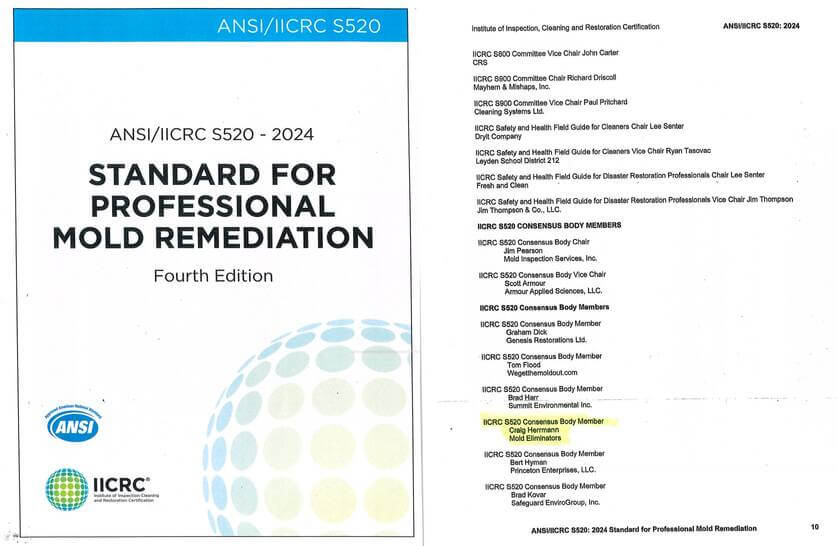
This process follows the S520 standard that our owner, Craig Herrmann, helped author as a co-author of the 4th Edition. When the people doing the work measure it against the rulebook one of them literally wrote, you are not taking anyone’s word for “good enough.” You are measuring against the published floor for the entire industry.
Independent clearance and the liability question
In a multi-unit building, “we cleaned it” is not an answer the board can defend. The questions that follow remediation are about liability: Is the air actually safe? Can a returning resident claim the work was inadequate? If a sale falls through over a disclosure, who is exposed? Clearance testing is how you replace opinion with evidence.
We use accredited third-party labs that have no financial stake in the result. We profit from fixing your problem, not from declaring it fixed, so the lab that signs off does not work for us. That separation is the entire point. Independent clearance testing gives owners, boards, and managers a defensible, documented record that the remediated units met objective criteria before anyone moved back.
For high-rise boards, that document is worth as much as the remediation itself. It closes the loop on the responsibility question, supports insurance and disclosure conversations, and protects the building’s reputation with the residents and buyers who are watching how the situation was handled.
Craig’s high-rise expertise
Mold Eliminators is led by Craig Herrmann, who has worked Las Vegas properties since 1996 and on more than 255 of them. He is an IICRC Master Certified Flood Expert, one of three in Southern Nevada, an IICRC board member, and a co-author of the ANSI/IICRC S520 standard, the 4th Edition published in 2024.
That background matters most in vertical, shared-system buildings, where the margin for error is thin and the consequences of getting containment or clearance wrong land on every unit at once. Towers near the Strip and across the valley are not edge cases for us; they are exactly the kind of construction Craig has spent a career understanding, from podium slab leaks to curtain-wall condensation to the shared mechanical systems that move air and trouble between floors.
And the anti-upsell promise holds here too. If your “mold” turns out to be a stain, a soap residue, or a one-off leak that needs drying rather than a full remediation, we will tell you, and we will not invent a tower-wide project to justify a truck roll. That honesty is the whole reputation.
Frequently asked questions
- Can you remediate one unit without disrupting the whole building?
- Yes. That is the core of the work: containment and negative air isolate the affected unit so the rest of the tower stays comfortable, conditioned, and clean. The broader principles are the same ones we apply in mold remediation across every property type, scaled to the constraints of an occupied tower.
- How does mold spread between condo units?
- Most often through shared HVAC paths, stacked plumbing chases, and pressure differences that pull spore-laden air from one space to another. Addressing the HVAC and duct system is usually essential, because cleaning drywall alone will not stop a system that keeps reseeding the space.
- Who is responsible when mold crosses unit lines in a high-rise?
- That depends on the source and the governing documents, which is exactly why documentation and independent clearance testing matter so much. A clear, lab-verified record of source, scope, and results gives boards and managers what they need for the responsibility and insurance conversations that follow.
- Do you offer a free inspection for condo boards and property managers?
- Yes. We provide a free inspection for homeowners and property owners, and if the problem turns out to be smaller than feared, we will say so. You can request a free inspection or reach us directly through our contact page.
- How fast can you respond to an active leak in an occupied tower?
- Fast response is critical in a high-rise, because a contained problem becomes a distributed one quickly. Our 24/7 emergency team gets containment established and the source stopped before contamination travels through the building’s shared systems.
High-rise condo, HOA, or property management
Get a clear read on your tower, with no pressure to buy work you don’t need
We will inspect the issue, explain exactly what is happening, and back the result with independent lab verification. If you don’t need a full remediation, we’ll tell you that too.