Basement & Lower-Level Flooding Cleanup in Las Vegas
Below-grade and lower-level water damage
Standing water in a basement, sunken living room, or ground-floor garage does not wait for you to decide what to do. In a Las Vegas climate where evaporation is fast but trapped moisture is faster, the clock that matters is not the one on your wall. It is the 24 to 48 hour window before clean water turns dirty and a wet floor turns into a mold problem.
True basements are rare in the Las Vegas Valley. Most homes here sit on slab-on-grade foundations because of caliche soil and a high water table in pockets near washes. But “rare” is not “never,” and below-grade flooding is far more common than the word basement suggests. Lower-level flooding shows up in split-level and tri-level homes near Summerlin and the foothills, in sunken family rooms and conversation pits from the 1970s and 80s, in walkout daylight basements built into sloped Henderson lots, in elevator pits and parking structures under high-rise condos near the Strip, and in any ground floor where water has nowhere lower to go. Wherever the floor is the lowest point in the building, gravity makes it the collection point for every gallon that gets loose.
This page explains how lower-level flooding behaves, why it escalates so quickly into a microbial problem, and the order of operations a certified crew follows to stop the damage. Below-grade flooding is one branch of broader water damage restoration, and the principles that govern it, water categories, drying science, and documented results, are the same principles Craig Herrmann measures every job against.
Why lower levels flood, and why it is worse down there
The reason below-grade and lower-level spaces are the hardest to dry is simple physics. Water flows downhill and pools at the lowest point, where it sits in contact with flooring, baseboards, and the bottom course of drywall for the longest time. Heat rises, which means the coolest, dampest air in the house collects exactly where the water already is. And these spaces are usually the least ventilated rooms in the home, so humidity has nowhere to escape.
Common sources we see in the valley:
- Slab leaks and supply-line failures. A pinhole in a pressurized copper line under the slab can release hundreds of gallons before anyone notices, and it surfaces at the lowest floor.
- Water heater and appliance failures. A ruptured tank or a failed washing-machine hose in a lower-level utility room floods fast.
- Monsoon and storm intrusion. Las Vegas gets most of its rain in violent summer bursts. Sheet flow finds window wells, walkout doors, and grading flaws and runs straight downhill.
- Sewer backups. A blocked main can push contaminated water up through the lowest drain in the house, which is almost always on the lower level.
- High-rise and subterranean structures. Elevator pits, parking garages, and mechanical rooms below grade collect water from plumbing risers and intrusion across many units.
The deeper problem is what you cannot see. Water wicks upward into drywall, climbs through baseboards, slips under floating floors, and migrates along the bottom plate of framing. By the time the visible puddle is gone, moisture has often traveled several feet up the wall and several feet out under the flooring. That hidden moisture is what feeds mold, and it is why structural drying done with meters and documentation matters far more than a wet-vac and a box fan.
 Standing water pooled in a lower-level room being assessed with moisture equipment
Need help now?
Talk to a Las Vegas expert
In-house certified crews. One-hour emergency response across the valley, 24/7.
Water category: the single most important decision
Before a single fan turns on, a flooded lower level has to be classified. The S520 and S500 standards sort water into three categories, and the category dictates everything that follows, what can be saved, what must be removed, and how the space is treated. Craig Herrmann co-authored the ANSI/IICRC S520 standard, so this is not a judgment call we improvise. It is the rulebook, applied the same way every time.
Category 1: Clean water
From a sanitary source, a supply line, a water heater, or rainwater that has not picked up contaminants. Recoverable if dried fast. But Category 1 does not stay clean. Sitting on a dirty floor at room temperature, it degrades to Category 2 within roughly 24 to 48 hours.
Category 2: Gray water
Significant contamination, enough to cause illness if contacted. Washing-machine discharge, dishwasher overflow, or aged Category 1 water. Porous materials that absorbed it usually have to go. Surfaces are cleaned and disinfected.
Category 3: Black water
Grossly contaminated, sewage, ground-surface flood water, or any water carrying pathogens. This is removal and disinfection territory, not drying-in-place. Specialized sewage cleanup protocols apply, with containment and protective equipment.
The category is also a moving target, which is the whole reason speed matters. A burst supply line is Category 1 when it happens and Category 3 a few days later if it sits, soaks into carpet pad, and starts to grow microbial colonies. The faster a crew arrives, the more of your home stays in the recoverable category and the less has to be torn out. This is the same time-sensitive logic behind any flood restoration job, only intensified, because lower levels hold water longer than anywhere else in the house.
How standing water becomes a mold problem

People assume that because Las Vegas is a desert, mold is not a real risk here. Inside a flooded lower level, the desert outside is irrelevant. Mold needs three things: moisture, an organic food source, and time. A wet basement provides all three at once. The drywall paper, the wood framing, the carpet, the cardboard boxes in storage, all of it is food. The trapped, poorly ventilated air holds the humidity. And below-grade spaces stay damp long after the rest of the house feels dry.
The timeline is unforgiving. Mold can begin colonizing wet organic material in as little as 24 to 48 hours. That is the same window in which clean water degrades to gray. So the two clocks run together: every hour the water sits, the contamination level rises and the odds of microbial growth climb. By 72 hours, untreated, you are frequently no longer looking at a water job. You are looking at a remediation job.
This is why drying is not optional or cosmetic. Proper structural drying, returning every affected material to its dry standard and proving it with moisture readings, is what actually stops mold from taking hold. When growth has already started, the work crosses into mold remediation, with containment, negative-air, and HEPA filtration to keep spores from spreading to the rest of the home. The cheapest way to avoid that second job is to win the first one quickly.
A musty smell after a flood is not a minor annoyance. It is microbial volatile organic compounds, the gases mold gives off, telling you something is growing where you cannot see it. If you smell it, the time for fans alone has passed.
The cleanup process, step by step
Every Mold Eliminators crew is made up of W-2 certified employees, never subcontractors, and the work follows the same documented sequence whether it is a flooded conversation pit in Spring Valley or a parking-garage pit downtown.
- Emergency response and safety. A crew is dispatched fast, typically within one hour, 24/7. Power to affected circuits is shut down, and the water category is assessed before anyone wades in. Our 24/7 emergency response exists precisely because the first hours decide how big the job becomes.
- Water extraction. Truck-mounted and portable extractors pull standing water out fast. In below-grade spaces this often means specialized pumps for water that gravity will not drain on its own.
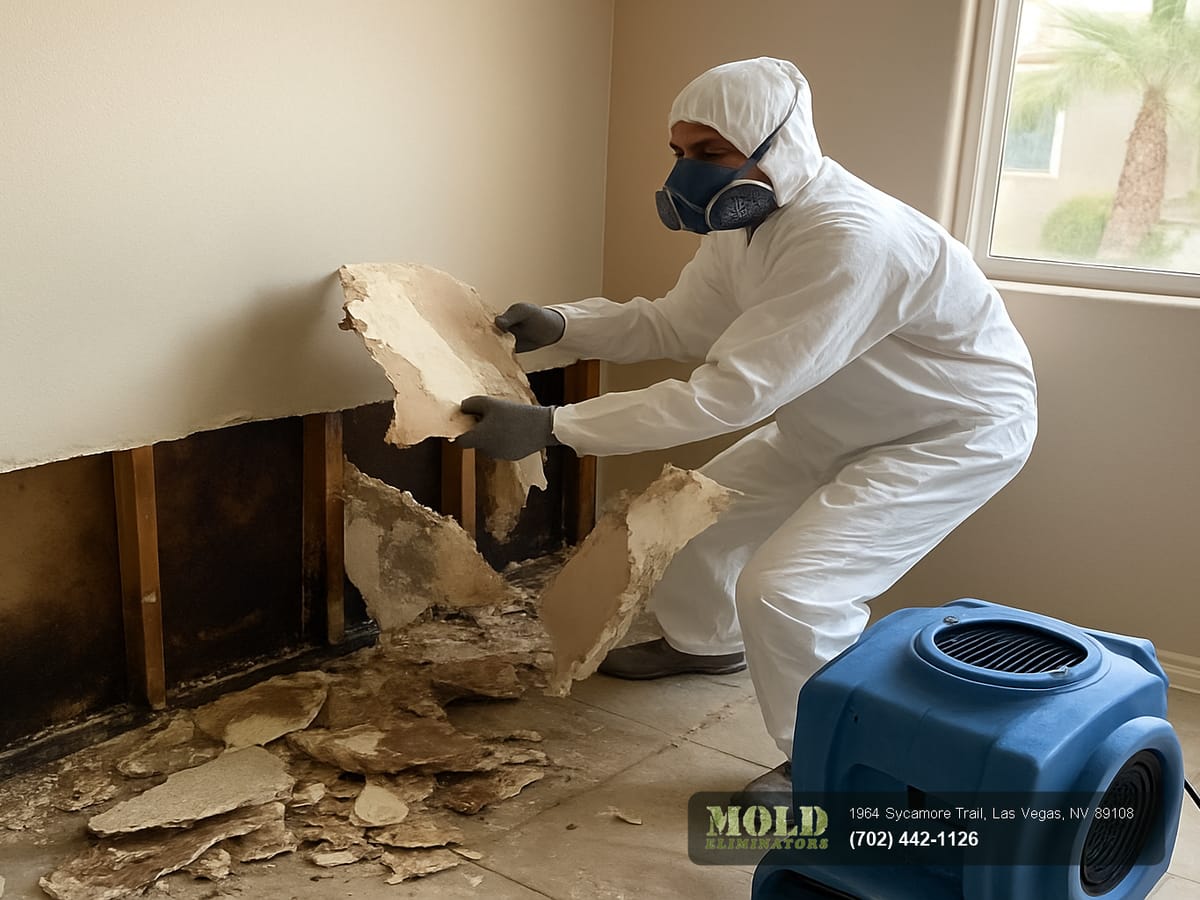
- Material assessment and selective removal. Based on category and saturation, we determine what dries in place and what must be removed. Carpet pad, soaked drywall, and ruined insulation come out. We remove what the standard requires, not more, and we tell you why.
- Structural drying. Air movers, commercial dehumidifiers, and where needed negative-air containment bring the structure back to its documented dry standard. We map moisture with meters daily rather than guessing by feel.
- Monitoring and documentation. Daily moisture logs track progress until every material reads dry. This record is what protects you with insurers and what proves the job is actually finished.
- Verification. When mold was involved, an independent third-party lab confirms the space is clean. We do not grade our own homework.
That last point is the heart of how we work. The labs that verify our results are accredited and independent, with no incentive to call a job done early or to invent problems that are not there. We offer property owners a free inspection up front because the honest version of this business profits from solving the problem, not from inflating it. If you want lab-backed peace of mind after the water is gone, our free mold inspection tells you the truth either way.
Preventing the next lower-level flood
No amount of prevention makes a home flood-proof, especially during a hard monsoon. But these habits shift the odds, and they shorten the response time when something does fail. We serve homeowners, property managers, and HOA boards across the valley, and our service areas cover Las Vegas, North Las Vegas, Henderson, Summerlin, Spring Valley, and Paradise.
The standard behind the work
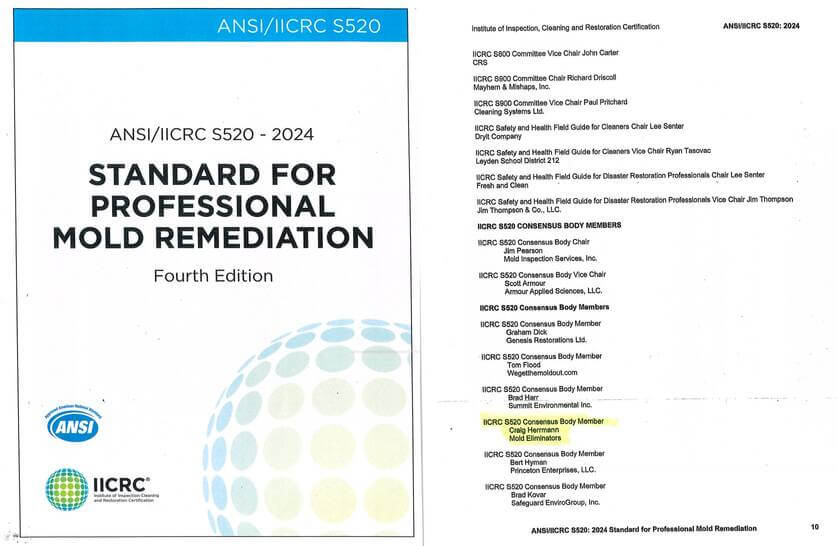
What separates a real restoration job from a wet-vac-and-hope job is whether anyone is measuring against a standard. The ANSI/IICRC S520 is the national standard for professional mold remediation, and Craig Herrmann is one of its co-authors, on the writing committee for the 4th Edition published in 2024. He is also an IICRC Master Certified flood expert, one of only three in Southern Nevada, and has worked more than 255 Las Vegas properties since 1996.
That matters to you in a flooded lower level for a concrete reason. The category of water, the dry standard for each material, the conditions under which something must be removed rather than dried, these are not opinions. They are written rules, and the work is judged against them and verified by an independent lab. You can read more about the credentials and the standard behind every job on Craig Herrmann’s page.
- Are basements even common in Las Vegas?
- True basements are uncommon here because of slab-on-grade construction, but below-grade and lower-level flooding is not. Sunken rooms, split-level and walkout designs, ground floors, elevator pits, and subterranean parking and mechanical rooms all collect water at the lowest point, and they all behave like a flooded basement when they do.
- How fast do I need to act after a lower-level flood?
- Treat it as urgent. Clean water can degrade to contaminated water within 24 to 48 hours, and mold can begin growing on wet organic material in the same window. The faster a crew extracts and dries, the more of your home stays recoverable. This is why our crews aim to respond within one hour, 24/7.
- Can I just dry it out myself with fans?
- Surface water you can see is only part of the problem. Moisture wicks several feet up walls and out under flooring where household fans cannot reach it, and without meters you cannot confirm a material is actually dry. Incomplete drying is the most common reason mold returns after a flood. Professional structural drying dries the structure, not just the air, and documents it.
- What if there is already a musty smell?
- A musty odor means microbial growth is likely already underway somewhere you cannot see. At that point the job has usually moved beyond drying into mold remediation, and an inspection with lab testing is the right next step to find the source and confirm the extent.
- Will you tell me if I do not actually need remediation?
- Yes. The free inspection exists so you find out the truth before you spend anything. We use independent third-party labs with no stake in selling you work, and if drying alone solves it, that is what we will say.
Standing water in a lower level? Do not wait it out.
A free inspection now is far cheaper than a remediation later. We will assess the water category, find the hidden moisture, and tell you the honest scope, with no upsell.