Roof Leak Water Damage in Las Vegas
Water Damage Knowledge
A roof leak is rarely a one-time drip. In Las Vegas, where flat and tile roofs bake under relentless sun for ten months a year and then take a beating from a few violent monsoon storms, a small failure overhead can quietly soak your attic insulation, saturate the ceiling drywall, and feed mold long before a stain ever shows on the ceiling below.
This page explains how roof leaks turn into structural water damage in our desert climate, why the entry point is almost never where the stain appears, and what proper drying and mold prevention look like above your ceiling. Roof leaks are one of the most common triggers we see in residential water damage restoration work across the valley, and they are also one of the most misdiagnosed. Homeowners patch the drywall, repaint, and assume the problem is solved, while the real damage keeps spreading inside the attic.
Mold Eliminators has worked the inside of Las Vegas roofs and attics since 1996. Owner Craig Herrmann is an IICRC Master Certified Flood Expert and a co-author of the ANSI/IICRC S520 standard, the national reference for how water and mold damage are properly remediated. That background matters here, because a roof leak that is dried wrong, or only half dried, is the single most common reason mold comes back after a ceiling repair.
Why Las Vegas roofs leak: flat-roof and tile-roof failures
The two roof styles that dominate Las Vegas neighborhoods fail in very different ways, and understanding which one you have tells you a lot about where water is getting in.
Flat and low-slope roofs are common on older valley homes, mid-century builds, and many commercial properties. They rely on a membrane, modified bitumen, or a built-up coating to shed water. Our extreme UV exposure and 100-plus-degree summer surface temperatures cook those materials, causing them to crack, blister, and pull away at the seams. Because the roof is nearly level, water does not run off quickly. It pools, finds the smallest crack or a failed drain, and sits there until it works through to the deck below. Ponding after a monsoon downpour is the classic flat-roof failure mode.
Tile roofs look bulletproof, and the tiles themselves usually are. The weak point is the underlayment beneath them, the felt or synthetic membrane that actually keeps water out. Sun-baked tiles trap heat against that underlayment and it degrades over fifteen to twenty years. Cracked tiles, slipped tiles, and failed flashing around vents, skylights, and chimneys let wind-driven monsoon rain reach the brittle underlayment, and from there it runs along the decking to a low point that may be many feet from the actual breach.
Need help now?
Talk to a Las Vegas expert
In-house certified crews. One-hour emergency response across the valley, 24/7.
How monsoon storms turn a small flaw into real damage
For most of the year, a tiny roof defect does nothing. There is no rain to exploit it. Then the summer monsoon arrives, and in the span of an hour a Las Vegas storm can drop more water than the previous several months combined. That sudden, heavy load is what converts a hairline crack or a single slipped tile into an active leak.
Monsoon rain also comes sideways. Driven by strong gusts, water gets pushed up under tile edges and into wall and roof junctions that a gentle rain would never reach. This is why so many roof leaks first appear during or right after a storm and then seem to vanish, only to return with the next one. The roof is not leaking constantly. It is leaking under pressure, during a specific weather event, which makes the entry point genuinely hard to find on a dry, sunny day.
The damage that follows is rarely limited to the spot where water enters. Water follows gravity and the path of least resistance: down a rafter, across the top of a ceiling joist, along a run of ductwork, until it reaches a low point and drips. By the time it stains your ceiling, it has often traveled through insulation and across framing, wetting far more of the structure than the visible mark suggests.
Attic and ceiling water damage: the signs above and below
Because roof water lands in the attic first, the earliest and most reliable signs of trouble are above your living space, not in it. Many homeowners only call once the ceiling fails, by which point the attic has usually been wet for some time.
When the damage reaches the room below, it becomes a ceiling water damage problem with its own risks, from stained and sagging drywall to the danger of a saturated section collapsing. The ceiling is the symptom. The attic and the roof are the cause, and lasting repairs have to address all three.
Finding the entry point
 Tracing a roof leak path through the attic structure
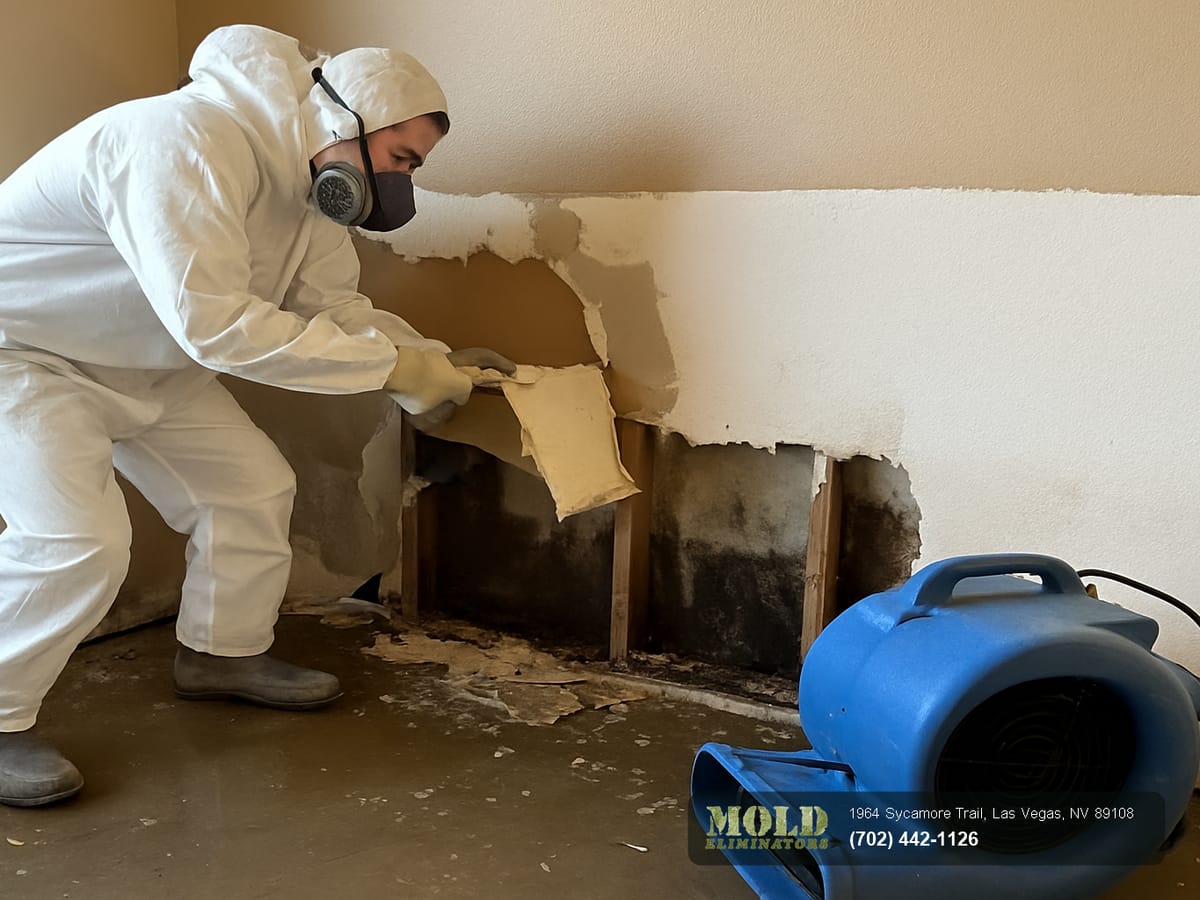
The hardest part of any roof leak is not the repair. It is finding where the water actually gets in. Because water travels before it drips, the wet ceiling stain is almost never directly below the breach. Chasing the stain leads to patching the wrong spot and a leak that returns with the next monsoon.
A proper investigation works backward from the damage. We trace water tracks on the underside of the decking and along the rafters, uphill toward the source. We map the moisture with meters and, where appropriate, thermal imaging that reveals the cool, damp footprint of a wet area inside walls and ceilings that looks dry to the eye. We check the usual suspects in valley roofs: failed flashing at vents, skylights, and chimneys, cracked or slipped tiles, degraded underlayment, ponding areas and failed drains on flat roofs, and gaps where the roof meets a wall.
The goal is to find every path the water takes, not just the first wet spot, before any drying or rebuilding begins. Skip this step and you are repairing the inside while the outside keeps letting water in.
Drying the attic and structure the right way
Once the roof is stabilized and the entry point is identified, the wet structure has to be dried completely before anything is closed back up. This is where most do-it-yourself fixes and many quick contractor patches fall short. Drywall dries on the surface in a day or two, but the framing, the decking, and any insulation trapped against them can stay wet for far longer. Sealing a damp attic is exactly how mold gets started.
Proper structural drying treats the attic and ceiling assembly as a system. The process follows the same principles we apply on every job, measured against the S520 standard that Craig Herrmann helped write.
- Stop the source and remove standing water. The roof breach is tarped or temporarily sealed so no new water enters, and any pooled water is extracted before drying begins.
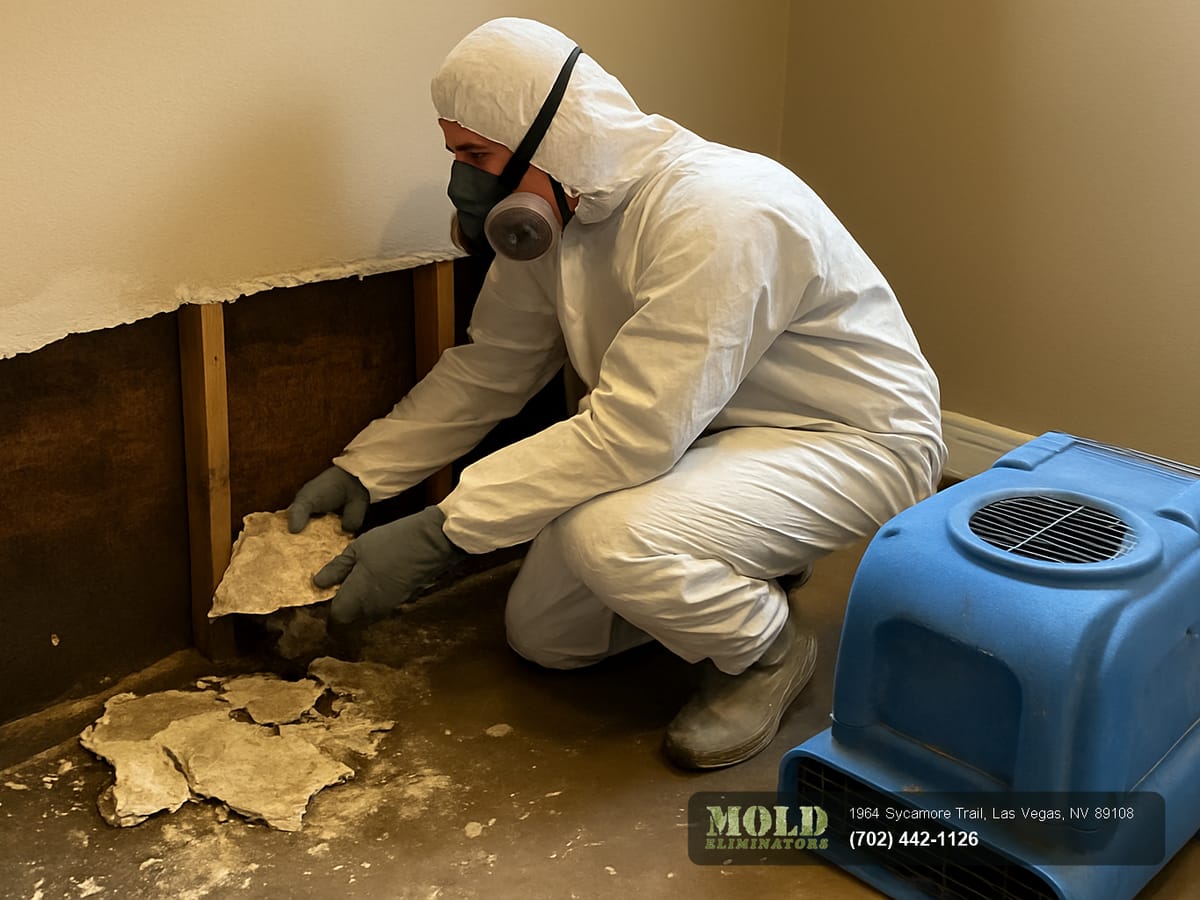
- Remove unsalvageable wet materials. Saturated insulation that has collapsed and water-damaged drywall that cannot be dried in place are removed. Holding onto soaked insulation only prolongs drying and traps moisture against the wood.
- Measure moisture in the structure. We take moisture readings in the framing, decking, and remaining drywall to establish how wet things really are and to set a dry target, not a guess.
- Apply controlled drying. Air movers and dehumidifiers are positioned to pull moisture out of the wood and the cavity, with airflow directed through the attic so the framing and decking actually reach a dry standard.
- Verify dryness before closing up. Drying is finished only when meter readings confirm the structure has returned to a normal, dry moisture content. We document those readings rather than assuming the job is done.
When a roof leak is part of a larger storm event or a major intrusion, the same disciplined approach carries into full water damage restoration, so the whole affected area is dried and verified, not just the obvious spot.
Preventing mold above the ceiling
Attics are an ideal place for mold to grow after a roof leak. They are warm, dark, often poorly ventilated, and full of the organic material mold feeds on: wood framing, paper-faced drywall, and dust-laden insulation. Add water and the only thing standing between a clean attic and a colony is how quickly and completely the area is dried.
The S520 standard is built around a simple principle: control the moisture and you control the mold. If the structure is dried to a verified standard within the right window, mold usually never gets a foothold. If a damp attic is sealed up and forgotten, growth can begin in a matter of days, hidden above the ceiling where no one looks until the smell or a stain finally gives it away. That hidden growth is exactly what drives attic mold removal jobs across the valley.
Where mold has already taken hold on rafters, decking, or insulation, the affected materials are addressed with proper containment so spores are not spread into the living space, following the same protocols we use for full mold remediation. The aim is always to fix the moisture problem first. Cleaning mold without correcting the leak that caused it simply resets the clock until the next storm.
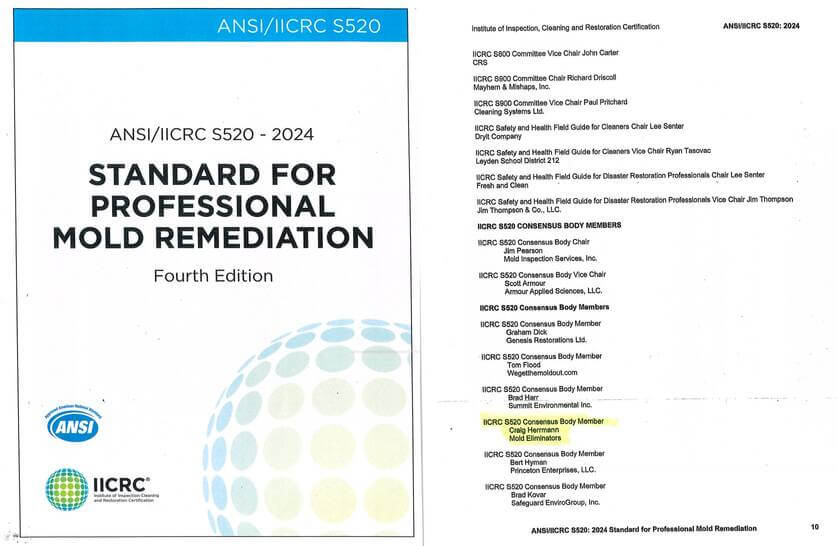
This is also why credentials matter on a roof leak. Drying decisions made against a real standard, by people who understand how moisture moves through a desert attic, are what keep a one-time leak from becoming a recurring mold problem. Craig Herrmann’s role as an S520 co-author means the same methods written into the national standard are the ones used on your home. You can read more about Craig Herrmann’s certifications and background and why that experience changes the outcome.
Frequently asked questions
- My ceiling stain dried out on its own. Is the problem gone?
- Not necessarily. A stain that stops growing usually means the leak is no longer active, often because the storm passed, not because the roof is fixed. The attic structure above it can still be wet, and the next monsoon can reopen the same path. A surface that looks dry can hide framing that is still saturated, which is why proper structural drying and moisture verification matter before you repaint.
- Why is the wet spot on my ceiling not under the roof leak?
- Because water travels. It enters at the roof breach, then runs down rafters and across framing until it reaches a low point and drips. The stain marks where it finally exits, not where it got in. Finding the true entry point is the whole reason a roof leak needs a real investigation rather than a guess and a patch.
- How fast can mold start growing in a wet attic?
- Given the warm, dark, food-rich conditions in a Las Vegas attic, mold can begin within a few days of the structure staying wet. That short window is why drying speed matters so much, and why sealing up a damp attic is the most common way roof leaks turn into attic mold problems.
- Do you fix the roof itself?
- Our focus is the water and mold damage inside the structure: finding the entry point, drying the attic and ceiling, and remediating any mold. We stabilize the breach so no new water enters during drying and coordinate so the roof repair and the interior restoration line up. The priority is that the structure is verified dry before anything is closed back up.
- Is the inspection really free?
- Yes. We offer a free inspection for homeowners and property owners so you understand exactly what is wet, where the water is coming from, and what the structure needs, with no obligation. For active leaks during a storm, our team is available around the clock for emergency response.
Next steps
Caught a roof leak? Find out what is wet before it becomes mold.
A roof leak is only as damaging as the water left behind in your attic. Mold Eliminators will trace the entry point, measure the moisture, and tell you exactly what the structure needs, no upsell, no scare tactics. If we find you do not need full remediation, we will tell you that too.
Schedule your free inspection or reach our team directly through our contact page.