Aspergillus Mold Explained
Mold Education
If you have ever spotted a patch of powdery green or grey growth on a windowsill, in a bathroom corner, or on a forgotten loaf of bread, there is a good chance you were looking at aspergillus. It is one of the most common molds on earth, it lives quietly in nearly every building, and most of the time it does no harm at all. The trouble starts when it finds steady moisture indoors and turns a small colony into a problem you can smell, see, and sometimes breathe.
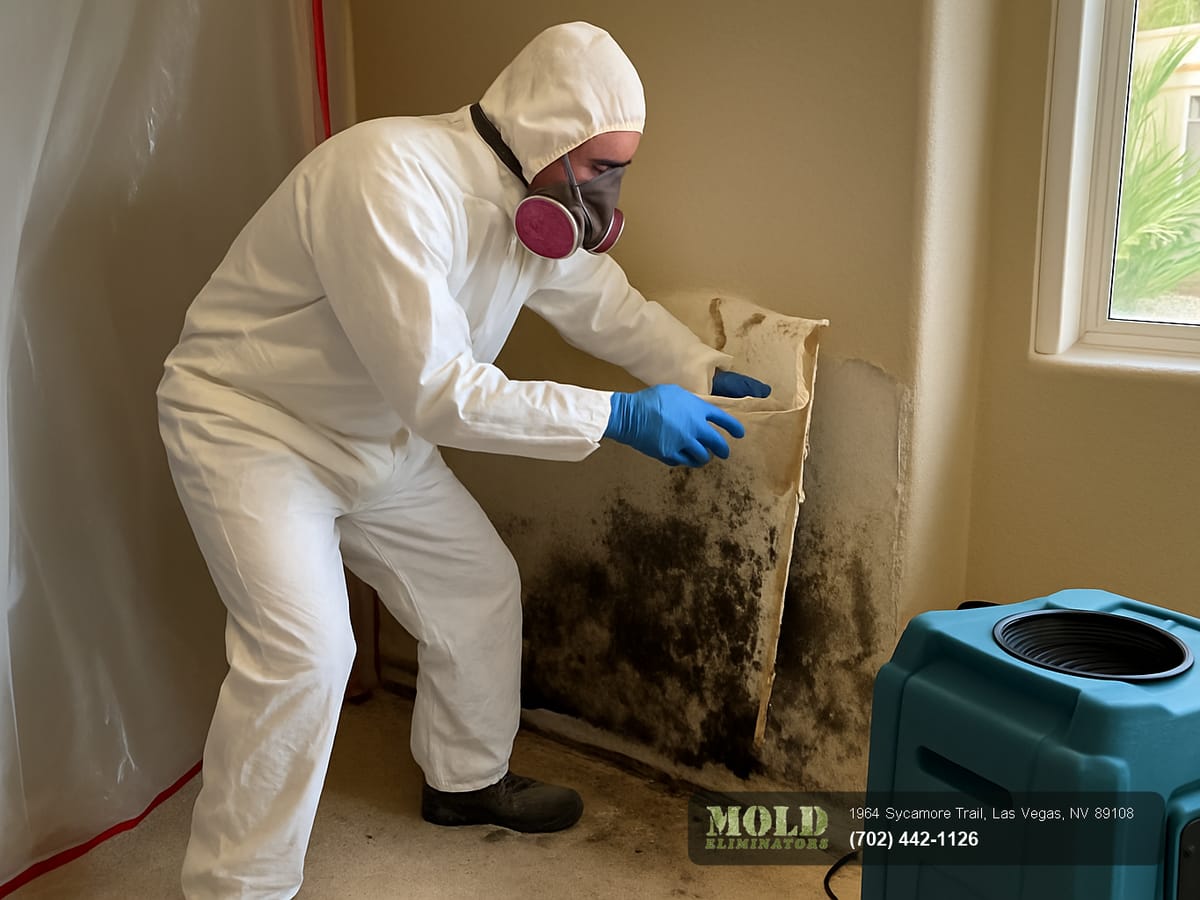
This guide explains what aspergillus mold actually is, where it tends to grow inside Las Vegas homes, how to recognize it, and why it matters for your health and your property. Our goal here is information, not alarm. Aspergillus is one of several molds we cover in our broader guide to the different types of indoor mold, and understanding it helps you make calm, factual decisions rather than fearful ones. If you already see growth and want it identified properly, a professional mold remediation assessment will tell you what you are dealing with and whether it needs action at all.
What aspergillus mold is
Aspergillus is a genus of mold, which means it is a large family rather than a single species. There are hundreds of species in the group, and a handful of them show up regularly in homes and workplaces. As a group it is what microbiologists call ubiquitous: its spores drift through outdoor and indoor air everywhere, all the time, in numbers far too small to see. That is normal. You breathe aspergillus spores most days of your life without any effect.
Like every mold, aspergillus is a decomposer. Its job in nature is to break down dead organic material, and it does that job well. The catch is that the inside of a building is full of organic material it is happy to feed on: paper-faced drywall, wood framing, cardboard, fabric, dust, and the food in your pantry. Give those materials moisture and a spore lands, germinates, and spreads into a visible colony. No moisture, no colony. That single fact is the key to understanding and controlling it.
One reason aspergillus gets attention is that some species produce mycotoxins under certain conditions, and a few are linked to respiratory illness in vulnerable people. It is not the cartoon villain that “toxic black mold” headlines suggest, but it is also not nothing. The honest position, and the one we take, is that identification matters more than panic. Knowing the species and the extent of growth tells you whether you have a wipe-it-down situation or a job that warrants containment.
Need help now?
Talk to a Las Vegas expert
In-house certified crews. One-hour emergency response across the valley, 24/7.
Where aspergillus grows indoors
Aspergillus is opportunistic. It does not need a flood to take hold, just persistent dampness and something organic to eat. In the desert that surprises people, because Las Vegas feels bone dry. The reality is that our homes create their own pockets of humidity, and aspergillus is very good at finding them.
The pattern in all of these is the same: a moisture source plus an organic surface plus time. That is why finding and fixing the water is always the first step, well before anyone scrubs a surface. If you suspect a hidden source you cannot locate, a measured inspection, the same diagnostic approach we use in full remediation work, traces the moisture before it traces the mold.
What aspergillus looks like
Aspergillus does not have one signature look, which is part of why you cannot identify it reliably by eye. Different species range across green, blue-green, grey, yellow, brown, and even black. A very common indoor species, Aspergillus niger, is dark and is sometimes mistaken for the so-called black mold, which is actually a different genus entirely.
The texture is usually the giveaway people notice first. Aspergillus colonies tend to look powdery, velvety, or fuzzy rather than slimy, often forming roughly circular patches that spread outward. Up close, the structure that gives the genus its name is a tiny stalk topped with a spherical head packed with spores, a shape an inspector can confirm under a microscope but you cannot see from across the room.
Color and texture can hint at aspergillus, but they cannot confirm a species, and the species matters when health is in question. This is exactly why a visual guess is never enough. Because so many molds overlap in appearance, proper identification means sampling, not staring. To learn how the broader family sorts out, our overview of common indoor molds compares aspergillus against the other genera you are likely to meet.
 Close-up of powdery green-grey aspergillus mold growth on a damp indoor surface
Why aspergillus matters
For most healthy people, ordinary exposure to aspergillus spores causes nothing at all. The body clears them routinely. The reason it earns serious attention is that the people most affected are the ones least able to fight it off, and a growing colony raises the spore count in your air well above the harmless background level.
In sensitive individuals, aspergillus exposure is associated with allergic reactions, asthma flare-ups, sinus irritation, and a persistent musty smell that signals active growth. In people with weakened immune systems, chronic lung conditions, or certain medical treatments, some aspergillus species can cause a more serious infection known as aspergillosis. That is the medical end of the spectrum, and it is a real reason not to let an indoor colony keep expanding. We are restorers, not physicians, so questions about symptoms belong with your doctor. What we can tell you is whether mold is present, how much, and what is feeding it.
There is a property side too. Because aspergillus feeds on building materials, an established colony is quietly digesting drywall, framing, or flooring while it grows. Left alone, a moisture-and-mold problem only widens, and what could have been a small corrected leak becomes a larger repair. Catching it early is cheaper, cleaner, and far less disruptive than catching it late.
The standards that govern how mold like this is contained and removed are not arbitrary. Our founder, Craig Herrmann, co-authored the ANSI/IICRC S520 standard that the industry follows, and that is the rulebook our crews work to on every job. You can read more about Craig and the S520 standard and why working to a documented protocol matters when health is on the line. The same principle applies to identification: we verify with an independent third-party lab rather than declaring a result on a technician’s say-so.
What to do if you think you have it
The calm, correct sequence is simple, and it starts with diagnosis rather than scrubbing.
- Do not disturb a large colony. Scrubbing or sanding dried mold sends a cloud of spores into the air. A small spot on a hard, non-porous surface can often be wiped down, but anything larger than a square foot or on porous material deserves a professional look first.
- Find the moisture. Mold is a symptom; water is the cause. Until the moisture source is identified and corrected, any cleanup is temporary. The colony will simply return.
- Get it identified. Because appearance cannot confirm a species, a proper assessment is the only way to know what you have and whether it needs containment. Our on-site free inspection for homeowners and property owners is the no-pressure way to find out exactly where you stand before any work begins.
- Remediate to standard, only if warranted. If removal is needed, it follows the S520 protocol: contain the area, remove what cannot be salvaged, clean what can, and verify the result. If it is not needed, we will tell you that too.
That last point is not a slogan. We would rather tell you that you do not need us than sell you a job that the data does not support. If lab analysis is warranted, samples go to an independent third-party lab and are billed at cost, and you get a documented answer either way. For the full picture of how containment and removal are done correctly, see our guide to professional mold remediation.
Aspergillus mold: common questions
- Is aspergillus the same as black mold?
- No. “Black mold” usually refers to a different genus, stachybotrys. Some aspergillus species, such as Aspergillus niger, do appear dark, which is why color alone cannot identify either one. The only reliable way to tell them apart is sampling and lab analysis, which is one reason our overview of indoor mold types stresses identification over appearance.
- Is aspergillus dangerous?
- For most healthy people, normal exposure causes no harm. It matters most for people with allergies, asthma, chronic lung disease, or weakened immune systems, where some species can trigger reactions or, rarely, an infection called aspergillosis. Medical questions belong with your doctor. Our role is to determine whether mold is present, how much, and what is feeding it.
- How do I know if the growth in my home is aspergillus?
- You cannot confirm it by sight, because many molds share the same powdery green, grey, or dark appearance. A proper assessment uses sampling and, when warranted, independent lab analysis to identify the species. A free inspection is the simplest way to get a factual answer before deciding anything.
- Why does aspergillus grow in a city as dry as Las Vegas?
- The outdoor desert is dry, but homes create their own humidity through swamp coolers, bathrooms, HVAC condensation, and slow hidden leaks. Aspergillus only needs a persistently damp organic surface, not a flood, so those interior pockets are exactly where it takes hold.
- Can I just clean it myself?
- A small spot on a hard surface can often be wiped down safely. Anything larger, anything on porous material like drywall, or anything tied to a hidden leak should be assessed first, because disturbing a colony releases spores and cleaning without fixing the moisture only buys a short delay before it returns.
Not sure what is growing in your home? Get a free inspection.
A calm, factual, no-pressure on-site inspection from an in-house certified crew. One-hour emergency response, 24/7, across the Las Vegas valley. We identify what you have, find what is feeding it, and tell you honestly whether you need us.