The 3 Categories of Water Damage Explained
Water Damage Guide
Not all water is created equal. A clean supply line that bursts behind a kitchen wall and a sewage backup that pushes up through a basement drain may both leave the same wet carpet, but they are two completely different jobs with two completely different safety protocols. The difference is what restoration professionals call the category of water, and it is the single most important fact about any water loss.
The three categories of water damage describe how contaminated the water is at the moment it touches your building, and that contamination level drives everything that happens next: what gear the crew wears, what materials can be dried and saved, what has to be removed and discarded, and how the result has to be verified before anyone calls the job finished. Get the category wrong and you either tear out salvageable materials you did not need to lose, or worse, you dry contaminated water into a wall and seal a biohazard inside your home. At Mold Eliminators we have classified and handled water losses across the Las Vegas valley since 1996, and the category is always the first thing we establish, because it decides the entire response. This guide explains the three categories in plain language, why the line between them moves over time, and what each one means for your property and your health.
Why the category drives the whole response
Before any equipment comes off the truck, a competent restorer answers one question: how clean is this water? That answer is not academic. It is written into the ANSI/IICRC S520 standard, the national rulebook for how water and microbial losses are handled, and it dictates the level of containment, the personal protective equipment the crew wears, and the line between what gets dried in place and what gets removed. Our founder Craig Herrmann helped co-author that S520 standard, so on a Mold Eliminators job the category is not a guess scribbled on a clipboard. It is a documented classification that the rest of the work is built on.
Here is why it matters so much. The category determines porosity decisions: a porous material like carpet padding or drywall that absorbs clean water can often be dried and saved, but the same material soaked in grossly contaminated water has to be removed because you cannot reliably decontaminate the inside of a porous structure. It determines worker safety: clean water needs basic precautions, while black water demands respirators, full containment, and biohazard handling. And it determines verification: a clean-water dry-out is verified with moisture readings, while a contaminated loss may require independent lab testing to confirm the area is genuinely safe again. Skip the classification step and every decision downstream is built on sand. That is why proper water damage restoration always begins with category, not with fans.
One more thing the category controls: the clock. Regardless of how clean the water starts out, a wet structure is on a timeline. Mold can begin colonizing wet organic materials within roughly 24–72 hours, and contaminated water degrades faster still. The category you start with is not always the category you finish with, which is the part most homeowners never hear, and it is where we turn next.
Need help now?
Talk to a Las Vegas expert
In-house certified crews. One-hour emergency response across the valley, 24/7.
Category 1: clean water
Category 1 is water that originates from a sanitary source and poses no substantial health risk at the moment it escapes. Think of a supply line that bursts under a sink, a failed water heater, an overflowing bathtub with the tap running clean, melting ice from an appliance, or rainwater that enters before it touches contamination. This is the best case, and it is also the most common call we get in Las Vegas, where slab leaks and aging copper lines are a fact of desert life.
Because the water itself is clean, the restoration goal is preservation. Most affected materials can be dried in place rather than demolished. The crew extracts the standing water, sets up dehumidification and air movement, maps the moisture with meters and thermal imaging, and dries every material back to a documented dry standard. Drywall, framing, carpet, and subfloor can frequently be saved if the response is fast and the drying is done to verified targets rather than guessed by touch.
The catch with Category 1 is that the word clean has an expiration date. The longer clean water sits, the more it picks up contaminants from the materials it soaks, dissolves into building dust and dirt, and feeds bacteria already present in the structure. Temperature, time, and what the water touches all push it toward the next category. In a hot Las Vegas summer, with warm cavities accelerating microbial growth, that clock runs faster. This is exactly why a clean-water loss is still treated as an emergency and not a scheduled errand.
IICRC water categories
The three categories of water damage
Category 1
Clean water
What it is: Water from a sanitary source that poses no substantial health risk when it escapes.
Example sources: Burst supply line under a sink, failed water heater, overflowing bathtub with the tap running clean, melting appliance ice, clean rainwater.
Handling: Preservation. Extract, dry in place with dehumidification and air movement, and verify with moisture readings. Most materials can be saved if the response is fast.
Category 2
Gray water
What it is: Significantly contaminated water that can cause discomfort or illness if a person is exposed to it or ingests it.
Example sources: Dishwasher or washing machine discharge, toilet overflow with urine but no solids, failed sump pump, broken aquarium, punctured waterbed.
Handling: Gloves, eye and respiratory protection, contained area. Non-porous surfaces are cleaned and disinfected; absorbed porous materials are removed rather than dried.
Category 3
Black water
What it is: Grossly contaminated water that can contain harmful bacteria, viruses, and fungi. Treated as a biohazard.
Example sources: Sewage backups, toilet overflow with solids, rising water from rivers or storm surge, ground surface water flowing into a structure.
Handling: Full containment with negative air pressure, respirators and protective suits. Porous materials are discarded; remaining surfaces are disinfected, dried, and verified by an independent lab.
Category 2: gray water
Category 2, commonly called gray water, contains significant contamination and has the potential to cause discomfort or illness if a person is exposed to it or ingests it. It carries microorganisms and chemical or biological matter, but not the raw pathogens of sewage. Typical sources include discharge from a dishwasher or washing machine, overflow from a toilet bowl that contains urine but no solids, a failed sump pump, broken aquariums, and water that seeps in through a punctured waterbed. It also includes Category 1 water that has been sitting long enough to degrade.
Gray water changes the math. Because the water now carries contaminants, the porosity of each material starts to matter a great deal. Non-porous and semi-porous surfaces like sealed concrete, tile, and solid wood can often be cleaned, disinfected, and dried. But porous materials that have soaked up gray water, carpet padding, particleboard, and saturated drywall, frequently have to be removed rather than dried, because you cannot reliably sanitize the inside of a material that has absorbed contaminated water. The crew also steps up its protection: gloves, eye protection, and respiratory protection become standard, and the affected area is contained to keep the contamination from spreading to clean parts of the home through foot traffic and air movement.
Gray water is also the category most likely to be misjudged, because the water looks relatively harmless. A homeowner sees slightly cloudy water from a washing machine and assumes a mop will handle it. The risk is real, though, both to health and to the structure, and gray water degrades into the most dangerous category quickly if it is left to sit. A proper assessment, ideally a free inspection before the water has time to worsen, is the difference between a contained, managed cleanup and a contamination problem that spreads through the building. When in doubt, the safe assumption is always the higher category.
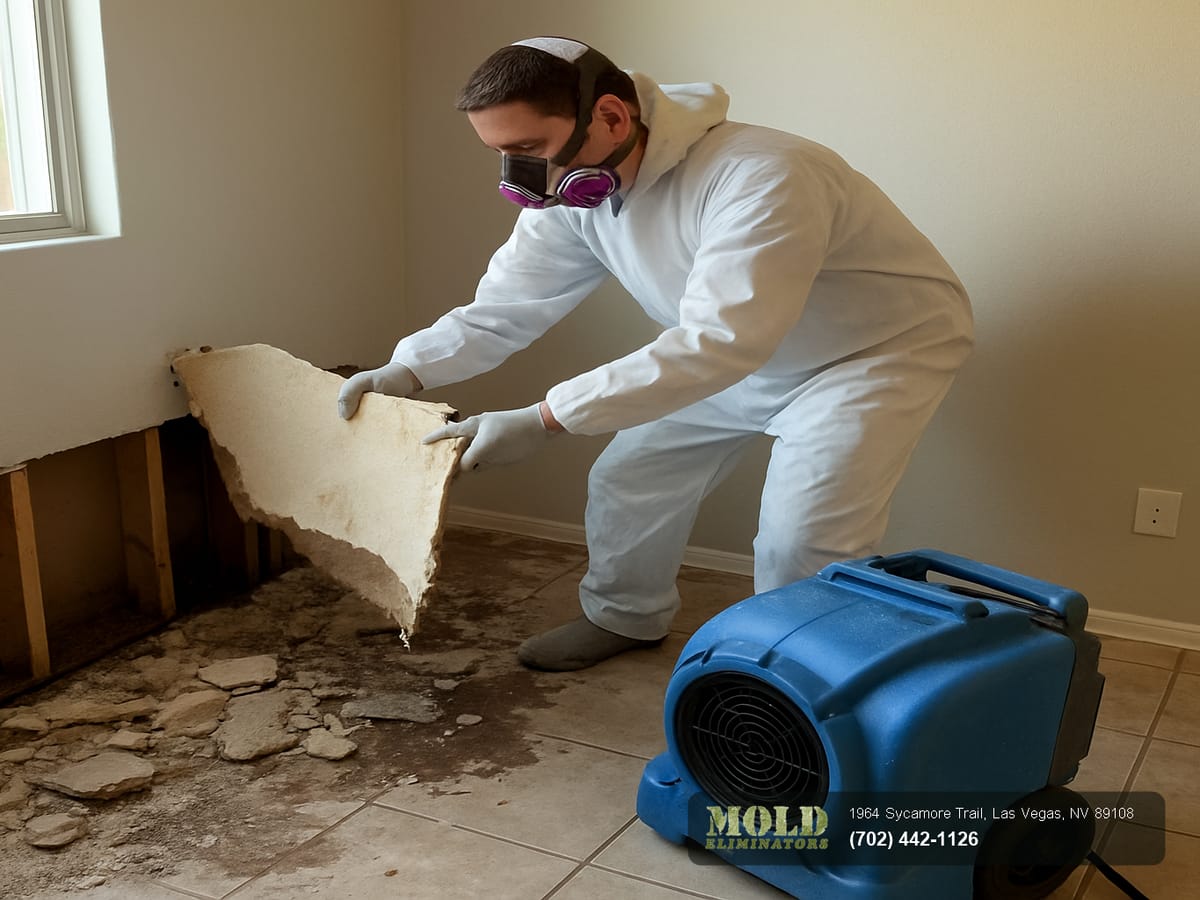 Containment barrier and protective equipment staged for a Category 3 black water cleanup
Category 3: black water
Category 3, known as black water, is grossly contaminated water that can contain harmful bacteria, viruses, fungi, and other dangerous agents. This is the most serious category, and it is treated as a biohazard. Sources include sewage backups, toilet overflow that contains solids, rising water from rivers or storm surge, and ground surface water that flows into a structure. Critically, any water that contacts those contaminants, or any Category 1 or 2 water that has been left standing long enough to grow harmful microbes, also becomes Category 3. A monsoon flood that pushes street water and soil into a Las Vegas home is black water from the first moment.
With black water, preservation gives way to protection of health. Porous materials that have absorbed black water, carpet, padding, drywall, insulation, and many flooring assemblies, are removed and discarded because they cannot be safely decontaminated. The work is performed under full containment with negative air pressure so contaminated air does not migrate, and the crew wears respirators and protective suits throughout. Surfaces that remain are cleaned, disinfected, and then dried. This is where water damage overlaps directly with sewage cleanup, and where the safety protocols are non-negotiable.
Black water is also where verification matters most. It is not enough for the area to look clean and feel dry. After a contaminated loss, samples can be sent to an independent third-party lab to confirm the space is genuinely safe to reoccupy, with the results coming from someone who has no stake in selling you more work. This is exactly the kind of situation where cutting a corner can quietly endanger a family, which is why we handle the water, the contamination, and the verification as one accountable job rather than handing pieces off between companies.
How a category is established on site
Classifying water is not about glancing at its color. Black water can run clear, and clean water can look filthy after it picks up drywall dust. A real classification weighs the source, the path the water traveled, the time it has been standing, the temperature, and the materials it contacted. Here is what that assessment looks at before any number goes on the report.
The honest reality is that the category often shifts during a job, almost always upward, never down. Water that was Category 1 on Monday can be Category 2 by Wednesday and Category 3 by the weekend if it is left untreated. That is the core argument for speed: the faster a loss is assessed and stabilized, the better the category, the more material that can be saved, and the lower the health risk. If water is actively spreading in your property right now, the right move is to call us so we can classify and contain it before the clock makes the decision for you.
Safety protocols, category by category
Once the category is set, the safety response follows a deliberate ladder. Each step up the category means more containment, more protection, and a harder line on what gets removed. This is the sequence the standard calls for, and the reason a guess on category is never harmless.
- Category 1, clean water. Basic precautions. Extract, dry in place, and verify with moisture readings. Most materials are preserved, and containment is minimal because there is no contaminant to spread.
- Category 2, gray water. Gloves, eye protection, and respiratory protection. The area is contained to limit spread, non-porous surfaces are cleaned and disinfected, and absorbed porous materials are removed rather than dried.
- Category 3, black water. Full containment with negative air pressure, respirators, and protective suits throughout. Porous materials are discarded as biohazard, surfaces are disinfected, and the work is treated as a health hazard from start to finish.
- Verification. Clean losses are signed off on moisture data; contaminated losses can be confirmed by an independent third-party lab, billed at cost only if lab analysis is warranted, so reoccupancy rests on evidence rather than a technician’s word.
- Documentation. Every category, reading, and decision is logged, giving you and your insurer a clear record of what was contaminated, what was removed, and how the result was proven safe.
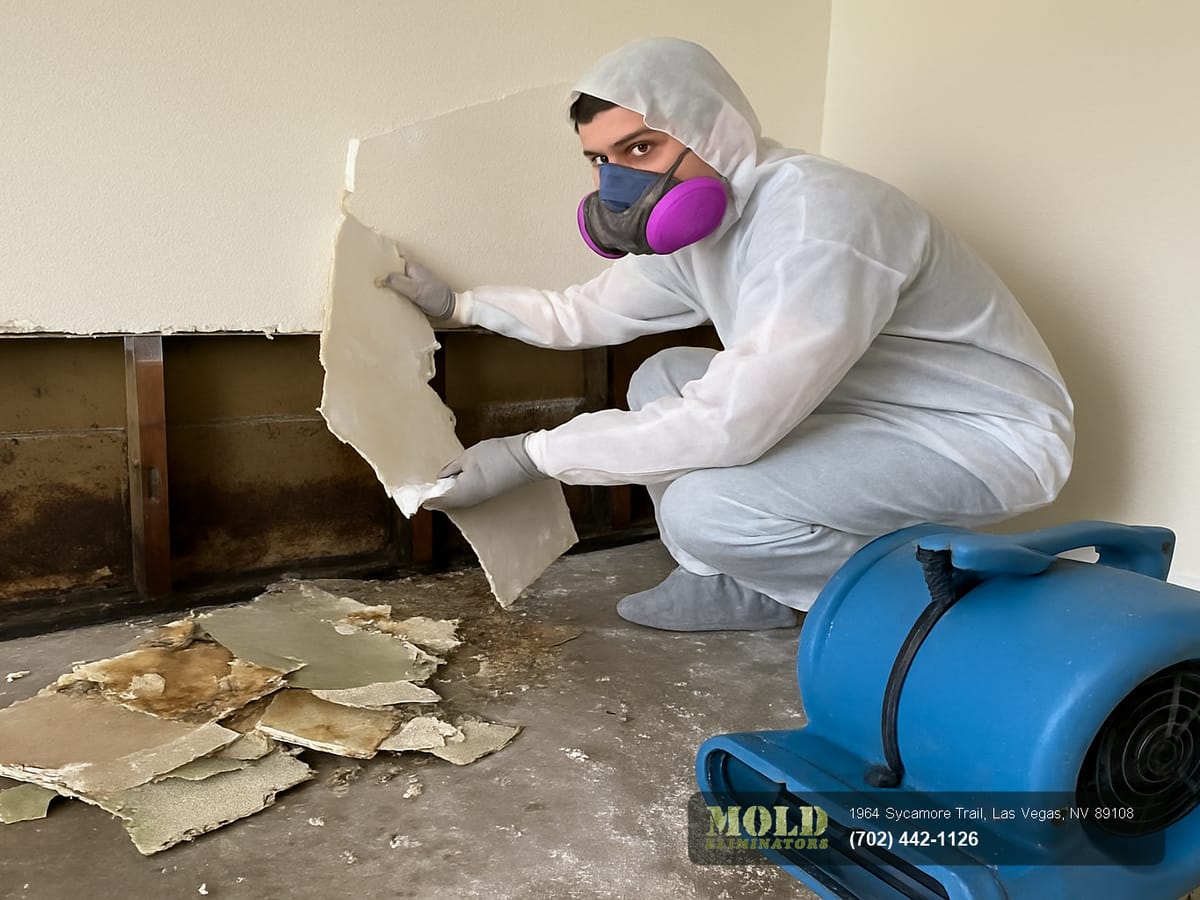 Restoration technician in protective equipment documenting moisture readings during a water loss
Why Las Vegas trusts us to classify it right
We wrote part of the rulebook
Craig Herrmann co-authored the ANSI/IICRC S520 standard that defines these categories and is an IICRC Master Certified Flood Expert. Your loss is classified to the national standard, not to a guess. Read more about Craig’s credentials.
One in-house crew
No subcontractors. Every technician is a certified W-2 employee, with one-hour emergency response, 24/7, across the valley. One crew owns the classification, the cleanup, and the verification from start to finish.
Honest and anti-upsell
We tell you when you do not need us. If a loss is a clean, dry-in-place Category 1, we will not invent a demolition. If samples are warranted, they go to an independent lab and are billed at cost, never marked up.
That is the whole difference. A category is a safety decision before it is a billing decision, and we treat it that way. The same honesty that drives our restoration work drives the classification: name the category truthfully, protect the people in the building, save what can be saved, and prove the result. If you want a calm, factual read on a water loss before anyone touches a wall, a free inspection is the place to start.
Categories of water damage, common questions
- What are the three categories of water damage?
- Category 1 is clean water from a sanitary source, like a burst supply line or a failed water heater. Category 2, gray water, is significantly contaminated water from sources like a dishwasher or washing machine that can cause illness. Category 3, black water, is grossly contaminated water from sewage, flooding, or ground surface water and is treated as a biohazard. The category sets the entire response, which is why it is the first thing established on any water damage job.
- Can clean water turn into a higher category?
- Yes, and it usually does if it is left to sit. Clean Category 1 water picks up contaminants from the materials it soaks, feeds bacteria, and degrades with time and heat. Within a day or two it can become gray water, and given enough time it becomes black water. The category only moves up, never down, which is why even a clean-water loss is treated as an emergency.
- Why does gray or black water mean materials get removed instead of dried?
- You cannot reliably decontaminate the inside of a porous material. Carpet padding, particleboard, and saturated drywall absorb contaminated water all the way through, so even after the surface is cleaned the contamination remains inside. With clean water those same materials can often be dried and saved; with gray or black water they are removed to protect the people who live there.
- Is sewage backup always Category 3?
- Yes. Sewage carries harmful bacteria, viruses, and other pathogens, so any sewage backup is classified as black water and handled as a biohazard from the start. That means full containment, respirators and protective suits, removal of porous materials, and disinfection of what remains. This is specialized sewage cleanup, not an ordinary mop-up.
- Who decides the category, and is it documented?
- A trained restorer establishes it on site by weighing the source, time, temperature, and materials the water touched, not by its color. Because our founder co-authored the standard that defines these categories, the classification is documented from the first visit with readings and photos. That record drives the response and supports any insurance claim, and our team is led by an IICRC Master Certified Flood Expert.
- Is the inspection really free, and what about lab testing?
- The on-site inspection is genuinely free. We come out, classify the water, and tell you what the situation actually requires, including when you do not need us. If lab analysis is warranted, for example to confirm a contaminated area is safe to reoccupy, samples go to an independent third-party lab and are billed at cost, never marked up. Booking a free inspection is the calm first step before any work begins.
Not sure what you are dealing with? Get a free inspection.
We classify the water, protect your home, and tell you the truth about what it needs, including when you do not need us. One-hour emergency response, 24/7, across the Las Vegas valley. The inspection is free; if lab analysis is warranted, samples go to an independent third-party lab, billed at cost.