Sewage Water in the House in Las Vegas
If you are seeing sewage water in the house, dark, foul-smelling water backing up through a drain, a toilet, or a floor, take a breath: this is fixable, and you are not the first Las Vegas homeowner to wake up to it. What you are looking at is what restorers call Category 3 water, the most contaminated kind. It is not a cosmetic mess to mop up. It carries bacteria, viruses, and biohazard, and how the next few hours are handled decides whether your home gets cleaned and saved or quietly turns into a mold and contamination problem.
The most important thing to know right now is what NOT to do. Do not wade through it, do not run fans to “dry” it yourself, and do not let it sit. Sewage water spreads contamination across every surface it touches, and porous materials it soaks usually cannot simply be dried, they have to be removed. The right move is to keep people and pets away from the area, shut off water to the affected fixture if you can do so safely, and call a certified crew. Mold Eliminators runs a 24/7 emergency line with one-hour response across the valley.
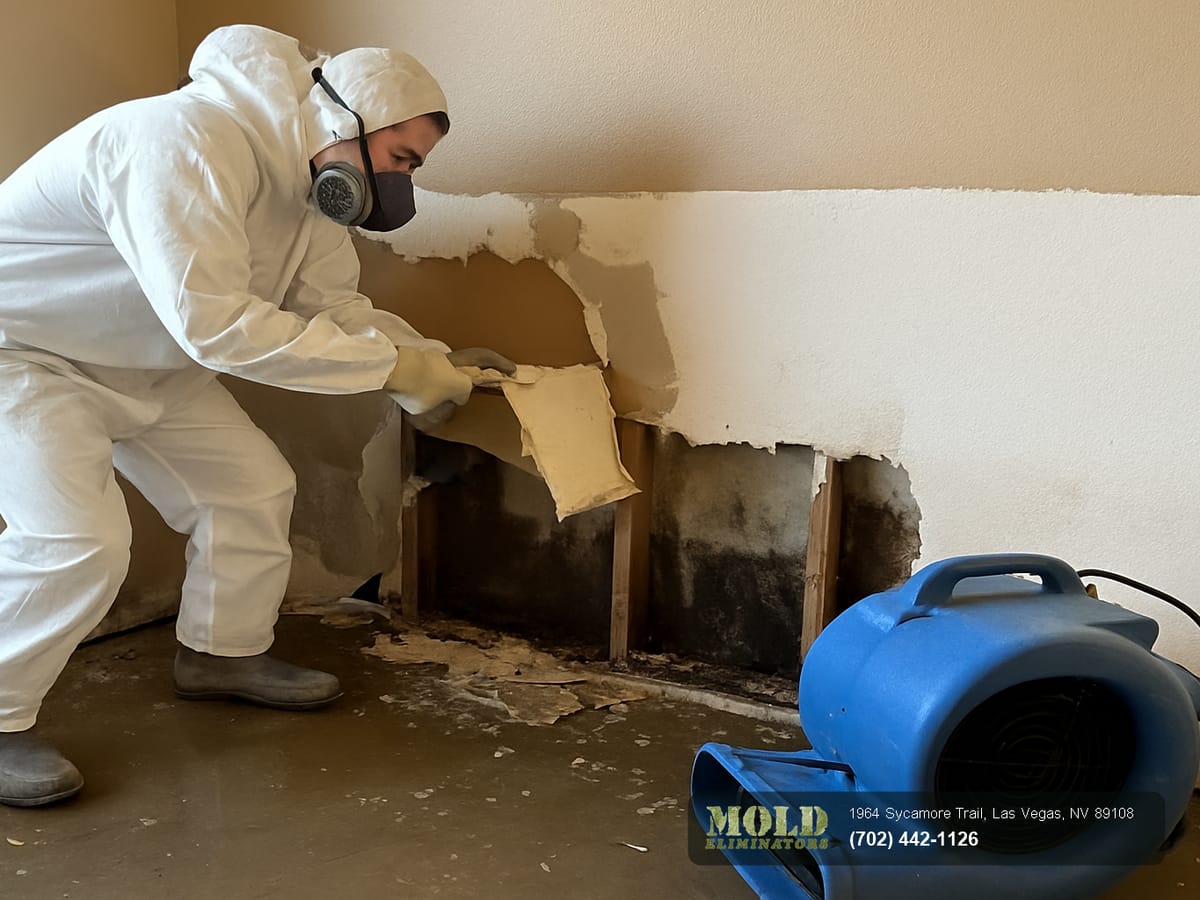 Sewage water backing up onto a tile floor inside a Las Vegas home
What sewage water in the house usually means in a Las Vegas home
Sewage water surfacing inside the house almost always points to a blockage or failure in the line that carries wastewater out of your home. Diagnosing it honestly matters, because the source decides the fix. In Las Vegas homes there are a handful of usual suspects, and it helps to know which one you are likely dealing with before anyone starts pulling out materials.
A main sewer line clog or backup. This is the most common cause. When the main line that takes waste to the city sewer gets blocked, the water has nowhere to go but back up, and it surfaces at the lowest drain in the house, often a downstairs toilet, a shower, or a floor drain in the garage or laundry. If multiple fixtures back up at once, the clog is almost certainly in the main line, not a single drain.
Tree roots and aging clay pipe. Plenty of older Las Vegas neighborhoods still have clay or cast-iron sewer laterals. Desert landscaping roots, mesquite, palm, and oleander, chase the only reliable water source underground, which is your sewer line, and they crack into the joints and choke the flow. A line that backs up, clears, then backs up again weeks later is the classic signature of root intrusion.
Slab leaks and ground movement. Las Vegas sits on expansive, shifting soil, and slab-on-grade construction is everywhere here. Ground movement can crack or offset a buried drain line under the slab, letting waste escape or back up. These are invisible from the surface, which is exactly why they get missed.
Monsoon and storm intrusion. During monsoon season, a sudden downpour can overwhelm drains and, in low-lying properties, push ground water and sewer water back into the home. Water that comes in during a storm and smells foul is treated as contaminated, not as clean rain.
What sewage water is almost never is harmless. Even when the visible water looks shallow, the contamination travels into the structure and the materials it touched, and that is the part you cannot see and cannot safely guess at.
Need help now?
Talk to a Las Vegas expert
In-house certified crews. One-hour emergency response across the valley, 24/7.
Why this is urgent and not something to clean up later
Sewage water is classified as Category 3 for a reason: it is grossly contaminated and can carry disease-causing bacteria, viruses, and other pathogens. Direct contact, or even breathing the aerosols it produces, is a genuine health risk, which is why this is one of the few situations where the honest advice is to stay out of the room and let trained people in protective equipment handle it.
There is also a clock on it, the same clock that governs any water event. Mold can begin to colonize wet organic materials, and most of your home is organic, from paper-faced drywall to wood framing and cabinetry, within roughly 24 to 48 hours of getting wet. With sewage, you are not only racing mold, you are racing bacterial growth that started the moment the water surfaced. After about 72 hours the conversation shifts from cleaning and saving materials to removing and replacing them. Every hour the water sits, it wicks further into baseboards, subfloor, and wall cavities, spreading the contamination and the cost.
Las Vegas adds its own wrinkle. Our extreme summer heat accelerates bacterial growth and odor, and it can drive moisture deeper into cool wall cavities through condensation, so a floor that feels dry on top can stay saturated and contaminated underneath. The desert air does not save you here, the contamination is the problem, not just the dampness.
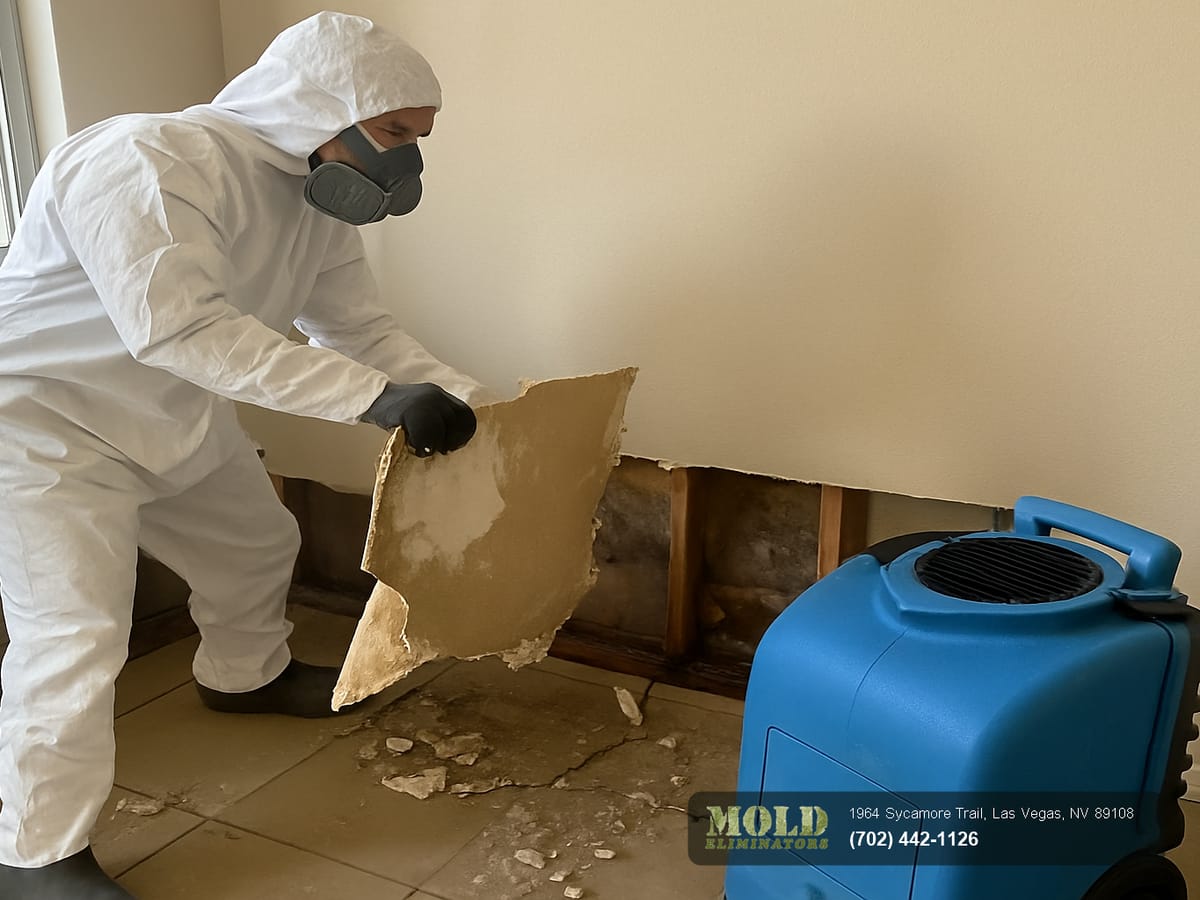 Certified technician in protective gear containing a sewage-contaminated room in a Las Vegas home
What the proper fix involves, done to the S520 standard
A sewage event is handled to the same national standard that governs mold work, the ANSI/IICRC S520 standard that our founder Craig Herrmann helped author. That means it is not a mop-and-fans job, it is a contain, remove, dry, and verify sequence with a documented finish line.
- Free on-site inspection first. Before any work or any quote, we come out and inspect, find the source of the sewage, and map how far the contamination and moisture have traveled with meters and thermal imaging. The on-site inspection is free, so you understand the actual scope before anyone commits to anything.
- Find and stop the source. Clearing the backup or repairing the failed line comes first, because cleaning a room while it is still flooding is pointless. We identify whether it is a main-line clog, root intrusion, a slab-level break, or storm intrusion.
- Containment. The affected area is sealed off so contaminated air and aerosols do not spread to the rest of the house, the same containment discipline used in mold remediation.
- Removal and cleaning. Porous materials soaked by Category 3 water, carpet, pad, soaked drywall, and insulation, are removed because they cannot be reliably decontaminated. Salvageable surfaces are cleaned and treated.
- Structural drying. Once the contamination is removed, the structure is dried to verified targets with commercial dehumidification and air movement, so trapped moisture cannot feed mold later.
- Independent lab clearance. When the work is done, an independent third-party lab verifies the result rather than us declaring it clean. You get data, not a technician’s word.
Why Las Vegas homeowners call Mold Eliminators for this
No subcontractors
Every technician is a certified W-2 employee, not a hired crew. One in-house team owns the source, the cleanup, the drying, and the verification, so no one points fingers when something gets missed. One chain of responsibility, start to finish.
Independent lab, anti-upsell
The result is verified by an independent third-party lab, not by the people who did the work. And we tell you when you do not need us. We will not pad a sewage job with services it does not call for.
One-hour response, 24/7
Sewage does not wait for business hours, and neither do we. One-hour emergency response, 24/7, across the Las Vegas valley, since 1996 and more than 255 properties restored. Reach us through our office, no call center in between.
If the water came in through a flood or a storm rather than a backup, the same crew handles it under flood restoration, and the full sewage cleanup process is one accountable job rather than three companies. Whatever the source, the standard is the same: find it, contain it, remove what cannot be saved, dry what can, and prove the result.
Sewage water in the house, common Las Vegas questions
- Is sewage water in my house actually dangerous, or can I just clean it up?
- It is genuinely dangerous. Sewage is Category 3 water, grossly contaminated with bacteria and pathogens, and contact or breathing its aerosols is a real health risk. Mopping it yourself spreads the contamination and misses what soaked into the structure. Keep people and pets out of the room and let a certified crew in protective equipment handle it. Our sewage cleanup process contains it before it spreads.
- Why does sewage keep backing up even after a plumber clears it?
- In older Las Vegas neighborhoods that usually means tree roots or a cracked clay or cast-iron lateral. Desert landscaping roots chase the water in your sewer line and grow back into the joints, so a line that clears then backs up again weeks later points to root intrusion or a failing pipe, not a simple clog. The source has to be diagnosed, not just snaked, which is what the free on-site inspection is for.
- Will I be charged just to find out what is wrong?
- No. The on-site inspection is free. We come out, find the source, and map the contamination and moisture so you understand the real scope before anyone commits to a quote. Lab analysis is a separate paid step when clearance testing is needed, but the inspection that tells you where you stand costs nothing. You can book a free inspection any time.
Sewage water in the house? Do not wade in. Get a free inspection.
Free, no-pressure on-site inspection to find the source and the scope. One-hour emergency response, 24/7, across the Las Vegas valley. We contain it, remove what cannot be saved, dry the rest, and verify the result with an independent lab.