Hard Water and Appliance Leaks in the Desert
The puddle under the dishwasher wasn’t there last week, the laundry room smells faintly damp, and the braided line behind the fridge has a chalky white crust on the fitting. In Las Vegas, that crust is the tell. Our water is some of the hardest in the country, and over the years it quietly grinds away at the valves, hoses, and seals that keep your appliances from flooding the room behind them.
Most people think of a leak as a sudden burst, but the more common story here is slow: a supply line that hardens, a valve that stops sealing, a pan that overflows because a drain scaled shut. By the time you see water, the cabinet base and the subfloor underneath have often been damp for a while. This guide explains how desert hard water causes appliance leak water damage, where the leaks usually start, and what you can do to stay ahead of them.
 Mineral scale buildup on an appliance water supply fitting in a Las Vegas home
Why Las Vegas hard water is so hard on appliances
Hardness is a measure of dissolved minerals in the water, mostly calcium and magnesium. The valley draws heavily on Colorado River water, and by the time it reaches your tap it routinely tests in the very hard range, often well above 15 grains per gallon. That number matters because every gallon that moves through your home leaves a little mineral behind. Multiply that by years of dishwashing, ice making, and laundry, and the deposits add up to real mechanical wear.
Scale does three things that lead to leaks. First, it builds up on the inside of fittings and valves, so seals that once closed cleanly now seat against a gritty ridge of mineral and never fully sit. Second, it makes rubber and plastic brittle, because the same mineral-rich water dries out the flexible parts that are meant to flex. Third, it narrows and clogs the small passages, drains, inlet screens, and float ports that appliances rely on to know when to stop filling. A clogged drain or a stuck float is how a perfectly good machine ends up sending water across the floor.
The desert climate compounds it. Low humidity and high heat dry out exposed rubber faster than a temperate climate would, so a hose that might last a decade elsewhere can stiffen and crack here in far less time. Garages and laundry rooms that hit 100 degrees in summer bake those supply lines daily. None of this is dramatic. It is slow chemistry and slow heat, which is exactly why it sneaks up on homeowners and why catching it early is the whole game.
Need help now?
Talk to a Las Vegas expert
In-house certified crews. One-hour emergency response across the valley, 24/7.
The most common appliance leak points in a desert home
Almost every appliance leak traces back to one of a handful of parts. Knowing where to look turns a hidden problem into a five-minute check. Here are the failure points we see most often across the valley, roughly in order of how frequently they cause real water damage.
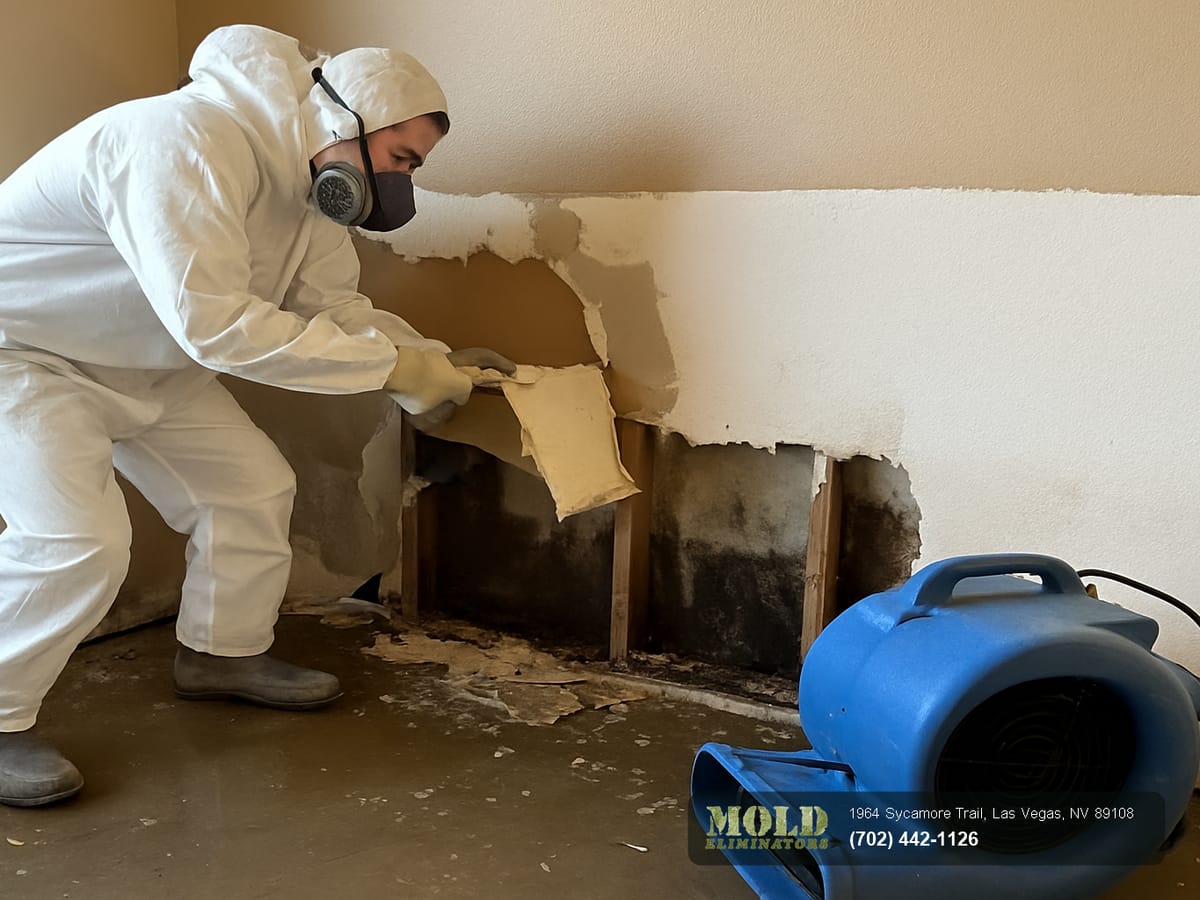
The thread tying these together is that they all sit in cabinets, closets, and back corners. A drip that would be obvious on an open floor instead soaks into a particleboard cabinet base, wicks into the subfloor, and feeds the wall behind it. That hidden path is why an appliance leak so often becomes a mold problem before anyone notices the water at all.
How a slow appliance leak turns into mold
Here is the part that catches people off guard. A sudden burst is loud and obvious, and most homeowners deal with it right away. The dangerous leak is the slow one, a few ounces a day from a scaled fitting, because it never makes a puddle big enough to notice. The water goes straight into porous material and stays there.
Mold spores are present in every building all the time, harmlessly, and they only bloom into a colony when they find a wet surface to feed on. A cabinet base or subfloor that stays damp from a slow drip is exactly that surface. In as little as 24 to 72 hours, organic materials that stay wet can begin to grow mold, and a leak that drips for weeks gives a colony all the time it needs to establish behind the cabinet, inside the wall cavity, and across the subfloor.
The desert does not save you here, despite the dry air. Inside a closed cabinet against a cool slab, the microclimate is humid even when the room is bone dry, and slab-on-grade concrete holds moisture far longer than people expect. That is why a kitchen can read comfortable on a hygrometer while the cabinet under the sink is quietly growing a problem. When water has been sitting long enough that you can smell it, proper water damage restoration means drying the structure to a measured target, not just wiping up what is visible. If you suspect a leak has been weeping for a while, a free inspection is the calm, factual way to find out whether moisture left anything behind before it becomes a remediation job.
 Homeowner inspecting a braided stainless steel washing machine supply line
How to prevent appliance leak water damage
You cannot change how hard the water is, but you can stay ahead of what it does. These steps cost little and catch the vast majority of slow leaks before they reach the structure.
- Replace rubber washer hoses with braided stainless. Swap the rubber fill hoses on your washing machine for braided stainless steel lines, and replace them on a schedule rather than waiting for failure. They are inexpensive and far more resistant to the heat and scale that crack rubber.
- Pull appliances out once a year and look. Slide the fridge, dishwasher, and washer out far enough to see the fittings behind them. Feel for chalky scale, check for staining or warping on the floor, and run a dry paper towel along each connection to find a slow weep.
- Flush the water heater annually. Draining the sediment out of the tank once a year clears the scale that corrodes the steel and clogs the relief valve. A heater that is never flushed in our water is on a shorter clock than the warranty suggests.
- Service or add a water softener. A working softener dramatically slows scale through the whole house. If you have one, replace the filters and check the brine line on schedule. If you do not, it is the single biggest reduction in appliance wear you can make here.
- Install simple leak detectors. A few battery water alarms in the drip pans and back corners, or an automatic shutoff on the main, will warn you about a slow leak the day it starts instead of the month you smell it.
- Know where your shutoffs are. Find and test the individual valves behind each appliance and the main shutoff, so that when something does let go you can stop the water in seconds rather than minutes.
What to do the moment you find a leak
If you discover an active leak or fresh water damage, the first move is to stop the source. Close the valve behind the appliance, or the main if you cannot reach it, and unplug the unit if water is anywhere near it. Then get air moving and pull the appliance away from the wall so the cabinet and floor can start to dry.
The harder judgment is what to do about the materials that already got wet. If the leak was caught within a day and the area is small and clean, drying it thoroughly may be all it needs. If water has been sitting, if it reached the subfloor or the wall cavity, or if you smell that musty edge, the structure needs to be measured and dried to a documented standard, not just surface dried. That is the line between a problem that ends here and one that quietly returns as mold in a few weeks.
This is where bringing in someone who handles the water and the mold risk as one job matters. Our crews map the moisture with meters and thermal imaging, dry to verified targets, and confirm the result, so you are not left hoping it is dry. Every technician is an in-house W-2 certified employee, never a subcontractor, and we offer one-hour emergency response, 24/7, across the valley. If you would rather just have a professional look before deciding anything, a free inspection tells you exactly where you stand at no cost.
Why Las Vegas trusts Mold Eliminators with hidden water
Built on the standard
Owner Craig Herrmann co-authored the ANSI/IICRC S520 mold standard, 4th Edition 2024, and is an IICRC Master Certified Flood Expert working in the valley since 1996. Read more about Craig’s credentials.
Measured, not guessed
We find the water you cannot see with moisture meters and thermal imaging, dry to a documented target, and verify the result. When lab analysis is warranted, samples go to an independent third-party lab, billed at cost.
Honest by default
No subcontractors, just certified W-2 crews, and an anti-upsell habit of telling you when you do not need us. With 255+ properties handled and one-hour emergency response, 24/7, one team owns the job start to finish.
That is the whole difference. A slow appliance leak is the kind of problem that rewards measuring over guessing, and we treat the water and the mold risk as one continuous job, the same way our full water damage restoration is held to the rulebook from the first reading to the last.
Hard water and appliance leaks, common questions
- How does hard water actually cause appliance leaks?
- Calcium and magnesium in the water leave mineral scale on the inside of valves, fittings, and seals. Over time that scale stops seals from closing cleanly, makes rubber and plastic brittle, and clogs the small drains and float ports appliances rely on. Any of those can turn into a slow drip or a sudden failure, which is the core of most appliance leak water damage we see in the valley.
- Which appliance leaks most often in Las Vegas?
- Refrigerator ice maker lines and dishwasher inlet valves are the most common slow leaks, because they sit out of sight and scale up quietly. Washing machine rubber hoses are the most common dramatic failure, since our dry heat hardens and cracks them. Water heaters run a close third as scale corrodes the tank from the inside.
- Can a small appliance leak really cause mold?
- Yes, and the small slow ones are the most dangerous because they never make a visible puddle. Water wicks into the cabinet base, subfloor, and wall, and materials that stay wet can begin growing mold in as little as 24 to 72 hours. Inside a closed cabinet against a cool slab the air stays humid even when the room feels dry.
- How can I tell if a hidden leak already caused damage?
- Look for chalky scale on fittings, a musty smell near an appliance, warped or stained flooring, or a soft cabinet base. None of these is required for a structure to be wet inside, though, which is why the only way to know for certain is to measure. A free inspection for property owners is the no-cost way to find out before any work begins.
- What should I do the minute I find an active leak?
- Shut off the valve behind the appliance or the main, unplug the unit if water is near it, and start drying the area while you pull the appliance away from the wall. If the water reached the subfloor or wall, or has been sitting, have it measured and dried to standard rather than just wiped up, which is the heart of proper water damage restoration.
- Will a water softener stop this from happening?
- A working softener dramatically slows scale through the whole house, so it is the single best reduction in appliance wear you can make here. It is not a complete fix on its own, since fittings and hoses still age, so pair it with annual inspections, a water heater flush, and braided stainless hoses for the best protection.
Caught a leak, or smell something musty? Start with a free inspection.
No-pressure, on-site mold inspection at no cost. One-hour emergency response, 24/7, across the Las Vegas valley. We measure the moisture, dry to verified targets, and tell you straight when you do not need us.