How Fast Does Mold Grow After Water Damage?
Water Damage & Mold Guide
Mold can begin to colonize wet building materials within 24 to 72 hours of water damage. That window is short, but it is also predictable, and understanding it is the single best thing you can do to keep a small leak from becoming a remediation project. Here is what actually happens inside a wet wall, what speeds it up in a Las Vegas home, and the point at which drying it yourself stops being enough.
When a pipe bursts or a slab leak soaks a floor, the clock that matters is not the one counting how long the water has been visible. It is the one counting how long the materials have stayed damp. Mold spores are already present in every building, harmlessly, all the time. They do not need to arrive from somewhere. They only need moisture, a food source, and a little time. Water damage hands them all three at once, which is why fast, thorough water damage restoration is really mold prevention by another name.
None of this is cause for panic. Mold is a moisture problem before it is a health problem, and moisture problems have known solutions. The goal of this page is to give you an honest timeline so you can make a calm, informed decision about when a wet spot is a towel-and-fan situation and when it is time to bring in certified help.
The 24 to 72 hour window
Under typical indoor conditions, common molds need somewhere between 24 and 72 hours of sustained moisture before spores germinate and start to grow into a visible colony. The first day is usually invisible: spores absorb water and activate, but nothing shows on the surface yet. By the second and third day, fine root-like structures push into porous materials and the first fuzzy or discolored patches can appear.
That 24–72 hour range is a guideline, not a guarantee. Some materials and conditions push germination toward the early end; others delay it. What is consistent is the direction of travel: every hour that drywall, carpet pad, baseboard, or framing stays wet, the odds tip further toward colonization. This is the reasoning behind the industry standard that Craig Herrmann co-authored, the ANSI/IICRC S520, which treats prompt drying as the front line of mold control rather than an afterthought.
The practical takeaway: the response in the first day or two does more to determine your outcome than anything that happens later. Water that is extracted and dried inside that window often leaves no mold problem at all. Water left to sit becomes a question of how much, not whether.
Need help now?
Talk to a Las Vegas expert
In-house certified crews. One-hour emergency response across the valley, 24/7.
What speeds mold growth up
The 24-to-72-hour figure assumes ordinary conditions. Several factors can pull growth toward the fast end of that range, and in Las Vegas homes more than one of them is often in play at once.
Put those together and you can see why two homes with the same leak end up in different places. A small kitchen drip wiped up and dried in an hour is a non-event. The same volume of water that runs behind a cabinet and into the wall, in a warm house, on porous materials, can be growing within a day. When moisture has reached materials you cannot fully dry from the surface, professional structural drying is what gets the water back out before mold gets established.
Why hidden moisture is the real danger in Las Vegas homes
It is tempting to think of the desert as a place where things dry out on their own, and on an open patio they do. Inside a home, the opposite problem is common: the surface looks and feels dry while moisture is still trapped in the materials underneath. That gap between how dry a wall looks and how dry it actually is causes most of the mold we find after water damage.
Slab leaks are a classic Las Vegas example. Water moves under the slab and wicks up into the bottom of walls and flooring, so the visible floor can read dry to the touch while the base of the drywall stays saturated. High-rise condos add their own version, where a leak in one unit travels through shared assemblies and shows up rooms or floors away from the source. Monsoon-season intrusions, roof and window leaks during a sudden storm, soak insulation and framing that then dry far slower than anyone expects.
The reason this matters for timing is simple: you cannot start the 24-to-72-hour clock on moisture you do not know is there. By the time a musty smell or a stain appears, the hidden material has often been wet long enough for growth to begin. This is why a proper assessment uses moisture meters and, where needed, a mold inspection to map dampness you cannot see, rather than relying on what is visible at the surface. If testing confirms there is no problem, you should hear that too. A genuine free inspection exists to answer the question honestly, not to manufacture a reason to start work.
Why fast extraction and drying prevents mold
Because mold is fundamentally a moisture problem, the entire prevention strategy comes down to removing water faster than mold can use it. The standard sequence is straightforward, even when the situation is stressful.
- Stop the source and extract standing water. Nothing dries while the leak is still running or water is still pooling. Fast extraction removes the bulk of the moisture before it can soak deeper into porous materials.
- Dry the structure, not just the surface. Air movers and dehumidifiers pull moisture out of framing, subfloor, and wall cavities. Moisture readings, not appearances, decide when materials are actually dry to standard.
- Verify with measurement. Drying is confirmed with meters against documented targets, so the job is finished on evidence rather than a guess. This is the discipline the S520 standard is built around.
- Remediate only what truly needs it. If mold has already taken hold, contained removal of the affected material follows, with independent lab verification that the area is clear.
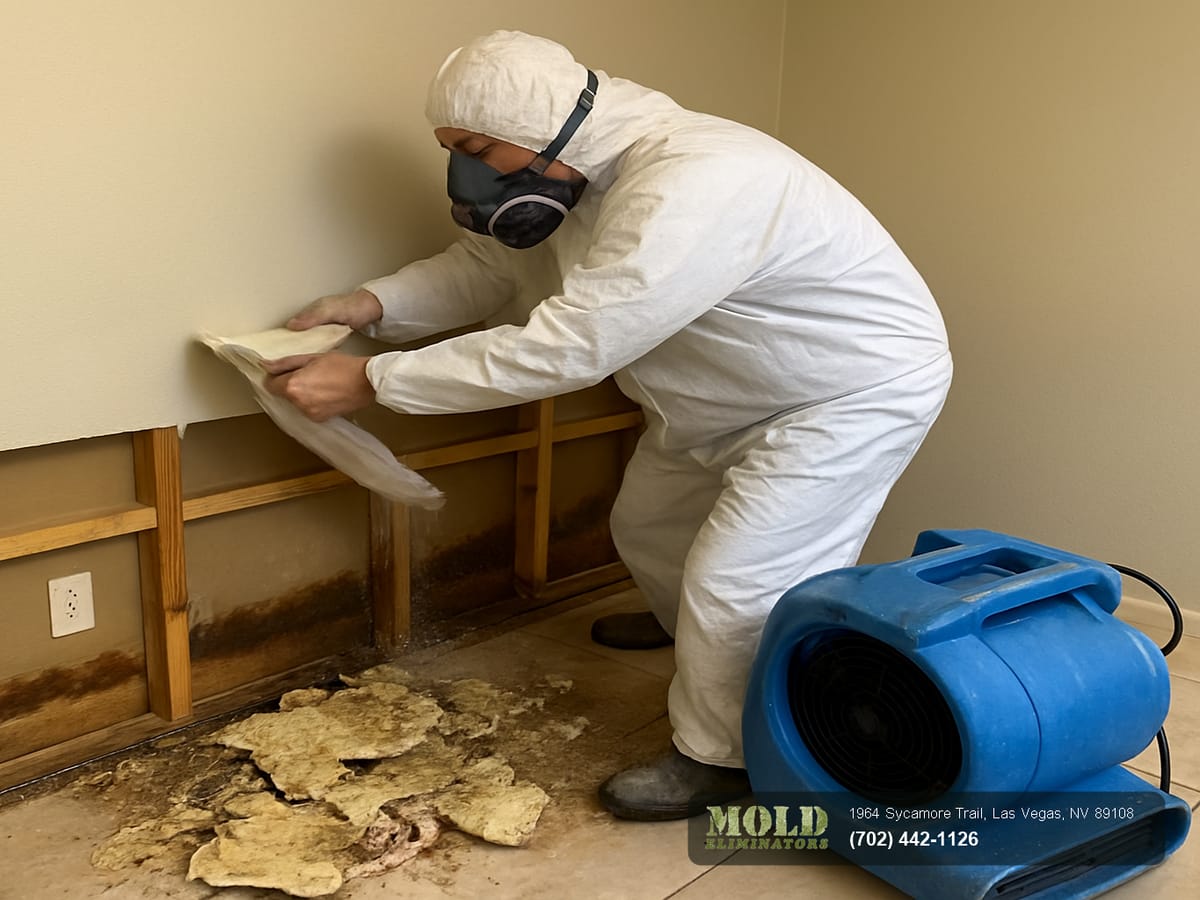
The reason this works is timing. Get water out of materials inside the same window mold needs to colonize them, and you deny the spores the sustained moisture they depend on. That is why a fast, measured drying response usually prevents the need for any mold remediation at all. When the response is delayed, drying alone is no longer enough, and removal of compromised material becomes part of the work. Speed is not about pressure or urgency theater. It is the cheapest, calmest fix available, and it gets less effective with every passing hour.
When to call
Plenty of small spills are genuinely a towel-and-fan job, and it is fine to handle those yourself. The honest line is about how much water reached how much material, and how long it has been there. A few square inches you wiped up within minutes is one thing. Water that has spread, soaked in, or been sitting is another.
Consider bringing in certified help when any of the following is true:
Because the first 24 to 72 hours carry the most weight, a same-day response is worth more than a perfect plan that arrives next week. Mold Eliminators uses in-house, certified W-2 technicians with 24/7 emergency response, so the people who assess your home are the people who do the work, with no subcontractors in between. If you are not sure whether what you are looking at warrants a call, that uncertainty is itself a good reason to ask. We will tell you plainly whether you need us, and we would rather you call early about a small leak than wait and watch it become a large one.
- Can mold really grow in just 24 hours?
- It can begin to. Under warm, humid conditions on porous materials, spores can germinate within about a day, with visible growth typically appearing across the 24-to-72-hour window. Cooler or drier conditions can delay it, but the safe assumption after water damage is that the clock is already running.
- If the surface feels dry, is the mold risk over?
- Not necessarily. A wall or floor can feel dry at the surface while materials underneath stay saturated, which is exactly where mold takes hold. This is why moisture meters and, where warranted, a professional mold inspection are used to confirm dryness rather than relying on touch.
- Will drying the area myself prevent mold?
- For a small spill caught quickly on a sealed surface, often yes. Once water has soaked into porous materials or sat for more than a day, household fans rarely reach the trapped moisture, and full structural drying is usually needed to get materials back to a verified dry standard.
- How quickly should I get water professionally extracted?
- As fast as is practical. Because the 24-to-72-hour window decides most outcomes, same-day extraction and drying is the goal. That is the reasoning behind around-the-clock emergency response, so the response can start inside the window that matters.
Caught water damage early?
Get an honest answer before mold has time to grow
A fast, measured drying response inside the first 24 to 72 hours is the best protection against mold. If you have water damage or a musty smell you cannot place, we will assess it straight and tell you what you actually need.