Saving Wet Carpet and Flooring
The flood is over, the water has been pulled up, and the carpet feels damp but intact. Now comes the question that decides hundreds of dollars and a lot of stress: can this carpet and flooring be saved, or does it have to come out? The honest answer depends almost entirely on how fast you act and what kind of water you are dealing with.
Saving wet carpet is not about wishful thinking or a few box fans. It is a measured, time-sensitive process where the type of water, the construction of the floor, and the hours that have passed all determine the outcome. At Mold Eliminators we have made that call across 255+ properties since 1996, and our founder Craig Herrmann co-authored the ANSI/IICRC S520 mold standard that governs how these decisions are supposed to be made. So this is not a guess. It is a documented judgment about what can be dried in place and what cannot.
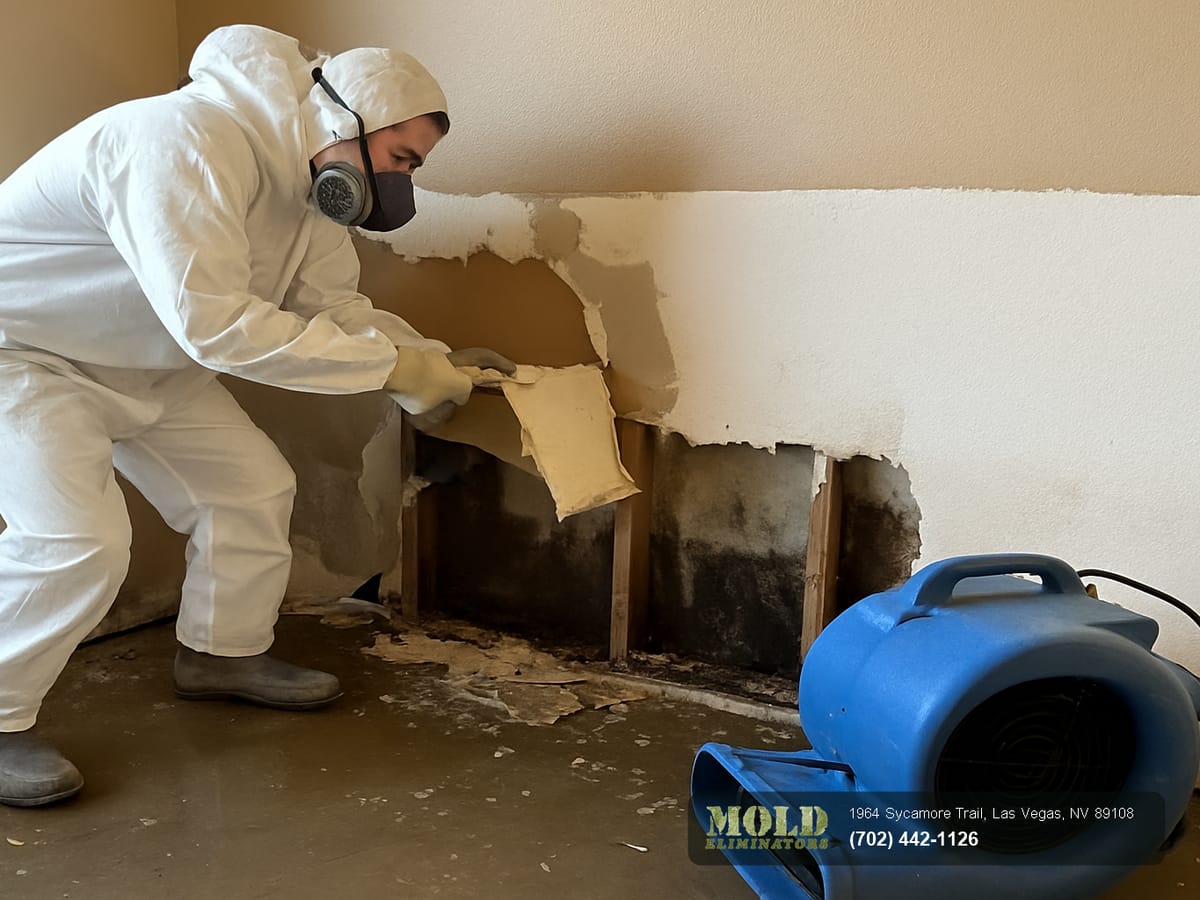
 Technician checking moisture in wet carpet and padding after a Las Vegas water leak
When wet carpet and pad can actually be saved
The single biggest factor in saving wet carpet is the category of water that soaked it. Clean water from a supply line, a refrigerator hose, or an overflowing sink is Category 1, and carpet caught in that water is very often salvageable if drying starts quickly. The carpet fibers themselves are durable; it is the moisture trapped underneath them that drives the decision. Proper water extraction followed by controlled drying can bring Category 1 carpet back to a clean, documented dry state, which is the heart of any carpet water damage recovery.
The carpet pad is a different story. The pad sits between the carpet and the subfloor and acts like a sponge, holding far more water than the carpet above it and releasing it far more slowly. With clean water and a fast response, the pad can sometimes be dried in place using floating techniques that lift the carpet and force air underneath. More often the pad is the part that gets removed and replaced, because replacing an inexpensive pad is cheaper and safer than gambling on whether a saturated one will dry before mold begins. Saving the carpet does not always mean saving the pad, and an honest restorer will tell you the difference instead of charging you to dry something that should simply be swapped out.
Water type changes everything. Category 2 water, sometimes called grey water, carries contamination from sources like a washing machine discharge or a dishwasher overflow. Category 3, or black water, comes from sewage backups and ground floods and is a biohazard. As a rule, carpet and pad soaked by Category 2 or Category 3 water are removed rather than dried, because no amount of air movement makes contaminated material safe to keep. If your water came from a backed up drain or a storm, the job shifts toward water damage restoration and removal, not drying in place. We tell you which category you are in before any equipment goes down, because that one fact decides whether your floor is a drying job or a tear out.
Need help now?
Talk to a Las Vegas expert
In-house certified crews. One-hour emergency response across the valley, 24/7.
The 24 to 48 hour window that decides the outcome
There is a clock running from the moment the floor gets wet, and it is not generous. Mold can begin to colonize wet organic materials, including the paper backing on carpet, the wood in a subfloor, and the dust trapped in a pad, within roughly 24–48 hours of getting wet. Inside that window, fast drying saves carpet and flooring. Past about 72 hours, the conversation shifts from save it to remove it, because the cost and the health risk of keeping damp material both climb sharply.
This is why drying wet carpet cannot wait for business hours. The faster a controlled drying environment is set up, with extraction, dehumidification, and air movement working together, the more material you keep and the lower the mold risk drops. A soaked floor left overnight because the cleanup can wait until tomorrow can turn a savable carpet into a landfill bag. If water is actively spreading through your floors right now, the right move is to call our team and start extraction immediately, then begin drying before that 48 hour window closes.
Las Vegas adds its own complications to the clock. Our dry desert air tempts people into thinking a wet floor will simply air out, but household evaporation is far too slow to beat mold underneath dense carpet and pad. Slab on grade construction is common here, and concrete slabs hold water far longer than anyone expects: a slab that feels dry on the surface can stay saturated underneath a carpet for weeks, quietly feeding mold while the room looks fine. None of that is visible to the eye, which is exactly why drying has to be measured with meters, not judged by touch.
How we decide what stays and what goes
Saving a floor is a judgment built from several readings taken together, not a single yes or no. Before any equipment is placed, we assess the conditions that determine whether carpet, pad, and subfloor can be dried in place or have to be removed.
This is the step a company chasing a quick invoice skips, because it takes meters, training, and time. It is also the step that makes the call honest. When we say a carpet can be saved, we can show you the readings; when we say the pad has to go, we can show you why. If you want that judgment on the record before any work begins, a free inspection gives you the facts with no pressure attached.
 Cupped hardwood and tile flooring being evaluated for water damage in a Las Vegas home
Hardwood and tile: a different rulebook
Carpet is forgiving compared with hard flooring, and each surface has its own rules for what can be saved.
- Hardwood. Solid hardwood often cups or crowns when it absorbs water, but cupping alone does not always mean replacement. With fast extraction and specialized drying mats that pull moisture up through the boards, mild cupping can frequently flatten back out over weeks of controlled drying. The faster drying starts, the better the odds the floor recovers.
- Engineered wood and laminate. These are layered products with glue and fiberboard cores that swell and delaminate once water gets in. Laminate in particular rarely survives a real soaking and is usually replaced. Engineered wood is sometimes salvageable, but only with quick action and careful moisture readings.
- Tile and stone. The tile surface itself shrugs off water, but the trap is underneath. Water travels through grout lines and migrates into the subfloor below, where it sits and feeds mold while the tile looks perfectly fine. We check moisture beneath the tile, not just on top of it.
- Subfloor first, surface second. With every floor type, the substrate decides the outcome. A beautiful surface over a saturated subfloor is still a mold problem, which is why our readings always go down to the layer the water is hiding in.
When saving the floor is not the right call
Drying in place saves a lot of floors from the dumpster, but only when the water was clean and the response was fast. There are situations where the honest answer is removal, and a restorer who works to the standard tells you which situation you are in rather than selling a one size package.
If the water sat too long before drying began, or it arrived already contaminated, drying is not the answer. Carpet and pad soaked by a sewage backup or a ground flood carry bacteria and biohazard, and those porous materials have to be removed and the area cleaned, not dried. That is where saving the floor overlaps with flood restoration and specialized cleanup: contain it, remove what cannot be salvaged, dry what can, and verify the result. And if mold already had time to take hold under the carpet before anyone started drying, the job becomes a containment and removal mold remediation with drying built into it, not drying alone.
This is where our anti-upsell promise actually costs us money on purpose. If your carpet is genuinely savable, we will float it, dry it, and prove it dry rather than talking you into a full replacement. If it is not savable, we will tell you that too, because we tell you when you do not need us. One in-house W-2 crew owns the extraction, the drying, and the mold risk from the first reading to the final verified dry target, with no subcontractors passing blame when something gets missed.
Why Las Vegas trusts us to make the save-or-remove call
We wrote the standard
Craig Herrmann co-authored the ANSI/IICRC S520 standard, 4th Edition 2024, and is an IICRC Master Certified Flood Expert. Your floor is judged by the rulebook, not by a sales target. Read more about Craig’s credentials.
Measured, not guessed
Moisture meters and thermal imaging give the carpet, pad, and subfloor real numbers, and daily readings prove when each layer hits its dry target. The drying ends on the data, never early to free a machine, never late to pad a bill.
In-house accountability
No subcontractors. Every technician is a certified W-2 employee, with one hour emergency response, 24/7, across the valley. One crew owns the water, the drying, and the mold risk, start to finish.
That is the whole difference. Where a franchise tears out everything to bill more, or drops a few fans and hopes, we read the moisture, save what the data says is savable, and document the result, the same way our restoration work is held to the standard from the first reading to the last. Make the right call fast, and your floor and your wallet both come out ahead.
Saving wet carpet and flooring: common questions
- Can wet carpet be saved, or does it always have to be replaced?
- It depends on the water and the timing. Carpet soaked by clean Category 1 water and dried within 24 to 48 hours is very often salvageable. Carpet hit by grey or black water, or left wet beyond about 72 hours, is usually removed because no amount of drying makes contaminated or mold colonized material safe to keep. The only way to know for sure is to measure, which is what proper water extraction and moisture mapping are for.
- Why does the carpet pad get removed when the carpet is saved?
- The pad sits under the carpet and soaks up far more water than the carpet itself, releasing it much more slowly. With clean water and a fast response the pad can sometimes be dried in place, but more often it is cheaper and safer to replace an inexpensive pad than to gamble on whether a saturated one will dry before mold starts. Saving the carpet does not always mean saving the pad.
- How long do I have before wet carpet can no longer be saved?
- Roughly 24 to 48 hours of fast drying is the strong window. After about 72 hours mold can begin colonizing the backing, the pad, and the subfloor, and the decision tips toward removal. That is why drying cannot wait for business hours. The faster extraction and controlled drying begin, the more flooring you keep.
- My hardwood floor is cupping after a leak. Is it ruined?
- Not necessarily. Cupping is the wood reacting to absorbed moisture, and with fast extraction and specialized drying mats that pull water up through the boards, mild cupping can often flatten back out over weeks of controlled drying. The sooner drying starts, the better the odds. Laminate rarely survives a soaking, and engineered wood is salvageable only with quick action and careful readings.
- My tile looks fine after the flood, so I am dry, right?
- Not always. Tile sheds water on top, but water travels through the grout lines into the subfloor underneath, where it can sit and feed mold while the tile surface looks perfect. We measure moisture below the tile, not just on the surface, because the layer the water is hiding in is the one that matters.
- Does insurance cover saving or replacing wet flooring?
- Often, when the water came from a sudden, accidental event like a burst pipe or a failed water heater, the drying and any necessary replacement are covered as part of water damage restoration. The documented moisture map is exactly what an adjuster wants to see. We log readings, photos, and scope from the first visit and work directly with your carrier. If lab analysis is warranted, samples go to an independent third-party lab, billed at cost. Start with a free inspection so you know where you stand before any work begins.
Wet carpet or flooring? Act fast and save what can be saved.
Free, no-pressure on-site inspection. One hour emergency response, 24/7, across the Las Vegas valley. We extract, dry to verified targets, and tell you honestly what stays and what goes, so you do not pay to replace a floor we could have saved.