Slab Leak Water Damage in Las Vegas
Water Damage Knowledge
A slab leak is one of the quietest, most destructive plumbing failures a Las Vegas home can face. Water escapes from a pipe buried in or beneath the concrete foundation, and by the time it surfaces, it has often been wicking into flooring, framing, and drywall for weeks. Understanding how slab leaks behave in our specific desert conditions is the first step to limiting the damage and the cost.
Most homeowners discover a slab leak the hard way: a water bill that suddenly doubles, a patch of floor that feels warm underfoot, or the faint, musty smell of moisture trapped where it should not be. Because the leak originates below a solid concrete slab, the water has nowhere obvious to go, so it travels along the path of least resistance, soaking the porous materials that make up your home. This is why a slab leak is rarely just a plumbing problem. It is a water damage restoration problem the moment the moisture reaches your living space.
This guide explains what a slab leak actually is, why they happen so frequently across the Las Vegas valley, the warning signs worth acting on, and how proper drying and mitigation protect your home from the long, expensive aftermath: hidden mold beneath your flooring.
What a slab leak actually is
Las Vegas homes are overwhelmingly built on slab-on-grade foundations. Instead of a basement or a raised crawl space, the house sits directly on a poured concrete slab. Running through and beneath that slab are the supply lines that bring pressurized water into your home and, in some configurations, the drain lines that carry it away. When one of those buried pipes develops a pinhole, a crack, or a failed joint, the result is a slab leak.
The distinction that matters is pressure. A supply-side slab leak is fed by your home’s water pressure twenty-four hours a day, so it can release a surprising volume of water continuously, even from a tiny pinhole. A drain-side leak only releases water when a fixture is used, but it often carries contaminants and can go undetected far longer. Either way, the water is being introduced underneath a sealed concrete surface, where it saturates the sub-slab soil, rises through expansion joints and cracks, and eventually reaches the materials you can see.
Because the source is hidden, the damage is hidden too. Moisture moves laterally beneath flooring and up into wall cavities long before any visible sign appears. That delay is exactly what makes slab leaks so costly, and why early detection paired with rapid structural drying changes the entire trajectory of the loss.
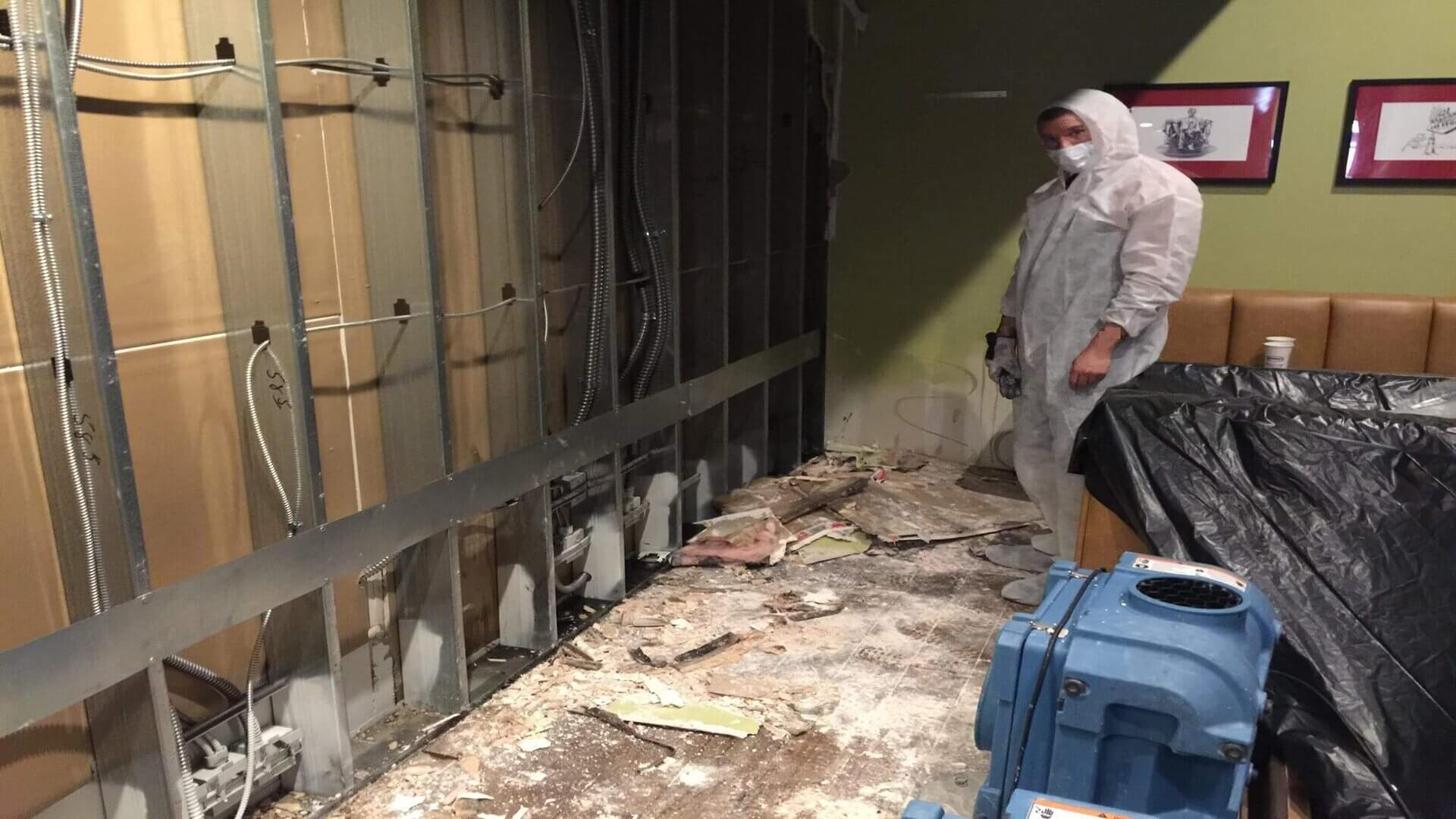 Water damage assessment after a slab leak in a Las Vegas home
Need help now?
Talk to a Las Vegas expert
In-house certified crews. One-hour emergency response across the valley, 24/7.
Why slab leaks are so common in Las Vegas
Slab leaks happen everywhere, but the Las Vegas valley stacks several conditions that make them noticeably more frequent here than in many other parts of the country. Three local factors do most of the damage.
Expansive desert soil
The valley sits on soils that swell when they take on water and shrink hard when they dry out. This seasonal movement flexes the slab and the pipes locked inside it. Over years of monsoon wetting and summer drought, that constant shifting stresses fittings and joints until one finally gives way.
Hard water on copper
Las Vegas tap water is among the hardest in the nation, loaded with dissolved minerals. On older copper supply lines, that mineral content accelerates corrosion from the inside out, etching the pipe wall until a pinhole forms. Pinhole leaks in aging copper are one of the most common slab leak sources we see in valley homes.
Slab-on-grade construction
Almost every home built across the valley sits directly on a concrete slab with the plumbing run through or beneath it. There is no crawl space to catch a drip and no easy visual access. When a buried line fails, the water is sealed under concrete, so the only place it can go is into your soil, your slab, and ultimately your floors.
Add summer heat that keeps water systems under constant demand and the picture is complete: stressed pipes, corrosive water, and a foundation design that hides the problem until it is significant. Homeowners across our Las Vegas service areas, from Summerlin to Henderson, deal with these same conditions, which is why slab leaks are a recurring source of interior water damage valley-wide.
Warning signs of a slab leak
The earlier you catch a slab leak, the smaller the damage. The challenge is that the signs are easy to dismiss individually. Read them together and a pattern emerges. If you notice more than one of the following, treat it as a probable leak and investigate.
Warm spots on the floor
A warm patch on a tile or wood floor, with no heat source nearby, is a classic sign of a leak on the hot water supply line beneath the slab. As heated water escapes, it warms the concrete above it. If your bare feet find a spot that should not be warm, take it seriously.
Spiking water bills
A pressurized supply leak runs continuously. If your water bill jumps sharply with no change in how your household uses water, the most likely explanation is water escaping somewhere you cannot see, and a slab leak is a leading suspect.
Foundation moisture
Damp baseboards, a persistently humid feel in one room, or visible moisture seeping up where the wall meets the floor all point to water moving through the slab. You may also hear the faint sound of running water when every fixture is off.
Cracked or lifting flooring
Tile that cracks for no obvious reason, grout that stays damp, wood planks that cup or buckle, or carpet that develops a soft, soggy area all suggest moisture rising from below. Flooring is often the first visible casualty of a slab leak.
None of these signs prove a slab leak on their own, but each one is worth a closer look. A spiking bill plus a warm floor plus a musty smell is a strong combination. When the evidence points underground, fast action matters: the difference between a contained repair and a full flooring teardown is often measured in days. If you suspect an active leak, our 24/7 emergency response team can be on site quickly to locate the source and stop the spread.
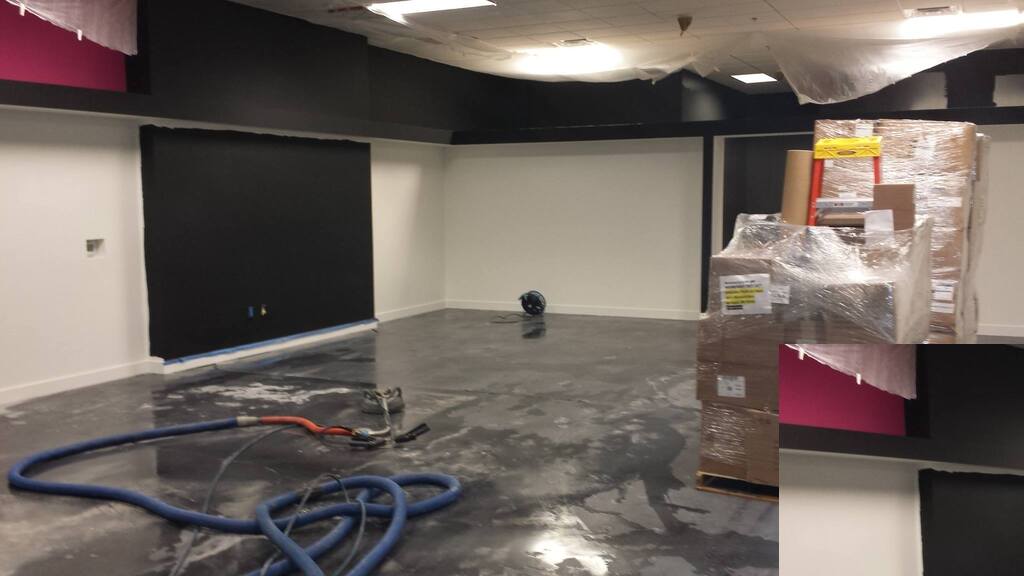 Drying equipment running after slab leak water damage
Mitigation and drying after a slab leak
Repairing the pipe is only half the job. By the time a slab leak is found, water has usually saturated the sub-slab soil, the concrete itself, the flooring above, and often the lower portion of the surrounding walls. Concrete is porous, and it holds moisture far longer than people expect. If that trapped water is left to dry on its own, it does not simply disappear: it migrates into framing and drywall and creates the perfect conditions for mold. Proper mitigation is what prevents the second, larger disaster.
Effective drying after a slab leak is a controlled, measured process, not a fan in the corner of the room.
- Stop the source and assess. The leak is repaired or isolated first. Then we map the full extent of the moisture using thermal imaging and penetrating meters, because the wet area is almost always larger than the visible damage.
- Extract standing water. Any pooled or surface water is removed immediately to halt further wicking into flooring and walls.
- Engineer the dry-out. Air movers and commercial dehumidifiers are positioned to pull moisture out of the slab and surrounding materials. Drying concrete takes more time and equipment than drying drywall, so the setup is built for the specific structure.
- Monitor to a documented standard. Moisture levels are measured daily and recorded until materials return to a verified dry baseline. We dry to a number, not a guess. This is the heart of professional structural drying.
- Clear for repairs. Only once readings confirm the structure is genuinely dry do flooring and wall repairs begin, so you are not sealing moisture inside your home.
This documented, measure-and-verify approach is exactly what the IICRC S520 standard calls for. Mold Eliminators owner Craig Herrmann is an IICRC Master Certified Flood Expert and a co-author of that standard, so the drying protocols we follow are the same ones the restoration industry is built around. Drying to a number, with no subcontractors and no shortcuts, is what separates a real mitigation job from a cosmetic one.
The mold risk under your flooring
The most serious long-term consequence of an untreated slab leak is mold growth where you cannot see it. Mold needs three things to colonize: organic material, a moderate temperature, and moisture. A slab leak supplies the moisture, and the underside of flooring, the tack strip, the subfloor, and the bottom of the drywall supply everything else. In as little as 24 to 72 hours, mold can begin to establish itself in those hidden cavities.
What makes slab leak mold especially deceptive is its location. It grows under tile and laminate, inside the wall base, and along the sill plate, well out of sight. You may have a thriving colony beneath your floor while the visible surfaces look perfectly normal. The first clue is often smell rather than sight: a persistent, earthy, musty odor that returns no matter how much you clean. That odor is the gas given off by active mold growth, and it is a signal to look deeper.
When mold has taken hold behind the baseboards or inside the wall cavity, surface cleaning will not solve it. The affected materials have to be properly addressed through professional mold remediation, and the source moisture has to be eliminated first so it cannot come back. In cases where the growth has spread up into the wall structure, finding and treating mold behind walls becomes part of the scope. This is precisely why fast, thorough drying after a slab leak is not optional: it is the single most effective way to prevent a mold problem from ever forming.
If you suspect a past or present slab leak may have left mold behind, the responsible first step is to find out for certain. A free mold inspection for homeowners and property owners establishes whether there is a hidden problem and how far it extends, using independent third-party lab testing for results you can trust. We will also tell you honestly when you do not have a problem that needs us.
- How fast can mold grow after a slab leak?
- Under the right conditions, mold can begin to colonize within 24 to 72 hours of materials becoming wet. Because slab leak moisture is trapped under flooring and inside walls, those conditions are easy to meet, which is why rapid drying and, when needed, mold remediation matter so much.
- Will my floor dry out on its own once the pipe is fixed?
- Rarely, and not safely. Concrete holds moisture for a long time, and as it slowly releases, that water migrates into framing and drywall instead of evaporating cleanly. Professional structural drying removes the moisture in a controlled way and verifies the structure is dry before repairs begin.
- How do I know if the musty smell is from a slab leak?
- A persistent earthy or musty odor that returns after cleaning usually means active moisture and possible mold in a hidden cavity. A free mold inspection with third-party lab testing confirms whether there is hidden growth and how far it has spread.
- Do you use subcontractors for slab leak water damage work?
- No. Every technician at Mold Eliminators is a W-2 certified employee, and the drying and remediation protocols follow the IICRC S520 standard co-authored by owner Craig Herrmann. You get one accountable, certified team from inspection through completion.
Slab leak questions, answered
Suspect a slab leak?
Catch the water damage before the mold starts
A warm floor, a spiking bill, or a musty smell is worth acting on today. Mold Eliminators provides a free inspection for homeowners and property owners, independent lab testing, and certified drying with no subcontractors, all backed by the S520 standard we helped write. Reach out and we will tell you exactly where you stand.