Water Damage Insurance Claims in Las Vegas
Water Cluster · Knowledge Guide
Here is the short version on water damage insurance claims in Las Vegas: if the loss was sudden and accidental, a burst pipe, a failed water heater, an overflow, your homeowners policy almost certainly covers it. What it usually will not cover is slow, long-term leaking and plain neglect. The claim is won or lost in the first hours, on documentation. So we photograph the source, log moisture readings before we dry anything, itemize every affected material, and hand your adjuster a file they cannot argue with. We bill your insurer directly, and we do not stop until it is handled.
A water loss in your Las Vegas home is stressful enough without an insurance fight on top of it. The good news: most claims that get handled correctly from the first hour go smoothly. The trouble starts when documentation is thin, the cause is unclear, or the policy language gets read against you. This guide explains how water damage claims actually work, where coverage lines fall, and how proper field documentation protects you.
Mold Eliminators has restored 255+ properties across the valley since 1996, and a large share of those jobs ran through an insurance claim. We are not a public adjuster and we are not your insurer, so the guidance here is plain and honest: sometimes a loss is clearly covered, sometimes it is clearly excluded, and a fair amount of the time it depends on facts a good restorer can capture on day one. We would rather tell you where you stand than sell you a claim that will not hold up.
This page sits under our broader water damage restoration work, which covers the physical drying and repair side. Here we focus on the paperwork and policy side: what carriers ask for, how adjusters think, and why the readings we take on the first visit matter more than most homeowners realize.
Sudden and accidental versus gradual and neglected
Almost every homeowners policy in Nevada turns on one distinction: was the water loss sudden and accidental, or did it happen gradually over time? That single question decides most claims. Coverage for the mold that follows a water loss works differently, and is covered on our page about insurance for mold remediation in Nevada.
Sudden and accidental events are usually covered. A supply line bursts behind a washing machine, a water heater lets go, a pipe fails inside a wall and floods a room overnight: these are the textbook covered losses. The damage is abrupt, you could not have reasonably seen it coming, and you acted to stop it once you knew. Carriers expect to pay for these, and the dry-out, demolition, and rebuild typically fall within coverage.
Gradual or neglected damage is a different story. A slow drip under a sink that rotted the cabinet over months, a long-running slab leak nobody addressed, or staining that clearly developed over a season often falls under maintenance exclusions. Insurers reason that you had time to notice and fix it, so the resulting damage is your responsibility, not theirs. The same goes for wear, deterioration, and seepage that the policy lists as excluded perils.
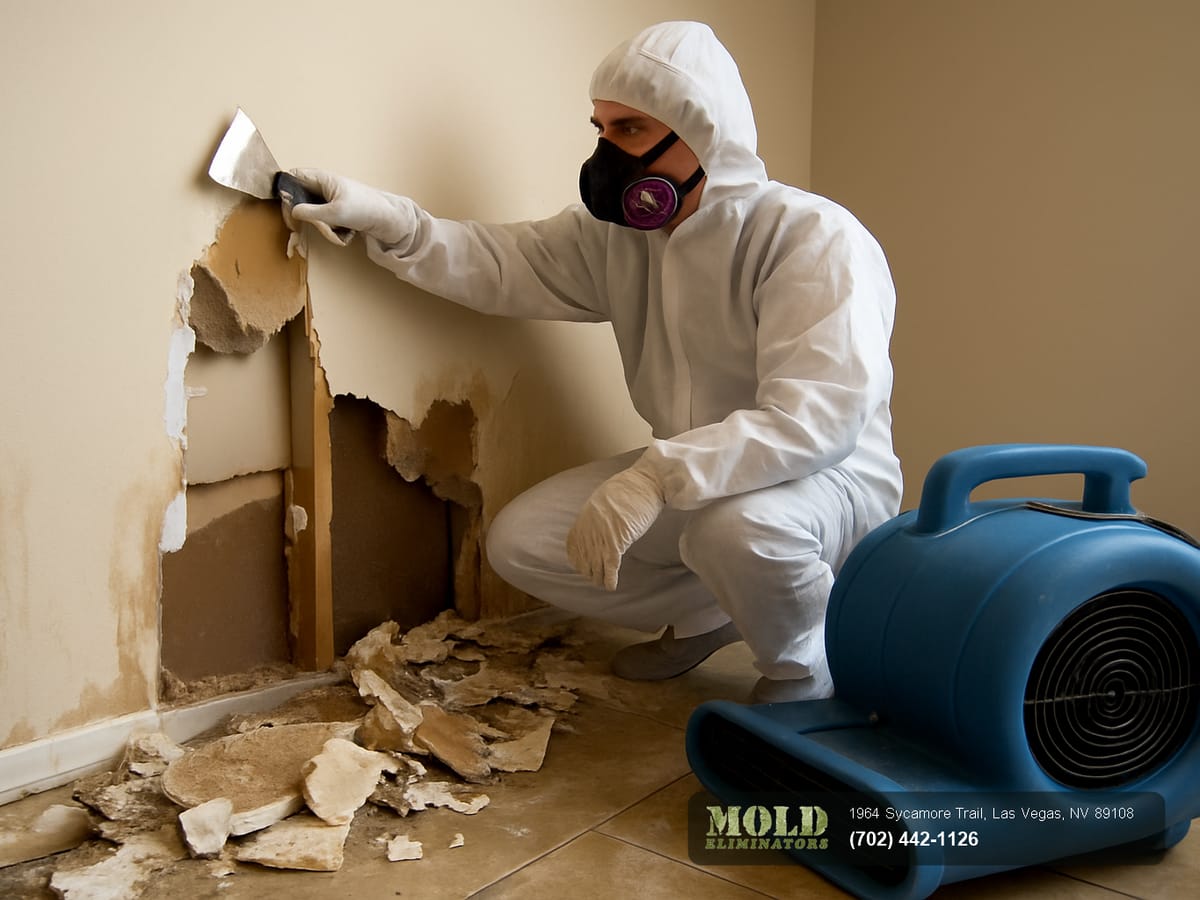
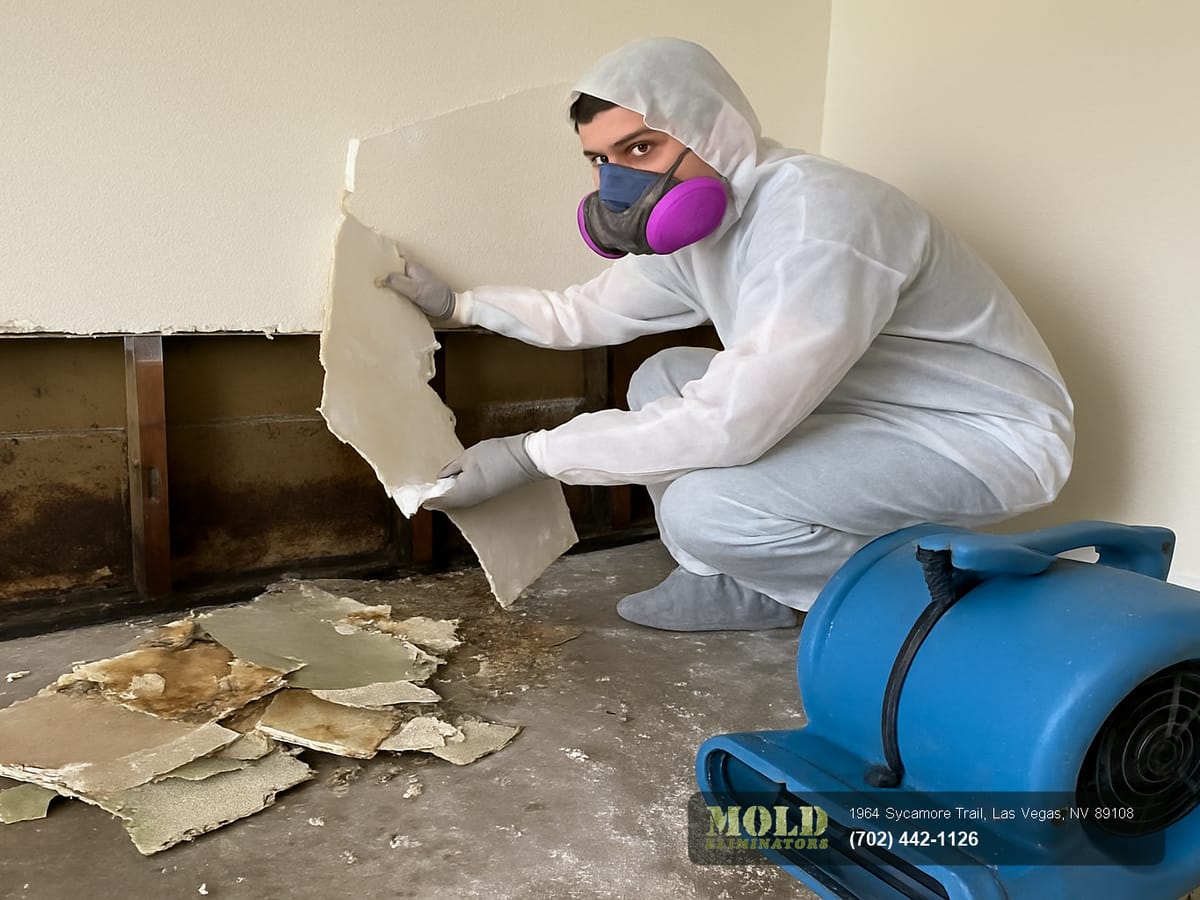
The hard cases live in the middle. A pinhole leak might have weeped for weeks before it suddenly let go and flooded the floor. Was that sudden, or gradual? The answer often comes down to evidence: moisture mapping, the condition of materials, corrosion patterns, and whether secondary problems like mold growth had time to establish. This is exactly why what gets recorded on the first visit can make or break the outcome.
Need help now?
Talk to a Las Vegas expert
In-house certified crews. One-hour emergency response across the valley, 24/7.
Why documentation from the first visit decides the claim
Insurance adjusters were not standing in your home when the loss happened. They reconstruct events from evidence, and the strongest evidence is captured early, before drying changes the scene and before anyone disturbs the affected materials. A restorer who documents properly on arrival hands the adjuster a clear, defensible record instead of a guess.
Here is what thorough first-visit documentation looks like, and why each piece carries weight.
When we arrive on a loss, we capture all of this as a matter of routine, not as an add-on. Our crews are all W-2 certified technicians, never subcontractors, so the person taking the readings is accountable to the same standard from start to finish. That continuity is part of what makes the file hold up when an adjuster reviews it.
Founder Craig Herrmann is an IICRC Master Certified flood expert and a co-author of the ANSI/IICRC S520 standard that governs how this work is documented and performed. You can read more about Craig Herrmann and why that standard matters for your claim. When the documentation follows S520, adjusters know it was done right.
Working directly with your adjuster
A claim goes smoothest when the restorer and the adjuster speak the same language. We work directly with adjusters throughout the job: sharing our readings, explaining the scope, and justifying each line of drying and demolition with field data rather than assertions. When an adjuster can trace every decision back to a measurement, approvals move faster and disputes shrink.
A few things help your claim from the homeowner side:
- Report promptly and stop the source. Shut off the water, call your carrier, and start your claim. Acting quickly supports the sudden-and-accidental position and meets your duty to prevent further damage.
- Do not throw anything away yet. Damaged materials and contents are evidence. Let them be documented before disposal so they can support the scope.
- Let mitigation begin. Carriers expect you to limit damage. Starting professional drying right away is reasonable and often required, even before final claim approval.
- Keep one paper trail. Save every photo, reading, invoice, and message. A complete file answers an adjuster’s questions before they become objections.
If the loss is an active emergency, the clock matters. Our 24/7 emergency response reaches most of the valley within an hour, which means the source gets stopped and the scene gets documented while the evidence is still fresh. The sooner the first reading is logged, the cleaner the claim.
Flood policy versus homeowners policy
 Comparison of flood insurance and homeowners coverage for water losses
One of the most common and costly misunderstandings is the difference between a homeowners policy and a flood policy. They cover different events, and assuming one when you needed the other is how people end up uninsured for a loss.
A homeowners policy generally covers water that originates inside the home: a burst pipe, a failed appliance, an overflowing fixture. It does not cover rising water from outside.
A flood policy, usually separate and often through the National Flood Insurance Program, covers water that rises from outside and enters the structure: monsoon runoff, flash flooding, water coming up from ground level. In the Las Vegas valley this matters during monsoon season, when sudden storms overwhelm drainage and push water into garages and ground floors.
The practical lesson: identify the true source before you assume coverage. Water on your floor from a broken supply line is a homeowners claim. The same puddle from monsoon water entering under a door is a flood claim, and without a flood policy it may not be covered at all. Our documentation establishes the source clearly, which routes the claim to the right policy and keeps a covered loss from being denied under the wrong one.
Honest guidance on where your situation likely falls
We are anti-upsell by principle: we tell people when they do not need us, and we tell them honestly when a claim is unlikely to be covered. Here is a candid read on common scenarios, so you can set expectations before you call your carrier.
Likely covered
A burst pipe, a ruptured water heater, a supply line that failed overnight, a sudden appliance leak, or a fixture that overflowed without warning. Sudden, accidental, and promptly reported. Document the source and start drying.
Often excluded
A slow leak left for months, visible long-term staining, deterioration and wear, or seepage through a foundation. Maintenance-related damage is usually the homeowner’s responsibility, not the carrier’s.
Depends on evidence
A leak that weeped then suddenly failed, or damage where the timeline is unclear. These turn on first-visit readings, photos, and material condition. Strong documentation can move a borderline case onto the covered side.
If your situation looks like the middle column, do not give up before you have evidence, and do not assume coverage you may not have. The right move is the same either way: stop the source, get a properly documented inspection, and let the readings tell the story. We offer a free inspection for homeowners and property owners so you can understand the loss and your likely position before you commit to anything.
Secondary issues deserve attention too. When water sits, mold can follow within a day or two, and a denied or delayed claim is often a mold claim in waiting. If you are worried about what grew, our free mold inspection uses independent third-party labs so the results are objective, never a sales pitch. We serve homeowners across our full service areas throughout the Las Vegas valley.
Frequently asked questions
- Does homeowners insurance cover water damage in Las Vegas?
- Usually, if the water loss is sudden and accidental, like a burst pipe or a failed appliance. Gradual leaks, long-term seepage, and maintenance-related damage are commonly excluded. Outside flooding from monsoon storms typically requires a separate flood policy, not your homeowners coverage. The right water damage restoration documentation is what proves which category your loss falls in.
- Why does documentation from the first visit matter so much?
- Adjusters reconstruct the loss from evidence, and the best evidence is captured before drying changes the scene. Moisture readings, dated photos, and a clear source record distinguish a covered sudden event from an alleged maintenance issue. Following the S520 standard that Craig Herrmann co-authored gives adjusters confidence the file was done right.
- What is the difference between a flood claim and a homeowners claim?
- A homeowners policy generally covers water originating inside the home, such as a burst pipe. A flood policy covers water rising from outside, such as monsoon runoff entering at ground level. Identifying the true source first decides which policy applies, and our readings establish that source clearly.
- Can I start drying before the claim is approved?
- Yes, and you usually should. You have a duty to prevent further damage, so prompt mitigation is reasonable and often required. Our 24/7 emergency response stops the source and documents the scene early, which strengthens the claim rather than weakening it.
Where Las Vegas claims get complicated
Two local wrinkles trip up valley homeowners. Monsoon flooding can fall under separate flood insurance rather than your standard policy, and knowing which one applies changes the entire claim. And in a high-rise or HOA condo near the Strip, the line between what your policy covers and what the association covers is rarely obvious. We document the loss in a way that protects you no matter which way those lines fall.
Next steps
Not sure where your water loss stands? Let’s find out.
Get an honest, properly documented inspection before you talk to your carrier. We will tell you straight where your situation likely falls, and we will give you the readings and photos that protect your claim. There is nothing to pay up front for that visit.