Water Heater Burst: What to Do
Water Damage Emergency Guide
A water heater holds 40 to 50 gallons under pressure, and when the tank lets go it does not trickle. It empties across your floor in minutes, then keeps refilling and spilling until someone shuts the supply off. If you are standing in a spreading puddle right now wondering what to do, the next ten minutes matter more than the next ten days.
This guide walks through exactly what to do when a water heater bursts, in the order that protects your safety first and your property second. The short version: stop the water, kill the power to anything the water can reach, get the standing water out fast, and document everything for your claim. The faster a structure is dried, the less likely a sudden burst turns into a slow mold problem behind the baseboards. If water is actively spreading and you want a crew on the way while you read, our emergency water removal team answers 24/7 with a one-hour response across the Las Vegas valley.
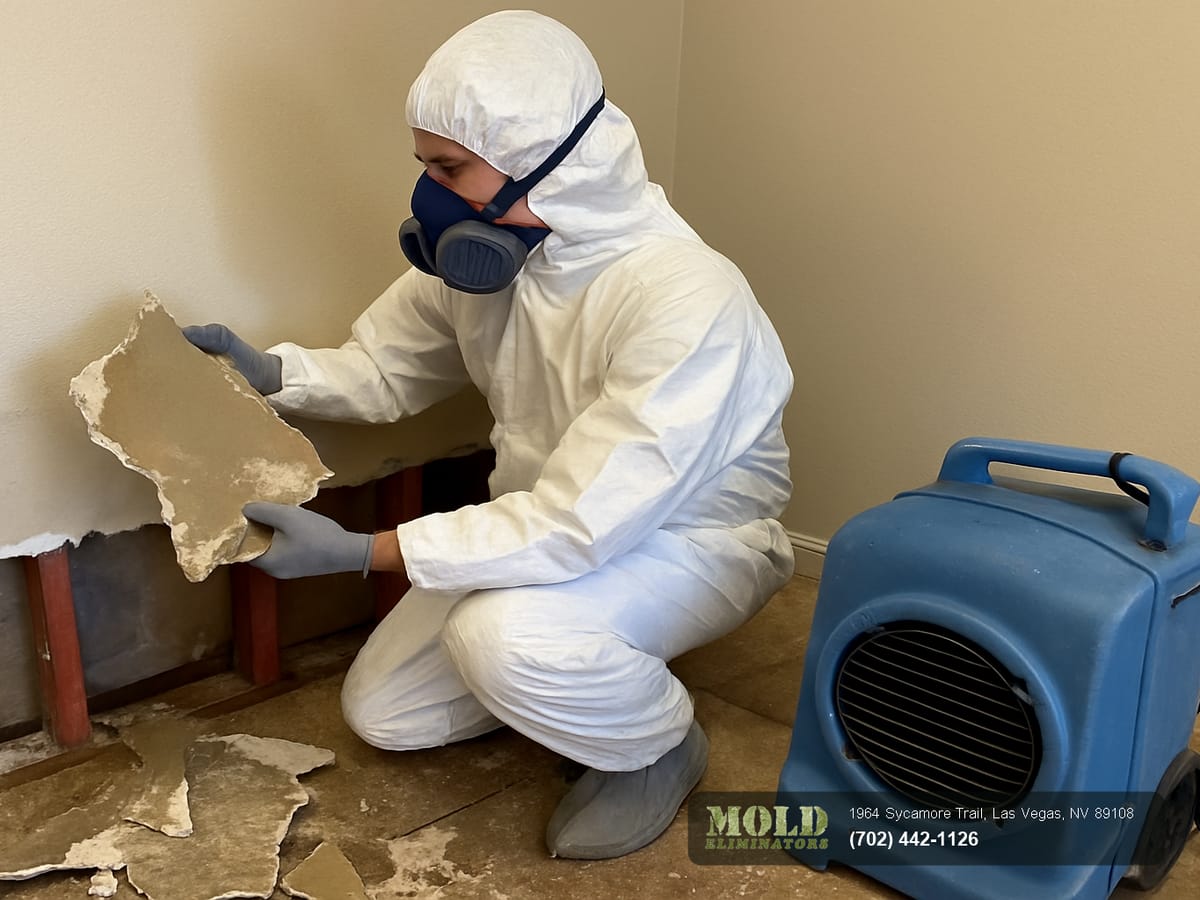 Failed residential water heater leaking onto a garage floor in a Las Vegas home
The first five minutes: stop the water and the power
When a water heater bursts, two things are leaking at once: water and, potentially, danger. Gas heaters have an open flame or pilot, electric heaters carry 240 volts, and the water now pooling on your floor can reach either one. So the first moves are not about cleanup. They are about cutting the two things that make a burst tank dangerous before you do anything else.
Here is the order that keeps you safe and limits the damage. Do not skip the power and gas steps to get to the water faster, because a wet floor near a live electrical connection is exactly the situation you want to avoid.
- Shut off the water supply. Find the cold-water inlet valve on top of the heater and turn it clockwise until it stops. If that valve is stuck or you cannot reach it safely, go to the home’s main water shutoff, usually near the street-side hose bib or in a box near the curb, and close it. This stops the tank from refilling and spilling more.
- Cut the power to the heater. For an electric unit, switch off its dedicated breaker at the main panel, typically a double-pole 30-amp breaker. Do not touch the heater or stand in the water to do this. If you have to cross standing water to reach the panel, stop and call an electrician or our emergency line first.
- Shut off the gas. If your heater is gas, turn the gas control valve to OFF, then close the gas shutoff valve on the supply line running to the unit. If you smell gas at any point, leave the house and call your gas utility from outside.
- Open a hot tap to relieve pressure. Opening a hot-water faucet somewhere in the house relieves pressure in the system and helps the tank drain instead of forcing water out of the rupture.
- Move what you can. Lift electronics, boxes, and anything porous up off the wet floor. Most water heaters live in a garage or closet packed with stored belongings, and getting those off the ground early saves them.
Once the water is stopped and the power and gas are off, the emergency is stable. Now the clock that matters is the drying clock, and it is not generous. Wet drywall, framing, and subfloor can begin growing mold within roughly 24–48 hours, which is why the steps below move quickly from safety to extraction.
Need help now?
Talk to a Las Vegas expert
In-house certified crews. One-hour emergency response across the valley, 24/7.
Electrical safety: the rule that overrides everything
Water and electricity are the reason a burst water heater is treated as a genuine emergency and not just a mess. Water spreading across a floor can energize through an appliance cord, a damaged outlet, or the heater’s own wiring, and you cannot tell by looking whether a puddle is safe to step in. The rule is simple and absolute: if standing water has reached outlets, power cords, or the electrical panel, do not enter it.
If you cannot safely reach the breaker without crossing water, leave the power on, get everyone out of the wet area, and let a professional handle it. Our crews carry the training and equipment to de-energize and work a flooded space safely, and a one-hour emergency response means you are not waiting all night in a hazard. This is also the moment to keep children and pets well clear of the area until the power is confirmed off and the water is removed.
Once power is confirmed off and the area is safe, the priority shifts to getting the water out before it soaks deeper into the structure. The longer it sits, the more it wicks up into wall cavities and down into the subfloor, where household towels and a shop vac cannot reach it.
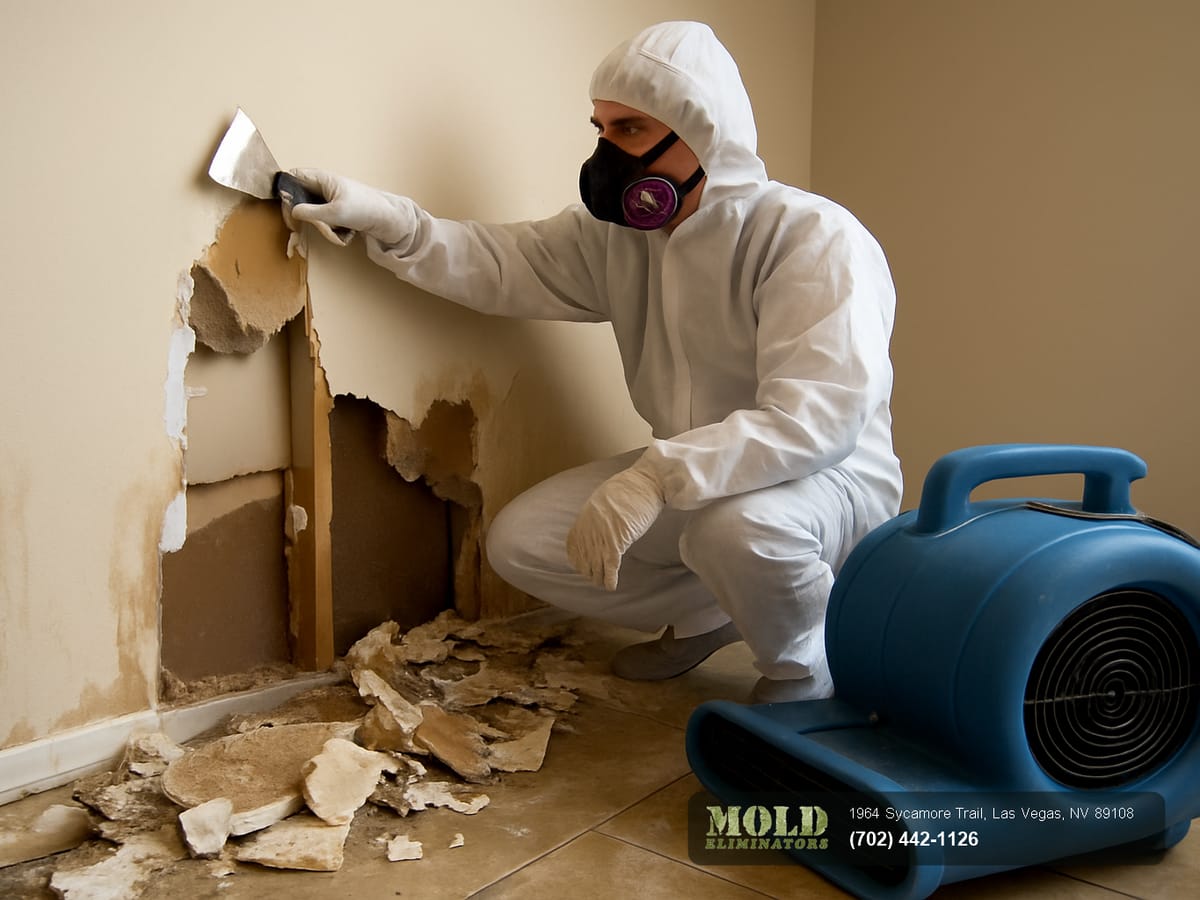 Air movers and a commercial dehumidifier set up to dry a water-damaged room
Extraction and drying: why fast and measured wins
Mopping up the visible water is the easy, visible part. The water that already wicked into the drywall, the bottom plates of the framing, and the subfloor is the part that does the real damage, and it does not evaporate on its own fast enough to matter. That is why proper water damage restoration treats a burst as a drying problem, not a mopping problem.
- Extract the standing water. Commercial extraction pulls water out far faster than evaporation and protects the materials underneath. Pulling water out is always faster than drying it out.
- Map the moisture. Meters and thermal imaging show exactly how far the water traveled and how wet each material is, so the drying is aimed, not guessed, and there is a documented baseline to measure against.
- Dehumidify and move air. Commercial dehumidifiers keep the room drier than the wet materials while high-velocity air movers sweep moisture off surfaces into the air to be captured.
- Verify and document. Daily readings track each material to a real dry target, and the equipment comes out only when the numbers confirm the structure is dry, not when it feels dry.
This measured approach matters because Las Vegas adds its own wrinkles. Many homes here sit on slab-on-grade construction, and concrete slabs hold water far longer than people expect: a slab that feels dry on top can stay saturated underneath for weeks. The desert’s dramatic day-night swings make “it will just air-dry” a dangerous assumption. The structural drying standard our work follows was co-authored by our owner, Craig Herrmann, who helped write the ANSI/IICRC S520 standard, so the drying is done by the rulebook and proven with data rather than declared done by eye.
Insurance: document everything before you clean up
A burst water heater is one of the most commonly covered water claims, because the failure is sudden and accidental, which is exactly the kind of event most homeowner policies are written for. But coverage often turns on documentation, and the cleanup that feels urgent can erase the evidence an adjuster needs. So before you start hauling out soaked belongings, spend two minutes building your record.
Photograph and video everything first. Capture the failed heater, the standing water, the affected rooms, and the damaged contents from several angles before anything is moved or dried. These images are the backbone of the claim.
Save the failed heater. Do not throw it out. Adjusters and manufacturers sometimes inspect the unit to confirm the cause of failure, and a tank that is already at the dump cannot be examined.
Keep your receipts and notes. Log the date and time you noticed the burst, every step you took, and any emergency services you called. Keep receipts for anything you buy to mitigate damage, since reasonable mitigation costs are typically reimbursable.
Act to prevent further damage. Policies expect you to mitigate, meaning you are obligated to stop the spread and start drying promptly rather than letting the damage compound. This is where a documented professional dry-out helps twice: it protects the structure, and the moisture map and daily logs are exactly what an adjuster wants to see. Because we dry fast and prove it with data, we are also documenting the very thing that keeps a covered water claim from quietly becoming a disputed mold claim months later. When you are ready for that record, a free inspection gives you a calm, factual picture of what got wet and what it will take to make it right, with no pressure attached.
Why Las Vegas homeowners call us after a burst
One-hour response, 24/7
A burst tank does not wait for business hours, and neither do we. Our in-house crews respond within an hour, any time, across the valley, so the water stops spreading and drying starts before mold’s clock runs out.
Certified to the standard
Owner Craig Herrmann co-authored the ANSI/IICRC S520 standard and has restored 255-plus properties since 1996. Your home is dried to documented targets, not to “feels dry.”
No subcontractors
Every technician is a certified W-2 employee, and an independent third-party lab verifies results. One crew owns the water, the drying, and the mold risk from the first reading to the last.
We are also straight with you about what you do and do not need. If a small, quickly-caught leak dried before it spread, we will tell you so rather than sell a package. And if the damage is bigger than it looks, the in-house accountability means there is one chain of responsibility from the burst to the verified-dry result, not a handoff to a separate mold company that points fingers when something gets missed.
Water heater burst: common questions
- What should I do first when a water heater bursts?
- Shut off the water supply at the heater’s cold-inlet valve or the home’s main shutoff, then cut the power to the unit at the breaker and turn off the gas if it is a gas heater. Only after the water, power, and gas are off should you start moving belongings and removing water. If standing water has reached outlets or the panel, do not enter it, call a professional. Fast, safe action is the heart of what to do when a water heater bursts.
- Is a burst water heater an emergency?
- Yes. Beyond the immediate electrical and gas hazards, wet drywall and framing can begin growing mold within roughly 24–48 hours, so drying cannot wait. The faster the water is extracted and a controlled drying environment is set up, the more material you save. If water is actively spreading, our emergency water removal line answers around the clock.
- Does homeowners insurance cover a burst water heater?
- Sudden, accidental water heater failures are frequently covered, since that is the kind of event most policies are written for. Coverage often hinges on documentation and prompt mitigation, so photograph everything before cleanup, keep the failed unit, and start a professional dry-out. The documented moisture map from full water damage restoration is exactly what an adjuster needs to approve the claim.
- Can I just dry it out myself with fans?
- For a tiny spill on a hard surface, sometimes. But household fans and the dry desert air cannot pull water out of a soaked wall cavity, a subfloor, or a concrete slab fast enough to beat mold’s 24–72 hour clock. Without dehumidification and moisture readings you are guessing whether it is dry, and guessing is how a sudden burst becomes a slow mold problem.
- How do I know if hidden water is still in the walls?
- A lingering musty smell, cool or clammy spots, warping or staining that shows up days later, and soft drywall at the base are all warnings that moisture is still trapped. None of them are required for a cavity to be dangerously wet, though, so the only way to know is to measure. A free inspection for property owners is the calm way to find out whether a past burst left anything behind.
Burst water heater? Stop it, dry it, and prove it.
Free, no-pressure on-site inspection and a one-hour emergency response, 24/7, across the Las Vegas valley. We dry to verified targets and document the result, so a sudden burst ends here, not in three weeks behind the baseboards.