Mold Removal & Water Damage Restoration in Spring Valley, NV | Mold Eliminators
Mold & Water Damage · Spring Valley, NV
When mold shows up in a Spring Valley condo or a ceiling stain spreads after the unit upstairs sprang a leak, the worst thing you can do is wait. Mold removal in Spring Valley, NV is rarely just a wall problem here. With so many shared walls and stacked units, water travels, and by the time you see it the real damage is usually behind the drywall. The good news: we are minutes away, the structure is almost always recoverable, and a measured response gets you back to dry and clean without the guesswork.
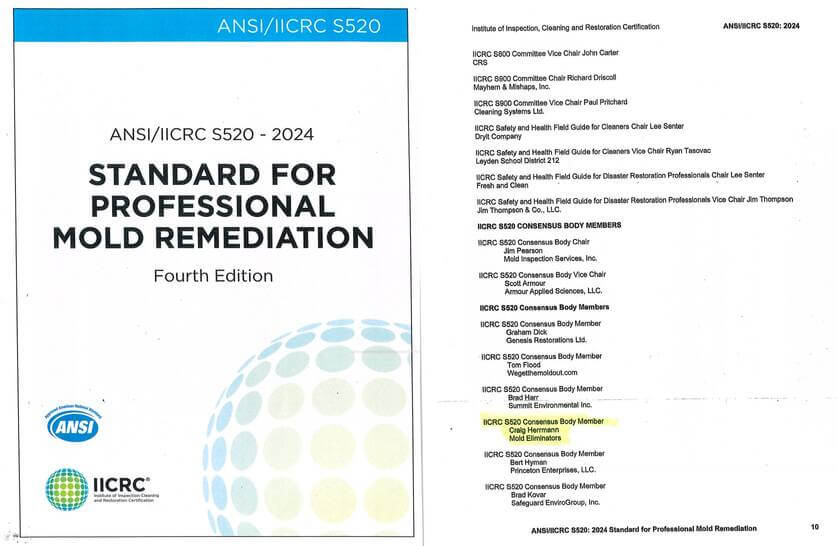
Spring Valley sits just west of our Las Vegas headquarters, so it is one of the fastest areas we reach. Mold Eliminators has restored more than 255 valley properties since 1996, all with in-house W-2 crews and a 1-hour emergency response. Whether you need mold remediation or full water damage restoration in Spring Valley, the same standards-driven process applies, and our founder, Craig Herrmann, helped author the ANSI/IICRC S520 standard the whole industry follows.
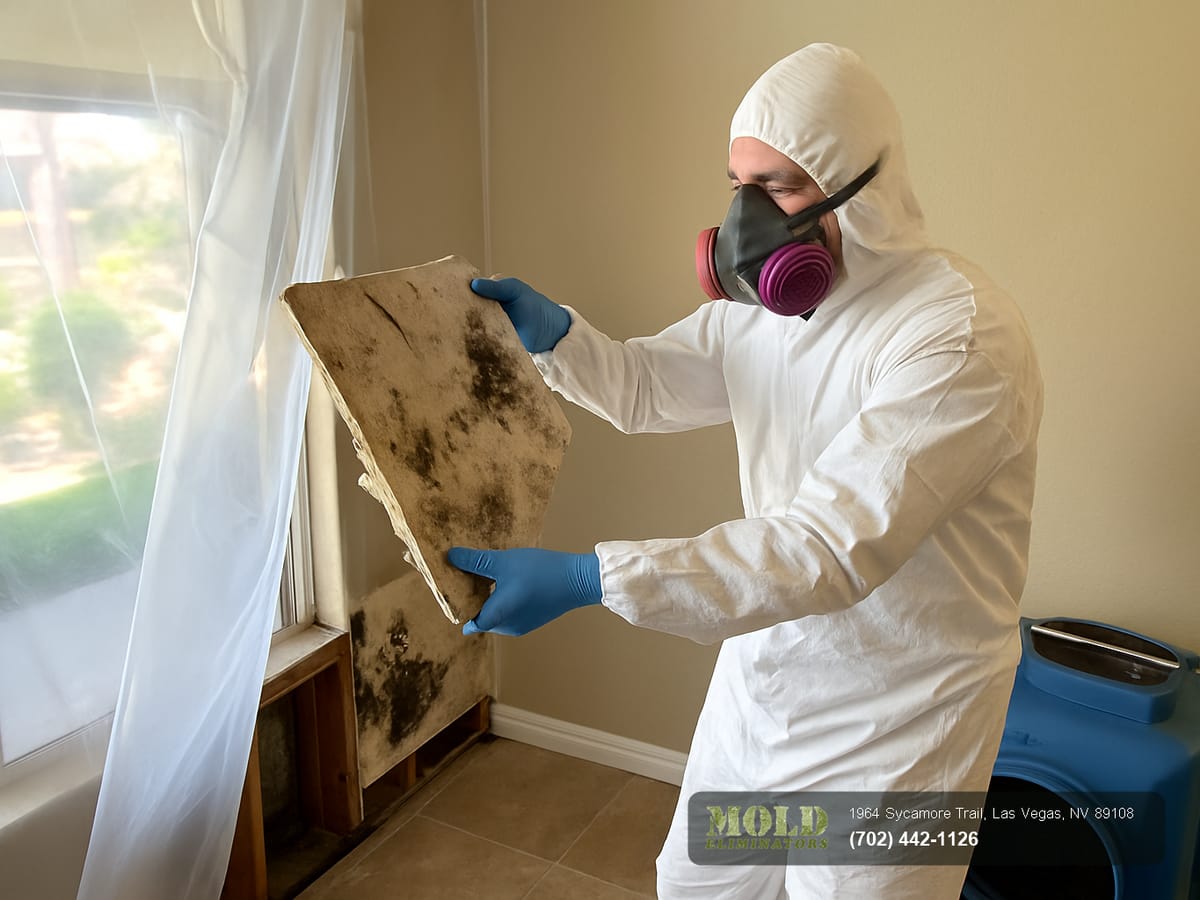
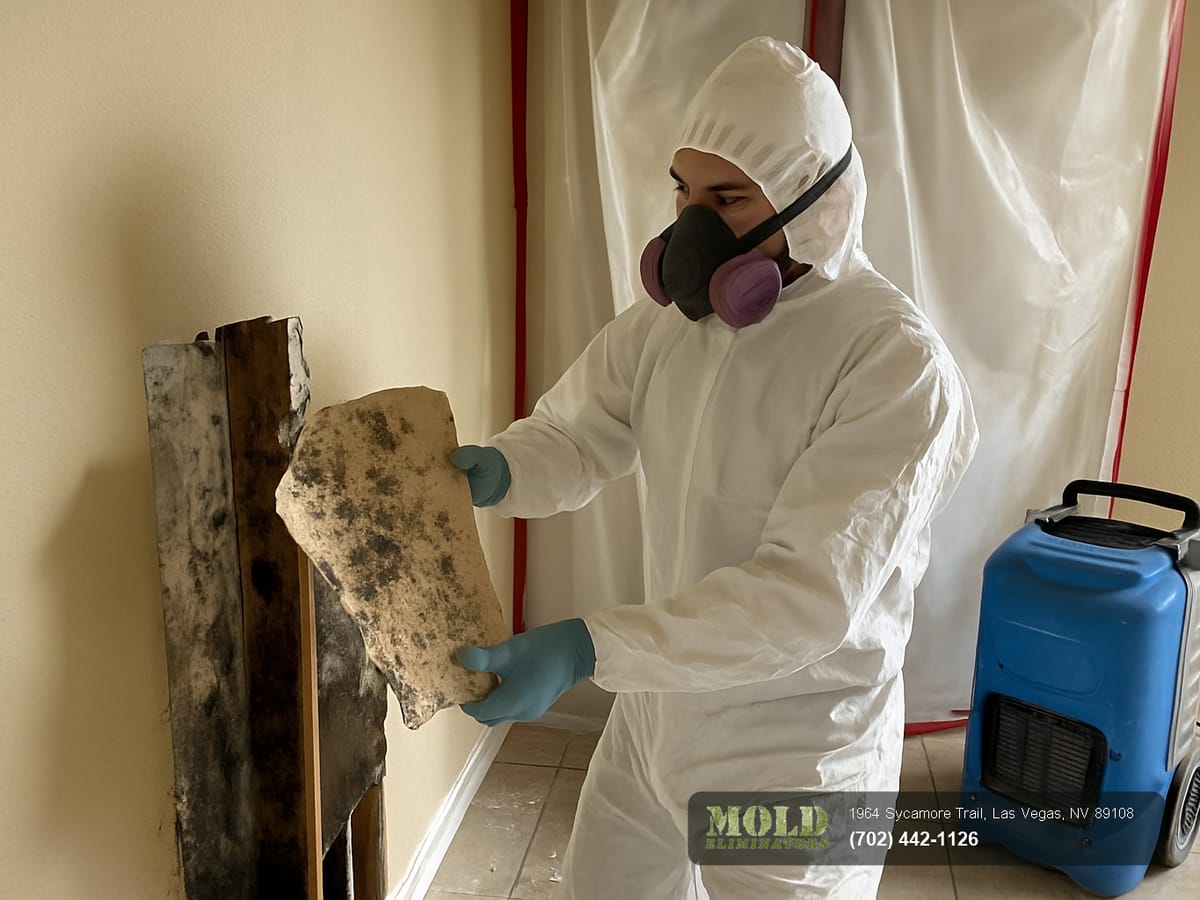 Our in-house, certified crew on a Spring Valley call. No subcontractors.
Need help now?
Talk to a Las Vegas expert
In-house certified crews. One-hour emergency response across the valley, 24/7.
Why Spring Valley homes and condos get mold
Spring Valley is one of the most densely built parts of the valley, and that density is the single biggest reason we get called here. From the Spring Mountain Road and Chinatown corridor to the master-planned pockets of Peccole Ranch and Rhodes Ranch, and the older blocks near Tropicana and Jones, the area is packed with condos, townhomes, and apartment communities. When you stack units and share walls, water stops being a one-room problem. An upstairs supply line or overflowing tub becomes a downstairs ceiling problem, and the moisture spreads sideways through party walls before anyone upstairs even notices.
That shared-wall reality is exactly why ceiling water damage is so common across the 89117, 89146, 89147, and 89148 zips. A leak two units up can saturate the cavity above your ceiling, and by the time the stain appears the drywall, insulation, and framing have already been wet for days. Multi-family buildings also tend to hide leaks longer because no single owner sees the whole picture, so the water has time to feed mold behind finished surfaces.
The desert adds its own twist. Plenty of older homes in central Spring Valley, built through the 1980s and 1990s, still run evaporative swamp coolers, and a swamp-cooler overflow or a failed float valve can dump water into a ceiling or down an interior wall for hours. If you suspect that source, our swamp cooler leak response targets it directly. Aging plumbing from that same era is another slow culprit: a pinhole drip behind a vanity or under a slab can weep for weeks, and the famously dry desert air masks the musty smell that would warn you in a wetter climate. The leak stays hidden, the cavity stays damp, and mold spreads behind the drywall long before anything looks wrong on the surface.
There is also a paperwork problem unique to this kind of housing. In HOA-managed and condo buildings, responsibility for water damage is often disputed: is it the upstairs owner, the association, or you? While the parties argue, the water keeps working. We document the source, the moisture readings, and the full footprint from the first visit so the facts are clear, which is half the battle when an HOA or condo water-damage responsibility question is on the table.
Where the water hides in a Spring Valley unit
The stain on your ceiling is the part you see. The damage that grows mold is the water that traveled into the cavities and shared assemblies you cannot see. In stacked condos and townhomes, these are the spots that fool owners:
Water does not just sit where it pooled. It wicks upward and sideways through porous materials by capillary action, climbing several inches up a sheet of drywall and following the path of least resistance down a wall cavity until it settles. In a multi-family building, that path often crosses an assembly two parties share, which is precisely why mapping the full footprint with moisture meters and thermal imaging, before a single fan is set, decides whether the job is done right or done twice. A proper mold inspection finds the edge of the wet area, not just the obvious stain.
The honest part of this work is telling you what can and cannot be saved. Drywall, insulation, and carpet pad that soaked up contaminated water usually have to be removed to standard, because you cannot decontaminate the inside of a porous material you cannot reach. Tile, sealed concrete, solid trim, and metal can often be cleaned and saved, because the contamination stays on the surface. Specialized drying systems can pull water out of a wall cavity in place before warping sets in, provided we reach them in the first day or two. We will always show you the readings and explain exactly why a material stays or goes, rather than demolishing on a hunch.
Air movers and dehumidifiers drying a Spring Valley condo after water damageOur S520 process, step by step
Mold removal and water damage work follow a strict order, because the moisture and any contamination have to be controlled before anything else happens. Skip a step and you spread the problem instead of fixing it. Here is what our in-house Spring Valley crews do:
- Emergency response and assessment. We answer 24/7 with a 1-hour emergency response, stop the intrusion where possible, and map moisture with meters and thermal imaging to find the true extent across walls, ceilings, and shared assemblies.
- Containment. We isolate the work area so spores and dust do not migrate into clean rooms or, in a condo, into a neighbor’s unit through shared chases.
- Source control and extraction. Standing water comes out fast, and we trace the source, whether it is an upstairs supply line, a swamp cooler leak, or failing original plumbing, so it does not simply refill.
- Removal and cleaning. Porous materials that cannot be saved are removed to standard, then every surface the water touched is HEPA-cleaned and treated, so we dry a clean structure rather than sealing a problem inside the wall.
- Structural drying. Calibrated air movers and dehumidifiers dry the cavity to documented moisture targets, not to “looks dry,” but to a measured reference.
- Verification and clearance. We re-read moisture and, where mold warranted it, follow with independent lab testing so your clearance is proven by a third party, never self-certified.
What we handle in Spring Valley
From a single moldy closet to a multi-unit water loss, we run the whole job in-house, from inspection through verified clearance. These are the services Spring Valley calls us for most:
Mold remediation
Containment, removal, and treatment to the S520 standard, then verification. Start with mold remediation when you can see or smell growth, or with black mold removal for the dark patches behind a chronically damp wall.
Water damage restoration
Extraction, controlled demolition, and drying after a leak or overflow. Our water damage restoration work in Spring Valley pairs with proper structural drying so the cavity dries to a measured target, not just to the touch.
Inspection & testing
Find the real footprint before you demo anything. A mold inspection maps moisture with meters and thermal imaging, and independent mold testing confirms what is actually in the air and behind the wall.
Flood & emergency response
For a sudden, spreading loss, flood restoration and around-the-clock emergency response stop the water and start drying fast, which is what protects the most material.
Ceiling & multi-unit leaks
The signature Spring Valley job: an upstairs leak that becomes your ceiling water damage. We trace it to the source, dry the cavity, and document who owned the water.
Commercial & HOA buildings
Apartment, condo, and mixed-use properties along the Chinatown corridor lean on our commercial water damage crews for fast, documented work that holds up with adjusters and associations.
Why Spring Valley calls Mold Eliminators
Because we live next door and we do the work ourselves. Spring Valley is just west of our Las Vegas base, so our 1-hour emergency response is real here, not a marketing number, and the first hour is what decides how much of your home you keep.
When the standards come up, they come from us. Our founder, Craig Herrmann, is one of only three IICRC Master Certified Flood Experts in Southern Nevada, an IICRC board member, and a co-author of the ANSI/IICRC S520 standard, 4th Edition. The drying and clearance targets we work to are not opinions, they are the rulebook.
Every technician on your job is a certified W-2 employee. We use no subcontractors, so the people who quote the work are the people who do it, and our name is on the result. We also do not grade our own homework: an independent, third-party lab verifies that the structure is clean, and a free inspection is available to homeowners and property owners. We are openly anti-upsell. If your Spring Valley home is clean, we will prove it with the lab report and leave, because we profit from fixing real problems, never from inventing them.
Mold removal in Spring Valley, NV: common questions
- The unit above me leaked into my ceiling. Who is responsible, me or the HOA?
- It depends on where the water came from and what your association’s governing documents say, which is why these disputes drag on. Often the upstairs owner is responsible for their plumbing, the HOA for shared and common elements, and you for your own interior finishes, but the lines vary by building. We help by removing the guesswork: we trace the source, photograph it, and record moisture readings from the first visit, so the HOA or condo water-damage responsibility question is decided on facts, not arguments. Meanwhile, drying starts right away so the damage does not grow while the paperwork sorts itself out.
- How fast can you reach Spring Valley?
- Fast. Spring Valley sits just west of our Las Vegas headquarters, so it is one of the quickest areas we cover, with a 1-hour target for emergency response, 24/7. With water damage the first day decides how much is savable, so we do not sit on a call.
- Is the black patch on my wall really toxic mold?
- Maybe, maybe not, and that is exactly why we test instead of scaring you. Plenty of dark staining is harmless, and some is active growth that needs proper black mold removal. The honest way to know is independent lab mold testing rather than a guess from a salesperson. If it is nothing, we will tell you it is nothing.
- My Spring Valley home is older and has a swamp cooler. Could that be causing mold?
- Very possibly. Many central Spring Valley homes from the 1980s and 1990s still use evaporative coolers, and an overflow or failed float valve can run water into a ceiling or down a wall for hours. Combined with older plumbing and dry air that hides the musty smell, the moisture can feed mold for weeks before you see it. Our swamp cooler leak response and a thorough mold inspection pinpoint the source.
- Do you serve my part of Spring Valley?
- Yes. We cover all of Spring Valley, including the Spring Mountain Road and Chinatown corridor, Peccole Ranch, Rhodes Ranch, the Tropicana and Jones area, and the 89117, 89146, 89147, and 89148 zips. See every community we cover on our service areas page.
Mold or water damage in Spring Valley? Call now, the first day decides everything.
Free, no-pressure on-site inspection, with independent lab testing available if you want it. In-house W-2 crews, no subcontractors, 1-hour emergency response, 24/7, just west of our Las Vegas base.
Our services in Spring Valley
Every mold and water damage service we provide for Spring Valley homeowners and property owners.