Asbestos Testing in Las Vegas
Knowledge · Water & Damage
Asbestos Testing in Las Vegas
Before you swing a hammer in an older Las Vegas home, you need to know what’s behind the drywall. If your house was built before 1990, asbestos testing isn’t paperwork for paperwork’s sake, it’s the difference between a clean remodel and a sealed-off, contaminated job site. We test first, with samples read by an accredited lab, so you get documentation contractors and permit offices actually accept.
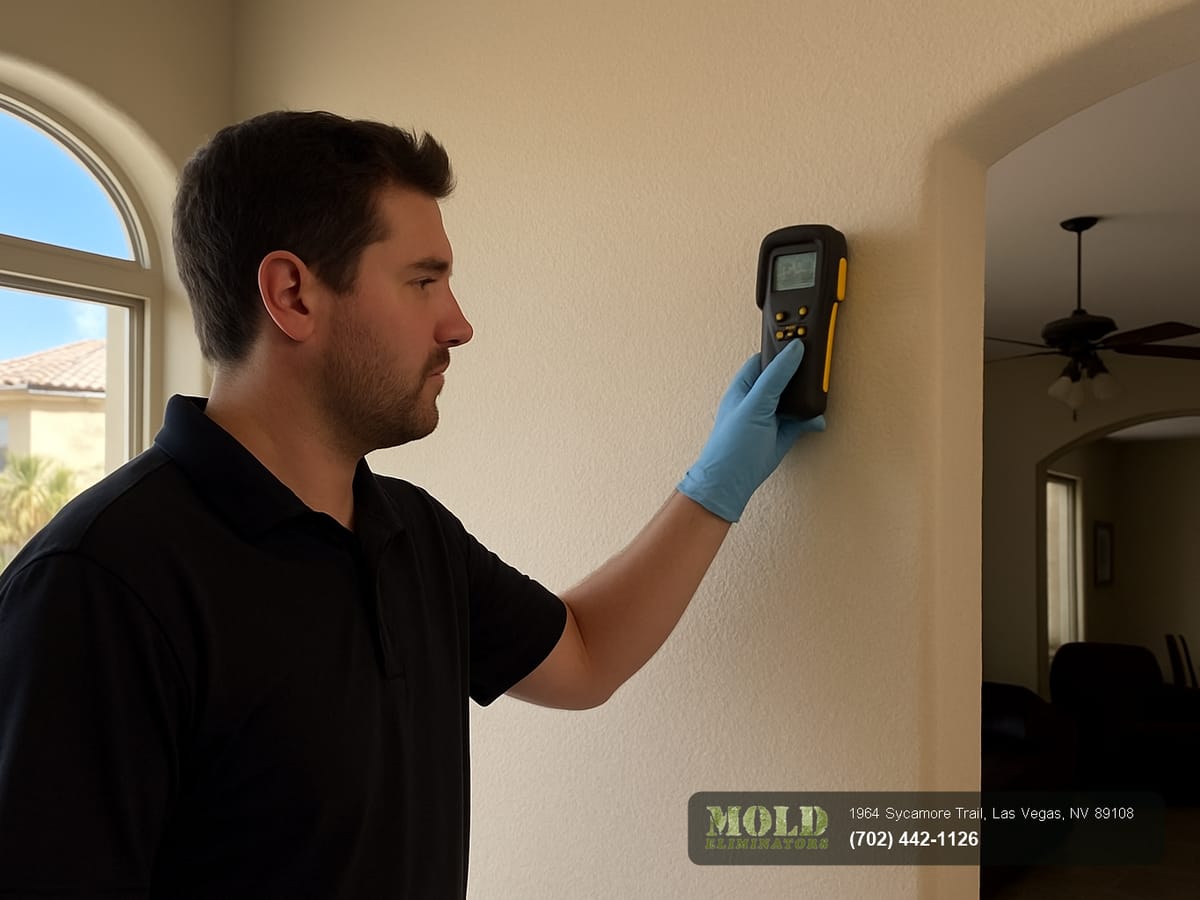
Most homeowners come to asbestos testing the same way they come to us about mold, at a panic moment. A demo crew finds suspect popcorn ceiling. A flooded floor needs the vinyl pulled up. A permit reviewer flags the age of the house and asks for a survey before work can start. Whatever brought you here, the principle is the same one that runs through everything we do: we measure against the standard, we let an independent lab tell the truth, and we don’t sell you work you don’t need. If a material tests clean, you’ll hear that plainly, and you won’t pay us to invent a problem.
Understanding
What asbestos testing actually is, and why it matters here
Asbestos is a naturally occurring mineral fiber that was prized for decades because it resists heat, fire, and corrosion. From roughly the 1940s through the late 1980s, it was woven into building products everywhere: popcorn (acoustic) ceilings, vinyl floor tiles and the mastic under them, sheet flooring backing, drywall joint compound, pipe and duct insulation, roofing felt, stucco, and textured wall coatings. You cannot tell whether a material contains asbestos by looking at it. The only reliable answer comes from collecting a physical sample and having it analyzed under a microscope.
That last point is the whole reason testing exists. Asbestos is only dangerous when it’s disturbed, when sanding, scraping, cutting, or demolition releases the microscopic fibers into the air where they can be inhaled. Left intact and undisturbed, an asbestos floor tile sits there harmlessly for decades. The danger arrives the moment a remodel or a water-damage repair turns that intact material into airborne dust. Testing before the dust starts is what keeps a routine project from becoming a regulated cleanup.
Las Vegas has its own wrinkle. The valley’s housing stock includes large numbers of homes built in the 1960s through the 1980s boom years, many with original popcorn ceilings and original flooring still in place. Add the desert reality of slab leaks, swamp-cooler condensation, and monsoon-season water intrusion, and you get a lot of older homes that suddenly need flooring or ceilings opened up after water damage, exactly the materials most likely to contain asbestos. When water forces a repair, testing is the calm first step. The same documentary, lab-backed approach we bring to a professional mold inspection applies here: identify what’s actually present before anyone disturbs it.
Need help now?
Talk to a Las Vegas expert
In-house certified crews. One-hour emergency response across the valley, 24/7.
Signs & When It’s Required
When asbestos testing is required (or strongly advised)
You don’t test out of fear, you test because of a specific, identifiable trigger. Here are the situations where testing belongs on the front of the project, not the back.
Pre-1990 home, pre-remodel
Any renovation that disturbs walls, ceilings, or flooring in a home built before 1990 is the textbook case. Test the specific materials you plan to touch before demo begins.
Before demolition
Full or partial demo releases the most dust. Nevada and federal rules expect a survey before structures of a certain age and scope come down. Permit offices ask for it.
Popcorn ceilings
Textured acoustic ceilings installed before the late 1980s are among the most common asbestos-containing materials in valley homes. Never scrape one dry without testing it first.
Old flooring & mastic
9×9 vinyl tiles, sheet-vinyl backing, and the black mastic adhesive underneath frequently test positive. Water-damaged flooring that has to be pulled is a classic trigger.
Water damage repairs
When a slab leak or monsoon intrusion forces you to open up an older home, the materials you’re removing are exactly the ones to sample first.
Real-estate transactions
Buyers, sellers, and lenders increasingly want documented clearance on older properties. Lab-backed results keep a deal moving instead of stalling it.
If none of these apply, your home is newer, or you’re not disturbing anything, you very likely don’t need testing at all, and we’ll say so. That same honesty is why so many homeowners start with our free inspection offer: it costs nothing to find out whether you have a real problem before you spend a dollar on a fix.
The Process
How we test, step by step
Good testing is methodical and unhurried. Rushing it is how fibers get released. Here’s exactly what to expect when we run an asbestos survey on a Las Vegas property.
1. Walkthrough & scope
We start by identifying the suspect materials tied to your actual project, the ceiling you want scraped, the floor you’re pulling, the wall you’re opening. We document the home’s age and construction so the survey matches the work, not a generic checklist.
2. Controlled sampling
Each suspect material gets a small physical sample collected with the area lightly wetted and the work zone controlled to prevent fiber release. We take enough samples per material type to give the lab a statistically meaningful read, one tile is not a survey.
3. Accredited lab analysis
Samples go to an independent, accredited laboratory for analysis under polarized-light microscopy. We don’t grade our own homework. The lab has no stake in your remodel and no incentive to find, or miss, anything.
4. Documented results
You receive a written report stating each material, the percentage of asbestos found (or “none detected”), and the lab’s chain of custody. This is the document a contractor and a permit reviewer will ask for by name.
5. Honest next steps
If everything tests clean, you’re cleared to proceed, go remodel. If something tests positive, we walk you through the options calmly: abatement, encapsulation, or simply leaving intact material undisturbed. No pressure, no scare tactics.
This is the same disciplined, lab-verified workflow behind our mold testing and mold remediation services, identify the truth with an independent lab, then act only on what’s actually there. The standards-first approach traces directly to Craig Herrmann, who has spent decades measuring jobs against the rulebook rather than guessing.
Accredited, independent lab
Every sample is read by a third-party accredited laboratory, not by us. That separation is your guarantee the result is real and not a sales pitch.
Documentation contractors accept
A clear written report with material-by-material findings and chain of custody, the format permit offices and licensed contractors expect to see before they start work.
In-house, no subcontractors
The same certified team that tests is the team you’ll deal with throughout. If our name is on the report, our people collected the samples.
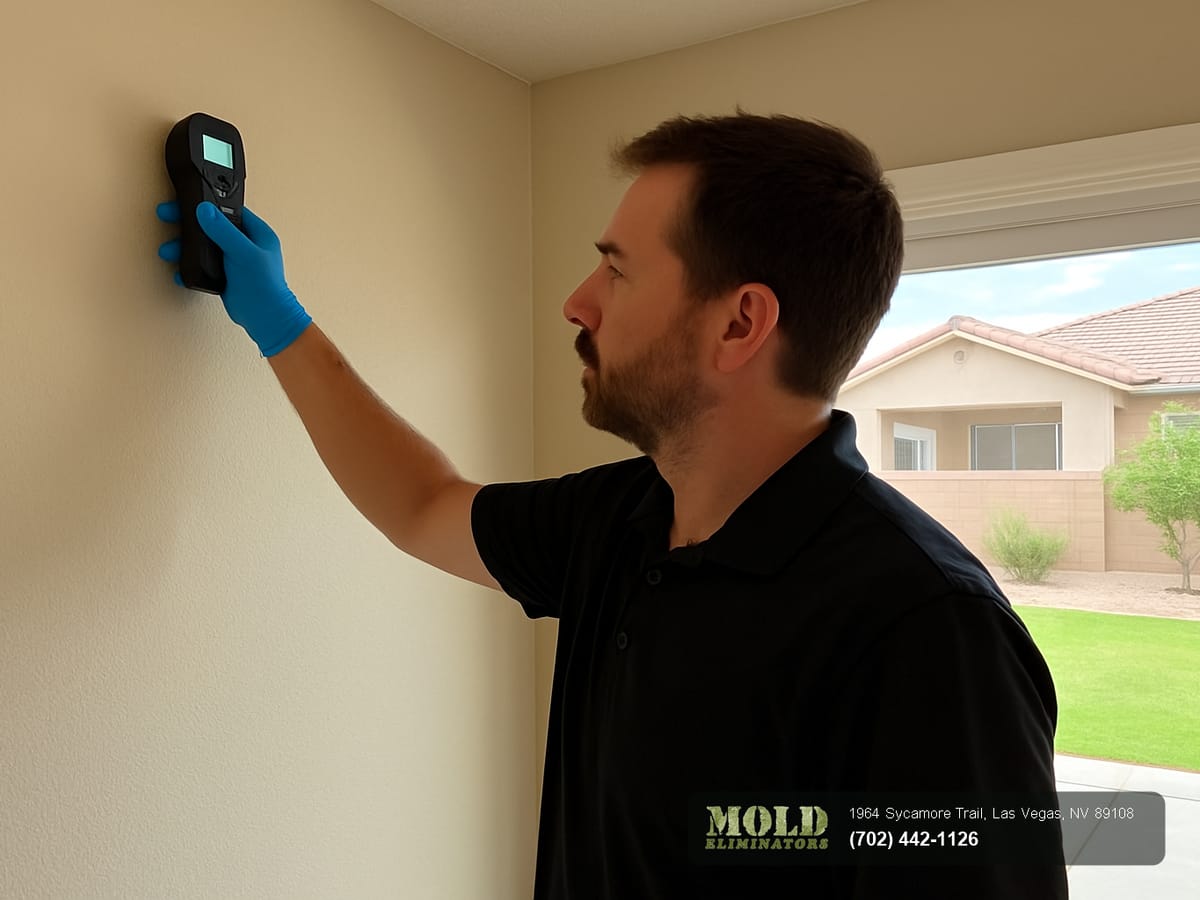 Sampling suspect ceiling material in an older Las Vegas home
Questions
Frequently asked questions
- Do I really need asbestos testing if my house looks fine?
- Appearance tells you nothing, asbestos is invisible in finished materials. What matters is the home’s age and whether you’re about to disturb anything. If your Las Vegas home predates 1990 and you’re remodeling, scraping a ceiling, or pulling old flooring, test the affected materials first. If you’re not disturbing anything, you generally don’t need to test.
- Why pre-1990 specifically?
- Asbestos use in residential building products dropped off sharply through the 1980s as regulations tightened, but it wasn’t fully phased out of common materials until around that time. Pre-1990 is a practical cutoff: older than that, assume materials are suspect until tested; newer than that, the odds fall considerably, though testing is still the only way to be certain.
- How long do lab results take?
- Standard turnaround from the accredited lab is typically a few business days, with expedited options when a permit or transaction deadline is pressing. We’ll give you a realistic timeline up front so it fits your project schedule rather than holding it up.
- What happens if a material tests positive?
- Positive does not mean panic. Intact, undisturbed asbestos is often safest left exactly where it is. If your project requires removing it, we explain your options, licensed abatement, encapsulation, or redesigning the work to avoid the material, calmly and without upselling. You decide with full information.
- Will the report satisfy my contractor and the permit office?
- Yes. The written lab report documents each material, the result, and the chain of custody in the format that licensed contractors and Clark County permit reviewers expect. That’s the entire point of having it done before work begins.
Next Steps
Test before you remodel, not after
The cheapest, calmest moment to handle asbestos is before the first piece of drywall comes down. Once an older material is disturbed, your routine remodel becomes a regulated cleanup, and the cost and timeline climb fast. Testing first keeps you in control. We serve homeowners, realtors, and property managers across the valley, see our full service areas to confirm we cover your neighborhood, then reach out to get on the schedule.
Have a project on the calendar, or a permit reviewer waiting on a survey? Get in touch and we’ll walk through your specific home, scope the testing to the work you’re planning, and give you straight answers, no hype, no upsell, just the documentation you need to move forward.
Ready to test before your remodel?
Talk to a real, certified team member today. Independent lab, honest answers, documentation your contractor can use.
Call (702) 442-1126 Request testing