Black Dust Around Vents in Las Vegas
If you are seeing black dust around vents, settling on the grilles, streaking the ceiling near the registers, or coating the furniture under a supply vent, your instinct that something is wrong is usually right. That fine black film is not normal house dust. In a Las Vegas home it most often points to one of two things: soot and fine particulate being pushed through a dirty or failing HVAC system, or mold growing somewhere in the cool, damp parts of your air handling that the airflow then sprays across the room.
The honest first step is to find out which one you have, because the fix is completely different. That is why a proper diagnosis always starts with a free on-site inspection, not a sales pitch. Below is what black dust around vents usually means in a desert climate, how urgent it is, and what the correct fix looks like when it does turn out to be mold.
 Black dust and dark streaking around a ceiling supply vent in a Las Vegas home
What black dust around vents usually means in a Las Vegas home
Black dust at the registers is a symptom, not a diagnosis. Several things produce it, and in our valley a few are far more common than others. Here is how we sort it out.
Mold in the air handling or ducts. This is the one that matters most. Your air conditioner pulls warm, often humid air across a cold evaporator coil, and that coil sweats. The condensate drips into a pan and drains away, but when the coil stays wet, the drain pan holds standing water, or the blower compartment never fully dries, you have a dark, cool, food-rich surface that mold colonizes. The airflow then carries spores and black fragments out through the supply vents, which is why the staining shows up right at the registers. If this is the cause, the right next step is an honest look at the mold inside your HVAC and ductwork.
Swamp cooler carryover. Many older Las Vegas homes still run an evaporative cooler. Swamp coolers add a lot of moisture to the air on purpose, and that moisture lands on duct interiors, registers, and nearby drywall. Combined with desert dust pulled through the pads, the result is a dark, gritty film around vents that is part mineral, part dust, and sometimes part microbial growth where the moisture pools.
Soot and combustion byproducts. Black dust is sometimes simple soot from candles, a gas furnace, a fireplace, or even ghosting where fine carbon collects on cooler ceiling surfaces near the air drafts. This is a real source and a real reason we test rather than assume. Soot is a cleaning and source-correction problem, not a remediation one, and a company that respects your money will tell you that plainly.
Hidden water feeding the system. A slab leak under the floor, a roof or window leak from a monsoon storm, or a slow plumbing drip can keep the framing and cavities near your ductwork damp. Mold that starts in that hidden moisture can ride the airflow to the vents. When the dust at the registers comes with a musty smell, the real problem is often water you cannot see, which is where water damage restoration and drying come into the picture.
Plain dust on a dirty filter or leaky return. Sometimes it really is dust, pulled in through an unsealed return or a filter that was never changed, with our relentless desert grit doing the rest. Even then it is worth confirming, because a leaky return can also be drawing damp, contaminated air from an attic or crawlspace into your living air.
Need help now?
Talk to a Las Vegas expert
In-house certified crews. One-hour emergency response across the valley, 24/7.
Why it matters and how urgent it is
Black dust around vents is worth taking seriously, but it is not a reason to panic. The urgency depends on the source, and that is exactly why guessing is the wrong approach.
If the source is mold in the HVAC system, every cycle of the air conditioner is distributing spores and fragments into the air you breathe, room by room. People with asthma, allergies, or weakened immune systems tend to feel it first: a stuffy nose that clears when they leave the house, a cough that lingers, eyes that water in certain rooms. The problem also tends to spread, because the same airflow that moves the dust also moves moisture and spores into new parts of the duct run. A small coil or plenum issue caught early is a modest job. The same issue left for a year can mean a contaminated duct system and growth in the wall cavities around it.
If the source is soot or plain dust, the health risk is lower, but a soot pattern can signal a combustion or ventilation problem worth correcting, and a leaky return pulling attic air is its own concern in a town where attics hit punishing summer temperatures. In every case, the responsible move is the same: identify the source before spending a dollar on the wrong fix. That diagnosis is what a mold inspection and lab testing is built to deliver.
What the proper fix involves, to the S520 standard
When black dust around vents turns out to be mold, the correct response follows the ANSI/IICRC S520 standard, the national rulebook for mold remediation. That standard was co-authored by our founder, Craig Herrmann, so this is not a process we follow loosely. Craig Herrmann is IICRC Master Certified and has worked these problems in the Las Vegas valley since 1996, across more than 255 properties. Done to standard, the fix runs in a deliberate order.
- Free on-site inspection first. We come look at the actual vents, the air handler, the coil, the drain pan, and the surrounding materials, then explain what we see in plain language. The inspection is free. If you also want air or surface samples confirmed by an independent third-party lab, that lab analysis is an optional paid add-on, and we tell you up front when it is worth it and when it is not.
- Find the source. Black dust at the register is the symptom. We trace it back to the real cause, whether that is a sweating coil, a clogged condensate line, a swamp cooler, a slab leak, or monsoon water intrusion. You cannot fix what you have not found, and cleaning the vents without correcting the source just resets the clock.
- Contain the work area. Before any cleaning begins, we isolate the affected zone so the airflow that spread the problem does not spread it further during the work. Containment is a core S520 requirement, not an upsell.
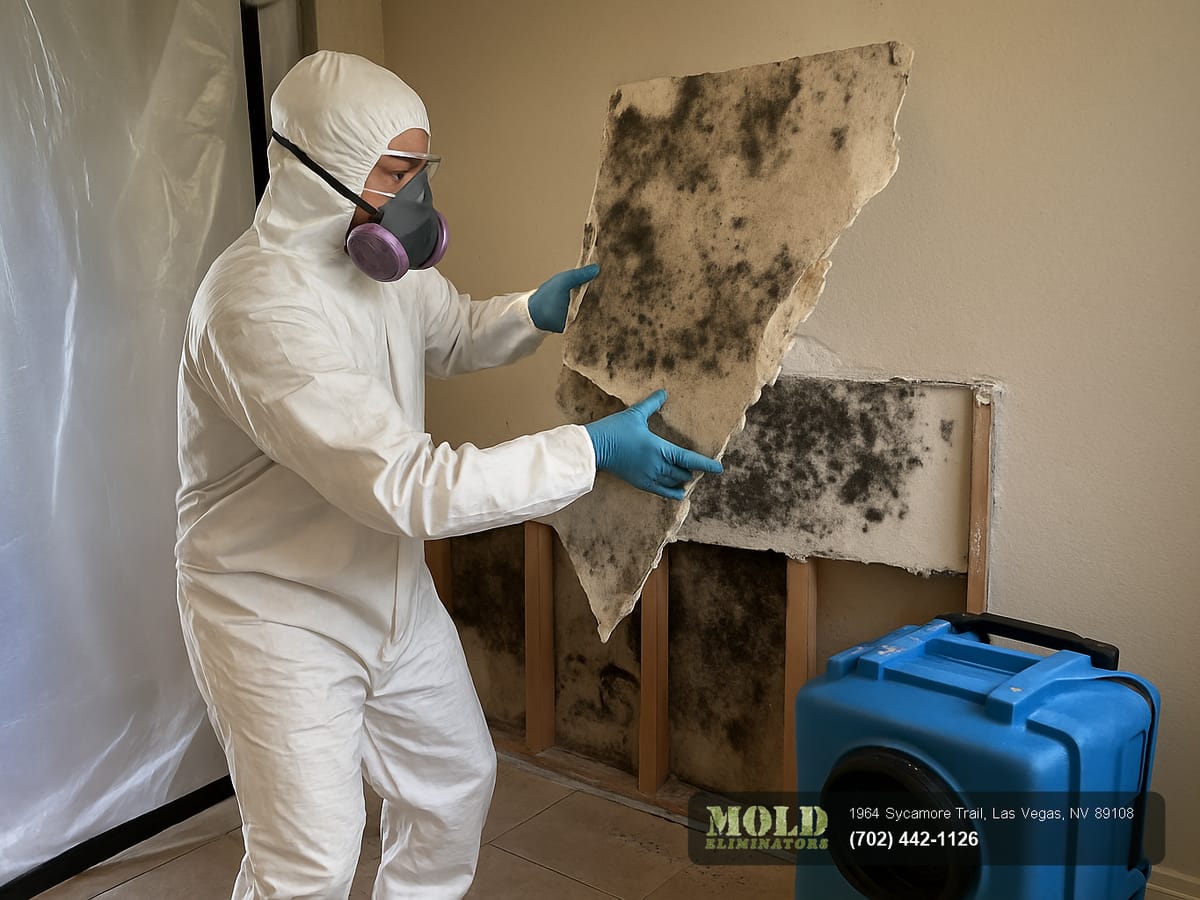
- Remove the growth. Affected components are cleaned or removed to standard, from the coil and plenum to any duct sections or porous materials that cannot be salvaged.
- Dry and correct the moisture. Because mold is a moisture problem, we resolve what kept the surface wet, the leak, the condensation, the drainage, so it does not simply grow back.
- Independent lab clearance. When the work is done, an independent third-party lab verifies the result. We do not grade our own homework. You get documentation showing the air is clean, not just our word.
Why homeowners call Mold Eliminators
No subcontractors
Every technician is a certified, in-house employee. One accountable crew owns the inspection, the source correction, and the remediation, start to finish, so nobody points fingers when something gets missed.
Independent lab, not our own grade
Verification comes from an independent third-party lab, so a clean result is proven on the record. Optional lab testing is the calm, factual way to know exactly what the black dust is.
Anti-upsell, fast response
If it is soot or plain dust, we tell you it is not a mold job. We answer with one-hour emergency response, 24/7, across the valley, because air-quality worries should not wait for business hours.
That is the whole difference. A franchise sells a duct cleaning and moves on. We diagnose the real source first, fix it to the S520 standard, and prove the result with an independent lab. If you want us moving today, our 24/7 emergency line reaches a real person, not a call center.
Black dust around vents in Las Vegas, common questions
- Is the black dust around my vents always mold?
- No. It is often mold growing on a sweating air conditioner coil or in damp ductwork, but it can also be soot from a furnace or candles, mineral and dust carryover from a swamp cooler, or plain desert dust through a dirty filter. The only way to know is to look at the source and, if needed, confirm it with independent lab testing. That is why we start with a free on-site inspection rather than assuming the worst.
- Why does this happen so often in Las Vegas?
- Our climate is the reason. Air conditioners run hard for months, so coils sweat and drain pans stay wet. Many homes still use evaporative swamp coolers that add moisture on purpose. Monsoon storms drive water into roofs and walls, and slab leaks are common in our slab-on-grade construction. Each of those puts moisture near the airflow, which is exactly what mold in an HVAC and duct system needs to take hold.
- Will cleaning the vents fix it for good?
- Not by itself. If mold is the cause, wiping the registers or even cleaning the ducts without correcting the moisture source just resets the clock until it grows back. The S520 standard, co-authored by our founder Craig Herrmann, calls for finding the source, containing the area, removing the growth, drying the moisture, and verifying the result with an independent lab. We follow that order, then confirm the air is clean before we call it done.
Seeing black dust around your vents? Start with a free inspection.
We diagnose the real source before you spend a dollar on the wrong fix, then handle it to the ANSI/IICRC S520 standard with independent lab verification. One-hour emergency response, 24/7, across the Las Vegas valley.