Condensation in Vents in Las Vegas
If you are seeing condensation in your vents, beads of water around a supply register, a damp ceiling ring under a ceiling diffuser, or droplets dripping from a metal grille, it usually means warm, humid air is meeting a cold surface somewhere in your air system. On its own that is just physics. The problem is what that moisture does next: vents and the cavities behind them stay wet, dust collects, and within a couple of days mold has everything it needs to start growing where you cannot see it.
This page is here to help you read the symptom honestly. Condensation at a vent is rarely the whole story. It is a clue pointing back to a source, sometimes a simple one, sometimes a hidden one. Below we walk through what it most often means in a Las Vegas home, how urgent it is, and what a proper fix looks like when it is done to the national mold standard. The first step is always the same: find the source before touching the symptom.
What condensation in your vents most likely means in a Las Vegas home
Water at a vent comes from one of a handful of causes, and they are not equal in seriousness. The honest way to approach it is to rule them out in order, because the wrong assumption sends you fixing the wrong thing while moisture keeps feeding mold behind the grille.
Cold supply air hitting humid room air. The most common cause. Your air conditioner pushes very cold air through metal registers. When indoor humidity climbs, water condenses on the cold grille the same way it beads on a glass of iced tea. In summer this spikes during monsoon season, when outdoor moisture surges and indoor humidity follows.
A swamp cooler in the mix. Many older Las Vegas homes still run evaporative coolers, which work by adding moisture to the air. Run one on a humid monsoon day, or run it alongside refrigerated air, and indoor humidity can climb high enough to fog every register in the house. The vents are just showing you the room is too wet.
Duct condensation from poor insulation. When ductwork runs through a hot attic with thin or failed insulation, cold supply air chills the duct skin and humid attic air condenses on the outside of it. That water drips, soaks attic framing and insulation, and tracks down to the vent. This one hides mold above the ceiling, out of sight.
Hidden water from another source. Sometimes the vent is just where the water shows up, not where it starts. A roof leak, a slab leak under the foundation, an AC drain pan that is overflowing, or monsoon intrusion through a roof penetration can all wet the same cavity a duct runs through. If the moisture appears after rain or never seems to dry, treat it as hidden water, not simple condensation.
Mold that has already started. If you also notice a musty smell coming out of the vent when the system kicks on, dark speckling on the grille, or anyone in the home reacting when the air runs, condensation has likely been feeding growth for a while. At that point the fix is not just lowering humidity. It is finding and removing what has grown, which is where professional HVAC and air duct mold work and full mold remediation come in.
Need help now?
Talk to a Las Vegas expert
In-house certified crews. One-hour emergency response across the valley, 24/7.
Why it matters and how urgent it is
Condensation feels minor because it looks minor. A little water on a grille is easy to wipe and forget. The reason it deserves attention is timing: mold can begin colonizing a wet, dusty surface within roughly 24 to 48 hours, and the inside of a vent is the ideal nursery. It is dark, it collects dust for the mold to feed on, and the air system then carries spores to every room every time it cycles. A vent problem does not stay a vent problem.
Urgency depends on the source. If the cause is simply high indoor humidity on a monsoon day, you have a little time, though you should still address it. If the water appears after rain, never dries, or comes with a musty smell, treat it as active and do not wait. Hidden moisture from a roof leak, a slab leak, or a failing drain pan keeps soaking framing and insulation around the clock, and that is exactly the slow, invisible damage that turns a cheap fix into a costly one. When water is actively spreading or you suspect a hidden source, our 24/7 emergency response stabilizes it first so the damage stops growing while we diagnose.
The Las Vegas climate cuts both ways here. Our dry desert air means a one-time bit of condensation can clear quickly on its own, which is genuinely good news. But our brutal attic heat drives strong temperature differences across ductwork, and monsoon humidity arrives fast and hard, so the conditions that create vent condensation are common from roughly July through September. A vent that sweats every summer is telling you the underlying setup, insulation, humidity, or equipment, needs a real fix, not an annual wipe-down.
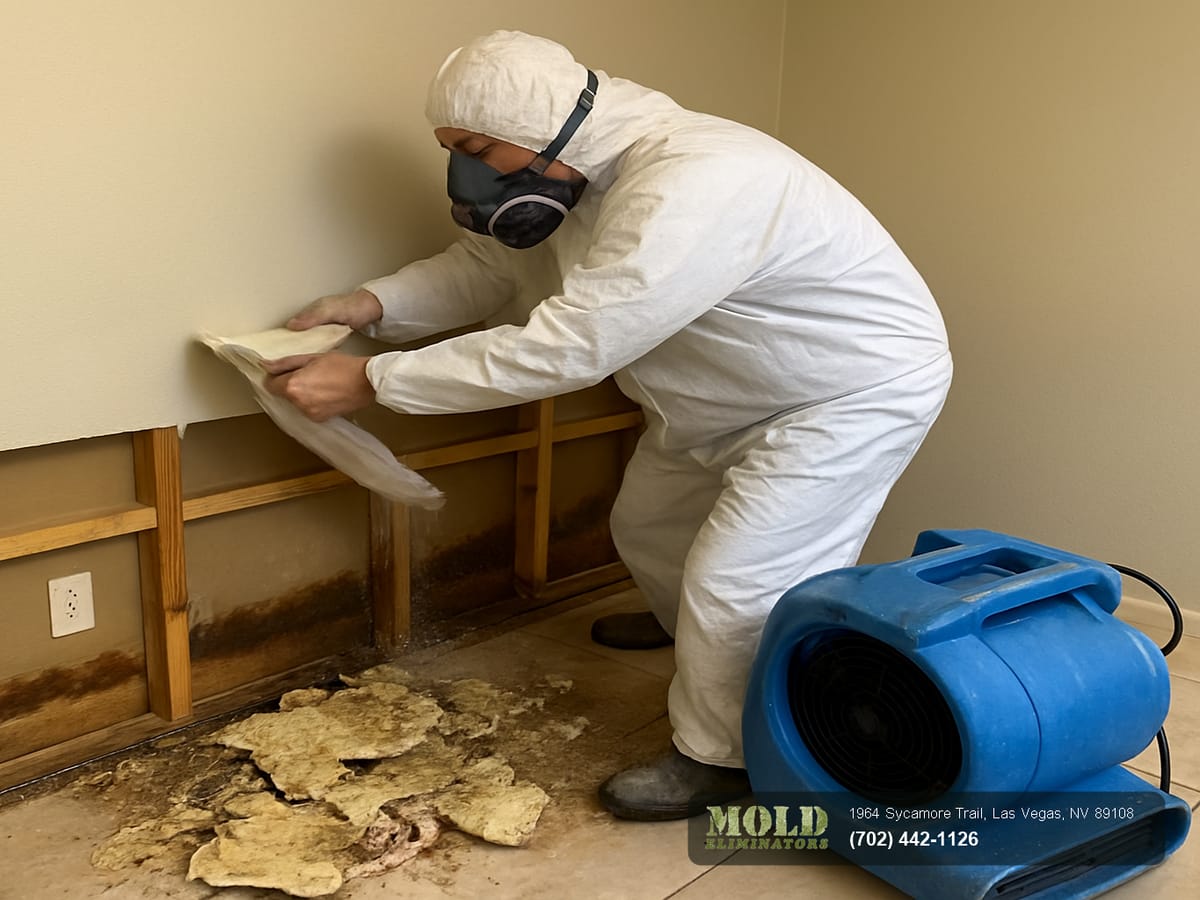 Air supply register and ductwork inspected for condensation and hidden moisture in a Las Vegas home
What the proper fix involves, to the S520 standard
A correct fix never starts at the grille. It starts by finding why the moisture is there, then handling any growth to the rulebook so it does not simply come back. The national mold standard that guides this work is the ANSI/IICRC S520, which our founder Craig Herrmann co-authored. Here is how we handle a vent condensation call, in order.
- Free on-site inspection first. We come out and diagnose the actual source, with no charge for the visit. Meters and thermal imaging trace whether the water is simple humidity, duct condensation, or hidden moisture tracking from a leak.
- Find and stop the source. Lowering humidity, correcting duct insulation, fixing a drain pan, or addressing a roof or slab leak. There is no point cleaning a vent that is going to be wet again next week.
- Contain the area. If mold is present, we isolate the affected space and the air handler so spores are not pushed through the rest of the home during the work.
- Remove what has grown. Affected materials and contaminated duct surfaces are cleaned or removed to standard, not painted over or fogged and called done.
- Dry the structure. Any wet framing, insulation, or cavity is dried to a verified target so there is nothing left for mold to feed on.
- Independent lab clearance. An independent third-party lab verifies the result, so you have data showing the area is clean rather than our word for it.
If you want certainty before any work starts, the smart move is to book a free inspection. It tells you exactly what you are dealing with, with no pressure to buy anything.
Why Las Vegas homeowners call Mold Eliminators for this
No subcontractors
Every technician is a certified W-2 employee of Mold Eliminators. One in-house crew owns the diagnosis, the fix, and the cleanup, so nobody points fingers when a vent keeps sweating.
Independent lab verification
We do not grade our own homework. An independent third-party lab confirms the area is clean, which is the difference between hoping it is fixed and having data that proves it.
Anti-upsell and fast
If a vent just needs lower humidity, we tell you that plainly rather than selling a remediation you do not need. And with one-hour emergency response, 24/7, we get to an active problem before it spreads.
Craig Herrmann has run Mold Eliminators in Las Vegas since 1996 and has worked on more than 255 properties across the valley. As an IICRC Master Certified specialist and a co-author of the S520 standard, he holds this work to the same rulebook the rest of the industry follows. That is why our duct and air system mold work is measured, contained, and verified rather than guessed.
Condensation in vents in Las Vegas, common questions
- Is a little condensation on my vents dangerous?
- A one-time bit of moisture on a cold grille during a humid day is usually just physics, and in our dry desert air it often clears on its own. It becomes a problem when it keeps happening, never dries, or comes with a musty smell, because then it has likely been feeding mold inside the vent. If you are unsure, a free inspection tells you exactly where you stand before you spend anything.
- Why do my vents sweat more during monsoon season?
- Monsoon humidity is the trigger. From roughly July through September, outdoor moisture surges, indoor humidity rises with it, and that humid air condenses on cold supply registers and on poorly insulated ductwork in hot attics. Swamp coolers make it worse by adding moisture indoors. The vents are showing you the home is too humid, and the fix is to address the source, not just wipe the grille.
- Could the water at my vent be coming from a leak instead of the AC?
- Yes, and this is the case worth catching. A roof leak, a slab leak, an overflowing AC drain pan, or monsoon intrusion can all wet the cavity a duct runs through, so the vent is just where the water shows up. If the moisture appears after rain or never dries, treat it as hidden water and call quickly. Our 24/7 team can stabilize it and trace the real source before it does more damage.
Seeing condensation in your vents? Find the source with a free inspection.
We come out, diagnose the actual cause, and tell you honestly what it needs, with no charge for the visit and no pressure to buy. One-hour emergency response, 24/7, across the Las Vegas valley. We find the source, fix it to the S520 standard, and verify it with an independent lab.