Peeling Paint From Moisture in Las Vegas
If you are seeing peeling paint from moisture, the paint is not the problem. It is the messenger. Paint blisters, bubbles, flakes, or sheets off a wall or ceiling for one main reason: water is pushing out from behind it, breaking the bond between the paint and the surface underneath. The paint is simply the first thing weak enough to show you that the wall behind it is wet.
So the real question is not how to repaint. It is where the water is coming from, and whether mold has already started to grow in the damp material behind the paint. Repaint over an active moisture source and the new paint will peel too, usually within weeks. This page walks you through what peeling paint usually means in a Las Vegas home, how urgent it is, and the proper way to fix it for good. The fix starts with a free inspection to find the source, not a paint can.
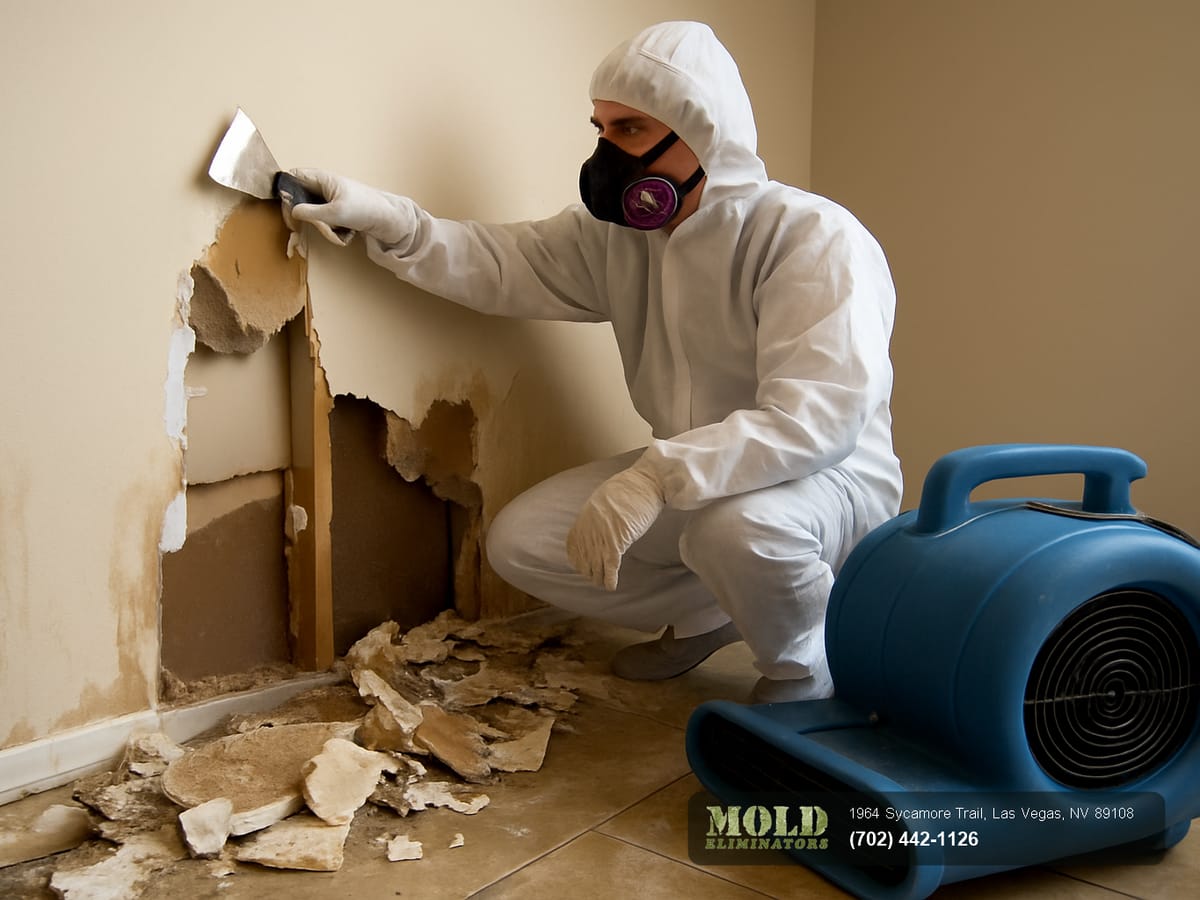 Peeling and bubbling paint on a Las Vegas interior wall caused by moisture trapped behind the surface
What peeling paint from moisture usually means in a Las Vegas home
Las Vegas is one of the driest places in the country, so peeling paint surprises people here more than it would on the coast. That dryness is exactly why it matters. In our climate, paint does not peel from ambient humidity in the air. When the paint on a specific wall or ceiling is bubbling and the rest of the house is fine, water is reaching that spot from somewhere, and the desert gives us a short list of usual suspects.
An air conditioning or condensation issue. Our AC systems run hard for months. A clogged condensate drain line, a sweating supply duct, or an evaporator coil pan that overflows can drip into a wall or ceiling cavity and soak the drywall behind the paint. This is one of the most common causes we find, and it often shows up on a ceiling directly below an attic air handler.
A slab leak. Much of the valley is built slab on grade, and a pinhole leak in a hot or cold water line running through the concrete slab can push moisture up into the base of a wall. Peeling paint and bubbling along the bottom of a wall, sometimes with warm spots on the floor, is a classic slab leak signature.
A swamp cooler. Evaporative coolers add a great deal of moisture to a home by design. An overflowing pan, a leaking water line, or condensation on uninsulated ductwork can wet ceilings and walls near the unit, which is why swamp cooler homes see more peeling paint than refrigerated ones.
Monsoon and roof intrusion. Our summer monsoon storms are brief but intense, and flat or low-slope roofs are common here. Water that gets past flashing or a tired roof membrane travels along framing and shows up as peeling paint on a ceiling or an upper wall, often a few feet away from where it actually entered.
A plumbing leak inside a wall. A slow drip from a supply line, a drain, or a shower pan keeps the back of the drywall wet around the clock. Bathrooms, kitchens, and laundry walls are the usual locations, and the peeling often appears on the opposite side of the wall from the fixture.
Honest diagnosis matters here, because the fix is completely different for each source. A swamp cooler problem is not solved the way a slab leak is. The only way to know which one you have is to find the water, which is the first thing a proper water damage restoration visit does.
Need help now?
Talk to a Las Vegas expert
In-house certified crews. One-hour emergency response across the valley, 24/7.
Why it matters and how urgent it is
Peeling paint feels cosmetic, so it is easy to put off. The risk is what is happening behind it. Paper-faced drywall, wood framing, and trim are organic materials, and mold can begin to colonize them within roughly 24 to 48 hours of getting wet. If the wall behind your peeling paint has been damp for weeks or months, which is common with a slow leak, there is a real chance mold is already growing in the cavity where you cannot see it.
That is the part that turns a paint job into a health and structural concern. Hidden moisture behind a wall does not stay put. It wicks into framing, softens drywall, and feeds a colony that releases spores and that musty smell into the air your family breathes. The peeling paint you can see is often the small visible edge of a much larger wet area inside the assembly. If you suspect the growth has spread inside the wall, our guide to mold behind walls explains what that looks like and how it is handled.
Urgency depends on the source. An active slab leak or a roof intrusion during monsoon season is adding water continuously, so the wet area grows every day it is left alone, and that pushes the situation toward emergency. A condensation issue that only happens when the AC runs is slower but still progressive. In every case, the clock favors acting early. Drying a wall that has been wet for two days is straightforward. Remediating one that has been quietly growing mold for two months is a much bigger job. When water is actively spreading, our 24/7 emergency line stabilizes the source first.
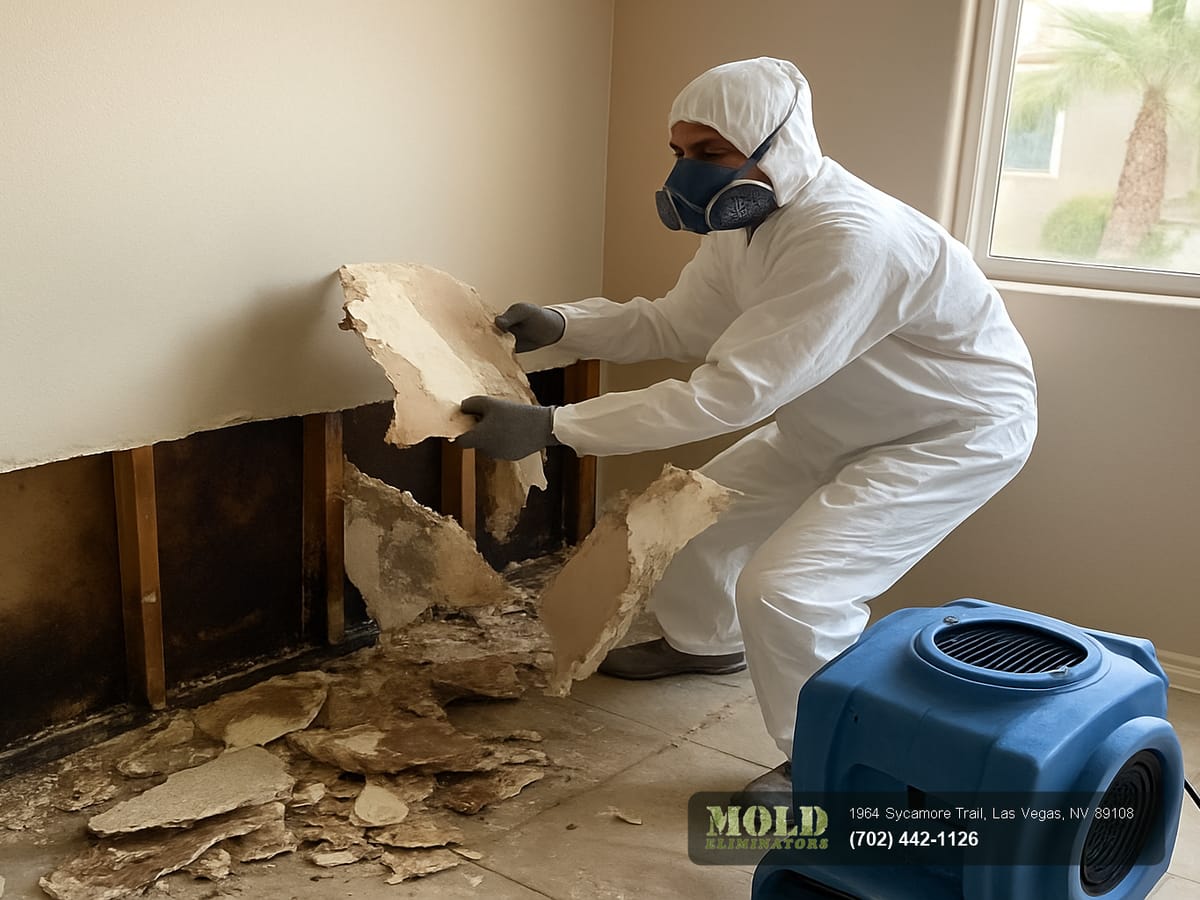 Technician using a moisture meter to locate the water source behind a wall with peeling paint
What the proper fix actually involves
Done to the ANSI/IICRC S520 standard, fixing peeling paint from moisture is not a paint job with a moisture step bolted on. It is a moisture job that ends with paint. Mold Eliminators handles it as one accountable sequence.
- Free on-site inspection. We come out, look at the peeling area, and use moisture meters and thermal imaging to find where the water is and how far it has traveled behind the surface. No charge, no pressure.
- Find and stop the source. Repainting over an active leak is wasted money. We identify whether it is AC condensation, a slab leak, a swamp cooler, roof intrusion, or in-wall plumbing, and the source is stopped before anything else.
- Contain the area. If mold is present, we set containment so spores are not spread through the home while the wet, affected material is opened up and removed.
- Remove and remediate. Drywall, insulation, or trim that is too damaged or contaminated to save is removed. Any mold is remediated to the S520 standard, not painted over.
- Dry to verified targets. The structure is dried with commercial dehumidification and air movement, and daily moisture readings confirm the framing and remaining material reach a documented dry standard before anything is closed back up.
- Independent lab clearance. Where mold was involved, an independent third-party lab verifies the area is clean. The all-clear comes from the lab, not from us, and only then is the wall rebuilt and repainted.
Why Las Vegas homeowners call Mold Eliminators
No subcontractors
Every technician is a certified W-2 employee. One in-house crew owns the inspection, the source repair, the drying, and the rebuild, so no one points fingers if something was missed.
Independent lab, anti-upsell
Clearance comes from an independent third-party lab, not from the person doing the work. We are built to tell you when you do not need us, not to talk you into a bigger job.
Certified to the standard
Founder Craig Herrmann is IICRC Master Certified and helped author the national mold standard. Read more about Craig and the S520 standard.
We have worked in Las Vegas homes since 1996, across more than 255 properties, with one-hour emergency response 24/7 across the valley. The difference is simple. A painter covers the symptom. We find the moisture, fix the cause to standard, and prove the wall is clean before it gets closed up, so the peeling does not come back. If you want to talk it through first, you can reach us directly, no call center in between.
Peeling paint from moisture in Las Vegas, common questions
- Can I just scrape and repaint the peeling area?
- Only if the moisture source is already fixed and the wall behind it is fully dry. If water is still reaching the wall, from a slab leak, AC condensation, a swamp cooler, or a roof intrusion, fresh paint will bubble and peel again, usually within weeks. The lasting fix is to find and stop the source first. That is the first thing a free inspection sorts out.
- Does peeling paint mean there is mold behind the wall?
- Not always, but it is a real possibility, especially if the wall has been damp for more than a couple of days. The paint peels because the material behind it is wet, and that same moisture is what mold needs to grow. The only way to know for sure is to open and measure it, which is why hidden growth is handled as mold behind walls rather than guessed at from the surface.
- Is the inspection really free?
- Yes. The on-site inspection to find the moisture source is free for homeowners and property owners. If you choose to add independent lab testing or analysis, that is a paid add-on, and we tell you the cost up front before any work begins.
Seeing paint peel from moisture? Find the real cause with a free inspection.
We come out, find where the water is coming from, and tell you honestly what it will take to fix it for good. One-hour emergency response, 24/7, across the Las Vegas valley. No subcontractors, independent lab clearance, no upsell.